
Best Solar Panel Kits for Campers: Reliable Off‑Grid Power on the Go
Growing freedom comes with dependable power. For campers, RVs, and tiny homes off the grid, a solar panel kit offers clean, quiet energy without frequent refueling. This guide highlights five top kits that balance efficiency, durability, and ease of use. Each option is suitable for 12V or 24V setups and pairs solar panels with PWM controllers or complete systems designed for RVs, campers, caravans, boats, and other off‑grid applications. Explore features, performance, and what to consider when choosing a kit for your next adventure.
| Brand | Kit Name | Key Feature |
|---|---|---|
| ECO-WORTHY | 200W Monocrystalline Kit with 30A PWM Controller | High efficiency panels + durable frame |
| Renogy | 200W Adventurer Starter Kit | Compact footprint, robust protection |
| Renogy | 200W Starter Kit with 2 Panels | Higher daily output, reliable PWM control |
| WERCHTAY | 200W Dual Panel Kit with 30A Controller | Two panels for higher flexibility |
| ECO-WORTHY | 200W Complete Kit with Battery and Inverter | All‑in‑one power solution |
Below you’ll find detailed product sections followed by a practical buying guide. Each kit targets RVs, campers, trailers, boats, and off‑grid living, with emphasis on safety, durability, and real‑world daily output under favorable sunlight.
ECO-WORTHY 200 Watts Kit With PWM Controller

This comprehensive kit focuses on a high‑efficiency 200W monocrystalline solar panel paired with a 30A PWM charge controller, designed for RVs, campers, caravans, and other off‑grid applications. It highlights a wide daily output potential of around 800Wh under four hours of strong sun, making it suitable for compact power needs during travels. The panel uses an corrosion‑resistant aluminum frame and a durable IP65‑rated junction box for weather resistance. With a robust build and clear lifecycle value, it targets long‑term off‑grid reliability.
Key considerations: ensure your battery bank aligns with a 12V or 24V system, verify mounting space on your rig, and plan for expansion if your energy needs grow. The kit’s standard mounting hardware and connectors support straightforward installation for most RV setups.
Renogy Adventurer 200W Kit With LCD PWM Controller
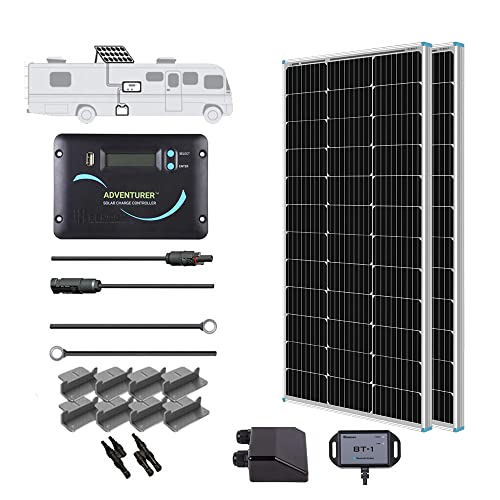
The Renogy Adventurer 200W kit emphasizes a compact footprint and 22% cell efficiency, making it a favored choice for RVs and campers who prioritize space efficiency. The 30A PWM charge controller integrates with a clean, flush‑mount design, reducing visual clutter on your vehicle. Its aluminum frame is corrosion‑resistant and engineered to withstand high winds (up to 2400Pa) and snow loads (up to 5400Pa), extending outdoor durability. The kit’s protection features guard against overcharge, overvoltage, discharge, short circuits, and reversed polarity.
Considerations: assess your roof or cargo area for panel placement and confirm that the mounting hardware fits your vehicle’s surfaces. This kit balances performance with tidy installation for travelers seeking reliable off‑grid power without complexity.
Renogy 100W Starter Kit With 30A PWM Controller

This starter kit offers a practical entry point for smaller solar setups. With an average output around 500Wh daily (subject to sunlight), it features a 22.5% cell efficiency and includes 30A PWM charging control with UL and IP ratings for safety and durability. The kit also comes with a panel that can endure challenging weather and a service plan designed to cover panel material and battery output over time. The inclusion of safety certifications and protective features supports confident use in a variety of camper environments.
Users should consider the daily energy demand of essential devices and plan for potential future expansion if larger appliances are required on trips.
Renogy 200W Dual‑Panel Starter Kit With PWM Controller

This kit ships with two 100W panels and a 30A PWM controller, designed for RVs, boats, trailers, or off‑grid systems. The 22% cell efficiency supports higher output while maintaining a modest footprint. Key advantages include a durable panel construction with reliable bypass diodes and a backsheet that helps dissipate heat, supporting steady performance in varied sunlight. The Wanderer PWM controller in related Renogy configurations offers multi‑stage charging with protection features to safeguard batteries.
Ideal usage scenarios include vehicles with limited roof space or setups requiring steady energy delivery across multiple days of travel. Consider pairing with a proven battery chemistry that complements PWM charging profiles for longer cycle life.
WERCHTAY 200W Dual‑Panel Kit With 30A Controller

This kit includes two 100W panels, a 30A PWM charge controller, and a 12V/24V configuration option through series or parallel connections. It supports broad RV and camper use with a focus on practical protection features like reverse polarity and overcharge safeguards. The panels are designed for stable outdoor performance and are paired with a controller that intelligently manages charging cycles to protect both battery types and the electrical system in mobile environments.
When evaluating, consider how you’ll wire for 12V or 24V operation, and ensure your battery bank, fusing, and cabling can accommodate the total current flow. This configuration is flexible for mid‑range energy needs on trips and longer stays.
ECO-WORTHY 200W Complete Starter Kit With Battery And Inverter
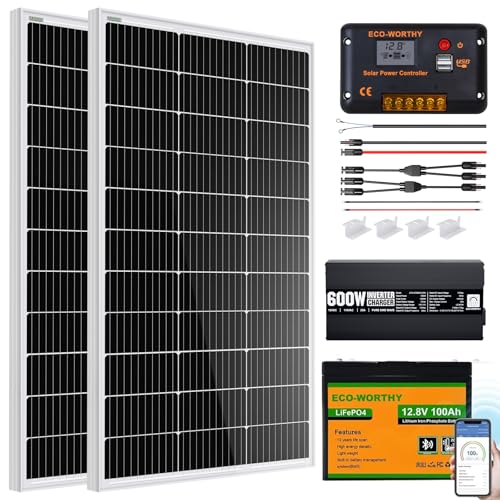
This all‑in‑one solar kit provides a 200W panel system plus a 30A controller, a 100Ah lithium battery in some configurations, and a premium inverter. The setup targets campers seeking a turnkey solution that goes beyond panel power to deliver stored energy and AC capacity for common appliances. The LiFePO4 battery offers long cycle life (deep discharge tolerance) and built‑in BMS to protect against overcharge, overdischarge, overheat, and short circuits. Panels’ aluminum frame and tough build support durability in harsh environments.
Key decisions include whether a fully integrated system best suits your travel style, and if you need 12V DC loads only or occasional AC power for devices like small appliances. Battery management and inverter efficiency are central to total daily usable energy.
Buying Guide: How To Choose The Right Camper Solar Kit
To select the best solar kit for your camper, evaluate these factors from multiple angles:
- Power needs: Estimate daily energy consumption for essential devices (lights, fridge, fans, charge devices). Compare to the kit’s expected daily output under realistic sun exposure.
- System voltage: Decide between 12V and 24V systems based on battery bank and device compatibility. Some kits offer flexible wiring to accommodate both.
- Panel footprint and mounting: Consider roof area or exterior racks. A compact 100–200W setup often fits most campers, while larger footprints suit bigger rigs or extended trips.
- Charge controller type: PWM controllers are affordable and simple, while MPPT controllers optimize power transfer in variable conditions but can be pricier.
- Durability and weather resistance: Look for corrosion‑resistant frames, IP ratings, and tested wind/snow loads. This reduces maintenance and extends lifespan.
- Battery integration: Decide between lead‑acid, LiFePO4, or other chemistries. LiFePO4 generally offers longer life, higher depth of discharge, and safer operation but at higher upfront cost.
- Expandability: If you anticipate adding devices, choose kits that allow extra panels or a larger controller and battery later without significant rewiring.
- Warranty and service plans: Long coverage for panels, controllers, and batteries protects your investment during travel.
- Installation effort: Some kits are “all‑in‑one” with included mounting hardware, cables, and fuses; others require additional components and DIY skills.
- Maintenance: Consider cleaning requirements for panels, seal integrity for roof penetrations, and ease of battery management with your chosen system.
In practice, select a kit that aligns with your daily energy profile, available mounting area, and preferred balance between initial cost and long‑term reliability. Assess whether you want a fully integrated solution (panels + battery + inverter) or a modular setup that lets you build your system over time. By comparing the five kits above, you can map which option best suits your camping lifestyle while ensuring safe, steady power across adventures.