
Best Micro Switch Roller Lever Solutions for Precision Automation
Inline roller lever micro switches are essential components for precise motion control in automation, robotics, and equipment with moving parts. This guide highlights five reliable options, focusing on models with roller actuators for smooth, short strokes and dependable SPDT configurations. Each product is suited for different projects: hobbyist Arduino builds, compact automation systems, and rugged environments. The following quick-reference table helps you compare key points at a glance.
| Product | Actuator | Contact | Typical Use |
|---|---|---|---|
| HiLetgo Micro Limit Switch | Roller Lever Arm | 1NO 1NC; SPDT | Compact projects, hobby electronics |
| Mrdilla SPDT Micro Limit Switch | Roller Lever Arm | 1NO 1NC; SPDT | Automation control; robotics |
| Twidec Micro Limit Switch | Push/Roller Lever | 1NO 1NC; SPDT | Arduino and small machines |
| Joinfworld IP67 Roller Lever | Removable Lever | 3-pin SPDT | Harsh environments; outdoor or damp setups |
| BOJACK Momentary Switch | Roller Lever Arm | 1NO 1NC; SPDT | General purpose control |
HiLetgo 10pcs Micro Limit Switch with Roller Lever

This KW12-3 roller lever micro switch covers typical needs in small automation projects. It provides a compact form factor (approximately 20 x 10.5 x 6.5 mm) with a roller lever for smooth actuation. It offers both normally open and normally closed configurations via SPDT contacts, and a voltage rating of AC 125–250V with a 5A current rating. Best for: tight spaces in hobby electronics where quick, precise actuation is required. Limitation: data notes short-stroke action, which may require a careful mounting position to ensure reliable triggering in high-speed cycles.
9Pcs SPDT Micro Limit Switch with Roller Lever

The Mrdilla set includes SPDT switches rated for 15A at 125/250VAC, featuring a roller lever and compact housing. With a rugged ABS body and silver contacts, these switches are suitable for automation systems and robotics where robust, repeatable actuation matters. Best for: projects needing higher current handling and durable, dust-resistant operation. Caution: ensure the lever length and actuator stroke align with your mechanical travel to avoid mis-triggering in tight assemblies.
Twidec 6Pcs Micro Limit Switch with Short Hinge Roller Arm
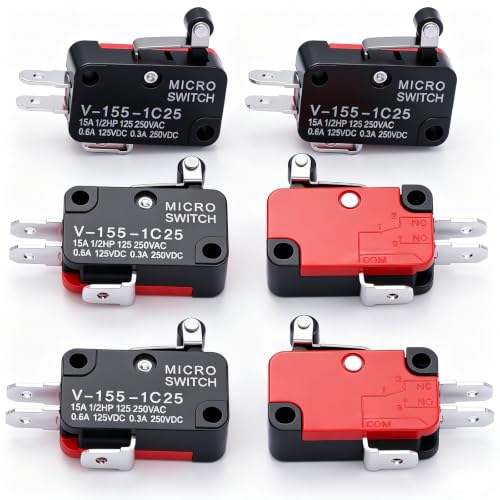
The Twidec set features SPDT with a hinge roller lever, offering a compact footprint (about 1.6″ x 0.9″ x 0.43″) and a strong current rating suitable for 15A at 125V/250V. Best for: Arduino projects and small automation tasks needing a longer lever travel and reliable tactile feedback. Better for: applications where a straight hinge lever is preferred for predictable engagement. Limitation: the data indicates a push-button actuator style, which may require a slightly different mounting approach than a pure roller lever in some setups.
Joinfworld IP67 Waterproof Micro Switch with Lever

Joinfworld’s IP67-rated roller lever micro switch is designed for challenging environments. It supports SPDT with 3 pins and includes a removable lever for customization. Best for: damp or dusty settings, outdoor equipment, and industrial automation where water and particulate exposure is possible. Caution: the IP67 rating implies sealed construction, but user-installed wiring must maintain sealing integrity to prevent ingress.
BOJACK Micro Limit Switch with Roller Arm

BOJACK offers a pack of 10 micro switches with SPDT (1NO 1NC) and a roller lever, rated at 5A for 125–250VAC. The momentary action type is suitable for push-to-trigger cycles in control circuits. Best for: bulk projects or educational kits where a predictable, low-cost limit switch is needed. Limitation: the operating current is modest; high-load applications may require higher current ratings or more robust models.
Buying Guide: Key Considerations for Micro Switches with Roller Levers
What actuator style do you need? Roller levers provide smooth engagement and reduced wear on moving parts. Consider hinge vs straight-lever designs and how they align with your mechanism’s travel.
What contact type is required? SPDT (1NO+1NC) is common for safety interlocks and bidirectional control. Ensure the setup supports the correct configuration for your circuit.
What rating do you require? Voltage and current ratings determine suitability for your power needs. Match the switch rating to your supply and load to avoid premature failure.
How rugged must it be? IP67 or other ingress protections matter in dusty, damp, or outdoor environments. Factor environmental exposure into your choice.
What installation considerations apply? Mounting hole size, actuator stroke, and overall dimensions influence fitment. Check lever length and mounting orientation to ensure reliable actuation.
FAQ
- What is a roller lever micro switch? A small switch with a roller-shaped actuator that improves engagement smoothness and reduces wear on moving parts during actuation.
- When should I choose SPDT over SPST? SPDT (single-pole double-throw) offers both normally open and normally closed contacts in one unit, enabling more versatile wiring and interlock configurations.
- Are IP-rated switches necessary for indoors? Not always, but IP ratings help if the environment includes dust, moisture, or direct exposure to water. IP67 is a common choice for rugged settings.
- Can these switches handle high current? Check the current rating; 5A and 15A options exist. Use switches that meet or exceed your load current.
- How do I choose the right lever length? Longer levers reach further and may trigger earlier or later in a cycle. Match lever geometry to your mechanism’s travel profile.
- Is mounting orientation important? Yes. Side-mounted, top-mounted, or vertical layouts affect trigger reliability and stroke distance. Plan mounting to avoid mis-triggering.