As an Amazon Associate I earn from qualifying purchases. These links may earn this site a commission when you buy, at no extra cost to you.
Gas line safety depends on accurate pressure readings. The following select gauges are designed for gas line testing and tank measurement, featuring robust brass and chrome-plated bodies, easy-to-read dials, and reliable FNPT connections. This guide highlights five options that balance accuracy, durability, and ease of use for American homeowners and professionals alike.
| Product | |||
|---|---|---|---|
| SENCTRL 0-30 Psi | 2″ | 3/4″ FNPT | 0-30 psi |
| MEASUREMAN 2″ Brass | 2″ | 3/4″ FNPT | 0-30 psi |
| CARBO 15 PSI | 2″ | 3/4″ FNPT | 0-15 psi |
| CARBO 1″ FNPT 0-30 | 2″ | 1″ FNPT | 0-30 psi |
| MEASUREMAN 2″ Steel | 2″ | 3/4″ FNPT | 0-15 psi |
SENCTRL 0-30 Psi Gas Pressure Test Gauge

The SENCTRL gauge combines a 2″ dial with a chrome plated steel body and a 3/4″ NPT connection. Its brass valve assembly supports direct integration into gas lines. The steel case provides corrosion resistance for long-term reliability in challenging environments.
Key features include a sealed black steel dial enclosure for visibility and a rugged valve body designed for gas line testing and tank measurements. This model is suitable for standard gas line pressure checks and quick diagnostic tasks.
MEASUREMAN 2″ Brass Gas Pressure Test Gauge Assembly
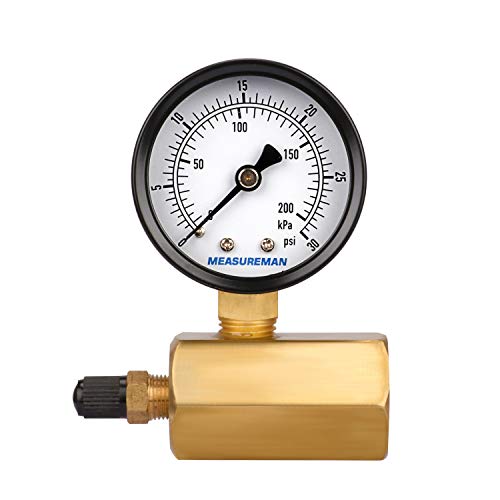
This MEASUREMAN assembly features a 2-1/2″ dial (effectively 2″ reading) with a brass gas test body and a 3/4” NPT female thread adapter for direct gas line attachment. The 0-30 psi scale is accompanied by a kPa conversion, offering dual-scale reading for versatility in various regions and standards.
Accuracy is noted at +/-3%, ensuring dependable readings during fast checks or routine maintenance. The brass construction emphasizes durability and resistance to gas line corrosion, making it a common choice for household and professional gas audits.
CARBO Instruments Gas Test Gauge 15 PSI

This gauge is designed for higher-range testing with a 3/4” FNPT connection and a 15 PSI maximum reading. It uses a forged steel body and brass valve, coupled with a sturdy steel gauge case and a durable glass lens. The 2″ dial is easy to read, and the chrome plated steel body resists corrosion in gas line environments.
With an emphasis on readability and rugged construction, this option suits regular gas line pressure testing where moderate pressure ranges are typical. The non-fading lens helps maintain clarity over time.
CARBO Instruments Gas Test Gauge 1” FNPT 0-30

This Carbo Instruments unit uses a 1” FNPT connection with a 0-30 psi range and a chrome plated steel body. The gauge includes a tightening tool and a Teflon seal, along with a durable glass lens. It provides a balanced combination of precision reading and ease of operation for space-limited gas line installations.
The 2″ dial remains legible in tight spaces while still delivering clear pressure readings essential for safe gas line work.
MEASUREMAN 2″ Steel Gas Pressure Test Gauge

This MEASUREMAN model utilizes a 2″ dial with a steel gas test body and a 3/4″ FNPT connection. The gauge offers a dedicated 0-15 psi range with a fine scale for precise pressure checks. The single-scale design makes it straightforward to read in a variety of gas testing scenarios. The chrome plated steel body and corrosion-resistant construction support long service life in frequent use environments.
SENCTRL 0-100 Psi Gas Pressure Test Gauge

This higher-range SENCTRL gauge provides a 2″ dial and a 3/4″ FNPT connection with a brass valve and chrome plated steel body. The dual emphasis on corrosion resistance and readability makes it suitable for gas line testing and tank measurements where higher pressures may be encountered. The black steel case adds durability against harsh environments.
CARBO Instruments Gas Test Gauge 15 PSI

This Carbo Instruments model again emphasizes a 3/4” FNPT connection with a 15 PSI reading. It features a brass valve, chrome plated steel body, and a sturdy gauge case with a non-fading durable glass lens. The combination aims to deliver dependable readings with long-term durability in gas line test conditions.
Buying Guide: Key Purchase Considerations For Gas Line Gauges
- Pressure range: Select a gauge that matches the expected line pressure. For residential gas lines, ranges like 0-30 psi cover most diagnostic needs; higher ranges may be needed for certain industrial tasks.
- Connection type and size: Most gas gauges use a 3/4″ or 1″ FNPT connection. Ensure the thread matches your gas line fittings and any adapters you may require.
- Dial size and readability: Larger dials (2″) are easier to read from a distance. Consider the environment where you’ll work and choose a dial height that minimizes misreads.
- Body materials and durability: Brass valve bodies and chrome plated steel or forged steel frames resist corrosion and physical wear, which is important for frequent use around gas lines.
- Lens and enclosure: A durable glass lens and a corrosion-resistant case help maintain clarity and longevity in challenging environments.
- Accuracy and scale: Look for gauges with clear scaling (e.g., +/-3%) and dual scales (psi and kPa) if you work across different standards or regions.
- Readiness for direct line integration: Some kits include tightening tools or seals (e.g., Teflon), which can simplify installation and reduce the need for additional accessories.
- Maintenance and calibration: Regular checks and, when needed, recalibration ensure consistent performance over time. Consider gauges with straightforward disassembly for inspection.
- Safety considerations: Use the gauge within its rated range; never exceed maximum pressure; ensure connections are tightened to prevent leaks.
When selecting a gas line pressure gauge, consider the typical working range, connection compatibility with your piping, and the environment in which the gauge will be used. Durability features such as a chrome-plated body, sturdy gauge case, and corrosion resistance contribute to reliable performance over time. Reading clarity and the ability to perform quick, accurate checks are essential in maintaining safe gas line operations.