
Best Electric Water Heaters for Outdoor Use
Direct answer: for outdoor or exterior setups, consider compact, weather-safe units with adequate protection and easy installation near the point of use. The best picks below balance outdoor readiness, safety features, and energy efficiency. This guide highlights five options most suitable for outdoor or exterior installations, including submersible and tankless models. Each choice targets a specific use case, from portable outdoor tubs to whole‑house setups, helping you pick the right heater for your climate and space.
Buyer-friendly summary table
| Product | Best For | Key Benefit | Potential Limitation |
|---|---|---|---|
| Submersible Water Heater 1500W | Outdoor pools, inflatable tubs, buckets | GFCI leakage protection and temperature control | Portable and not a whole‑house solution |
| APUS 27kW Tankless | Outdoor outlet with power access; high hot water demand | High flow rate up to 6.5 GPM; self-modulating | Requires proper 240V circuit and space for installation |
| 18kW V7B-180B Tankless | Point‑of‑use near showers or outdoor fixtures | Compact, 99.8% efficiency, quick hot water | May require professional wiring and venting considerations |
| 18kW ETL Fully‑Featured Tankless | Whole‑house or larger outdoor installations | LED temp readout, precise control | Requires appropriate electrical service and clearances |
| 110V Tankless 3000W | Under‑sink or outdoor small usage | Compact, easy to mount; ETL listed | Limited flow and temperature rise at high demand |
Submersible Water Heater 1500W

Best for portable outdoor setups where you need quick, hot water for pools, tubs, or buckets. It includes GFCI leakage protection and temperature control for safer outdoor use. Note that it is a submersible immersion heater, not a full home system.
APUS 27kW Tankless

Best for high outdoor demand where a dedicated outdoor heating solution is needed. This 27kW model handles multiple outlets with self‑modulating power. Choose this if you have the right outdoor electrical supply and want rapid hot water for several fixtures.
18kW Tankless V7B-180B

Best for point‑of‑use outdoor applications near a shower or sink. The V7B‑180B is compact and delivers hot water quickly with an efficiency claim around 99.8%. It includes safety protections such as leakage and dry‑heating protection. Limitation: installation impact from wiring requirements and space planning should be considered before outdoor use.
18kW ETL Tankless – Gray
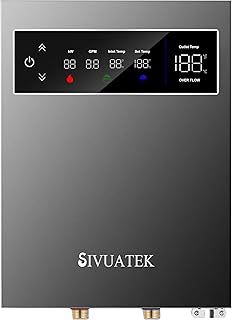
Best for whole‑house or larger outdoor installations where you need reliable, on‑demand hot water. This model features LED temperature readouts and precise control of inlet/outlet temperatures. It requires a suitable electrical service and proper clearances; consider professional installation when used outdoors.
110V Tankless 3000W
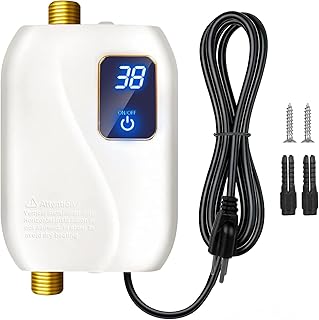
Best for compact outdoor setups such as under‑sink installations or small exterior fixtures. This 110V unit is designed for space‑constrained areas and includes multiple protection features. Limitation: modest flow rate and temperature rise under higher demand; suitable for single or low‑demand outdoor use.
Buying Guide: Outdoor‑Ready Electric Water Heaters
- Power supply and wiring: Outdoor units often require dedicated circuits (240V for high‑capacity tankless models). Ensure your electrical panel can support the unit’s amperage and that wiring is weather‑rated and code‑compliant.
- Protection and safety: Look for leakage protection, dry‑boil protection, and IP ratings or weather‑resistant housings. GFCI is important for outdoor use, especially near water.
- Installation location: Outdoor or exterior installations should consider venting (for tankless units with exhaust or outdoor‑rated enclosures) and clearance for service access. Point‑of‑use units benefit from proximity to the hot water draw point.
- Flow and heat load: Whole‑house tankless models require higher electrical capacity and careful load calculation. For outdoor pools or tubs, submersible heaters provide portability but are not substitutes for a home hot‑water system.
- Efficiency and costs: Tankless models avoid standby heat loss but require proper sizing to meet simultaneous usage. Self‑modulating operation helps maintain stable temperatures with variable flow.
- Durability in outdoor environments: Choose models with corrosion resistance and weather‑resistant housings. Consider enclosures or mounting locations that shield from direct rain and sun when possible.
FAQ
- Can an electric water heater be used outdoors?
Yes, but choose models designed for exterior use or with weather‑resistant enclosures and proper electrical protection. - What size tankless heater is best for outdoor use?
It depends on hot water demand. For a single outdoor faucet or shower, 3–6 GPM units are common; for whole‑house outdoor setups, higher capacity units are needed with appropriate electrical service. - Do I need a professional install for outdoor tankless units?
Often yes, due to wiring, venting (if applicable), and code requirements. Check local codes and manufacturer guidelines. - How do I protect outdoor heaters from weather?
Use weather‑rated enclosures, shielded mounting, and dedicated outdoor circuits with GFCI protection where required. - Is submersible better than tankless for outdoor pools?
Submersible heaters are portable and easy for temporary outdoor use; tankless units suit permanent or larger installations but require correct wiring and space planning. - What maintenance is typical for outdoor electric heaters?
Regular inspections for moisture ingress, enclosure sealing, electrical connections, and flushing or sediment removal as per manufacturer guidance.