
Best 240V Welder Extension Cords for Safe, Flexible Power Supply
Answering the common need for reliable, site-ready power extension, this guide highlights five top 240V welder extension cords. Each product is chosen for durability, suitability for common welding setups (MIG, TIG, stick, plasma), and safety features. Ideal buyers include DIY enthusiasts, hobby welders moving between projects, small shops, and field technicians. The quick-reference table below summarizes each option.
| Product | Length | Wire Gauge | Rated | Best For |
|---|---|---|---|---|
| POWGRN 50 Ft 30 Amp 10 Gauge | 50 ft | 10 AWG | 250V / 7500W | Midsize shop, portable welders |
| YESWELDER 50 Ft 8 AWG | 50 ft | 8 AWG | 250V / 40A | Heavy-duty outdoor or indoor use |
| YESWELDER 50 Ft 10 AWG | 50 ft | 10 AWG | 250V / 25A | Light-to-moderate loads, flexible reach |
| TOOLIOM 40 Ft 10 AWG | 40 ft | 10 AWG | 250V / 30A | Compact moves around shop |
| islewire 50 Ft 6 AWG | 50 ft | 6 AWG | 250V / 12,500W | High-draw welders & plasma cutters |
POWGRN 50 Foot 30 Amp 10 Gauge Welder Extension Cord

Best for moderately powered welders in small shops or home garages. This 50-foot, 10-gauge cord is rated at 250V and up to 7500 watts, suitable for many 30A welders. It uses a NEMA 6-50P to 6-50R connection, designed for safe plug-in and removal with a flat plug grip. The ETL listing supports safety compliance. Its weatherproof, high-temperature jacket offers protection in outdoor or challenging environments.
Who it’s best for: hobbyists and light-to-midrange shop welders needing extra reach without sacrificing safety. Caution: ensure your welder’s actual load stays within the 7500W limit to avoid overheating. Storage straps help keep cords tidy between jobs.
YESWELDER 50ft 250V Welder Extension Cord — 8 AWG

Better for heavy-duty outdoor or industrial-style setups. This 50-foot cord uses 8 AWG conductors, delivering up to 40A at 250V. It’s designed to resist corrosion and is suitable for indoor or outdoor use with a STW jacket. The NEMA 6-50P to 6-50R configuration fits most standard welders. The heavier gauge reduces voltage drop on longer runs.
Who it’s best for: users with higher current requirements or where the cord will run through outdoors or rough work areas. Caution: heavier gauge means less flexibility and a bit more stiffness; consider storage and handling on mobile work sites.
YESWELDER 50ft 250V Welder Extension Cord — 10 AWG
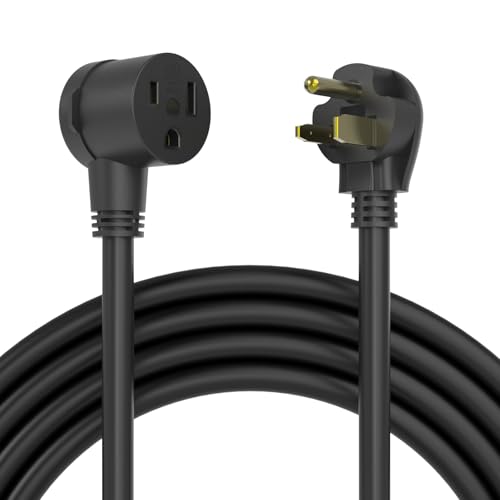
Choose this if you need a balance between portability and power. This 50-foot, 10 AWG cord supports 25A at 250V, making it suitable for lighter to moderate welding loads. It uses a NEMA 6-50P to 6-50R connection and features a durable, weather-resistant jacket for outdoor use. The longer reach reduces the need to relocate welding equipment frequently.
Who it’s best for: home workshops or garages with typical hobby welder setups. Caution: ensure your tool does not exceed the 25A rating to prevent overheating or nuisance tripping.
TOOLIOM 40ft 250V Welder Extension Cord

Best for compact shop layouts where you need to move the welder frequently. This 40-foot, 10 AWG cord supports up to 30A at 250V and uses NEMA 6-50P to 6-50R. It’s ETL approved and designed for indoor use with a heavy-duty jacket that resists moisture and splashes. The shorter length helps minimize voltage drop in smaller spaces.
Who it’s best for: small shops or canvas setups where mobility is key. Caution: if your welding load is high, you may benefit from the 50-foot options above to reduce heat buildup along longer runs.
islewire 50 Ft 6 AWG Welder Extension Cord

Ideal for high-draw machines and plasma cutters. This 50-foot cord uses 6 AWG conductors and delivers up to 12,500 watts at 250V. It features a robust STW jacket and ETL listing, with a secure 6-50P to 6-50R configuration. It’s designed for tough environments and outdoor installations while maintaining safety with a light and handle feature for visibility and maneuverability.
Who it’s best for: professionals running high-power welders or plasma cutters, or when the job requires extended reach. Caution: heavier gauge adds stiffness; plan route and storage accordingly.
Buying Guide: How to Choose the Right 240V Welder Extension Cord
- Welders and load: Match cord gauge to the welder’s amperage. Higher current needs thicker gauges (8 AWG or 6 AWG) to minimize voltage drop and overheating.
- Length vs. voltage drop: Longer cords increase resistance. If your setup allows, choose the shortest length that covers the distance to your work area, or consider a thicker gauge for longer runs.
- Outdoor vs. indoor use: If you’ll be outdoors or in damp environments, select cords with weatherproof jackets (STW or similar) and IP-rated protection. ETL listing indicates tested safety compliance.
- Plug and receptacle: Ensure the NEMA 6-50P to 6-50R configuration matches your welder’s connector. Check compatibility with the power source and adapters if needed.
- Portability and handling: Look for cords with grip-friendly plugs and, if possible, storage straps. This aids safe removal and coiling between jobs.
- Durability: A rugged jacket and corrosion resistance extend service life in shop environments with dust, moisture, and occasional oil exposure.
Frequently Asked Questions
- What does 6-50P to 6-50R mean? A: It indicates a common welding connector pairing for 240V systems, typically rated for 30–50A loads depending on gauge and length.
- Can I use a larger gauge cord than needed? A: Yes, thicker gauges reduce voltage drop and improve safety, especially on longer runs. Consider flexibility and storage trade-offs.
- Are these cords suitable for plasma cutters? A: Many are designed for high-draw welders and plasma cutters, but always verify the wattage rating and compatibility with your specific model.
- What is ETL listed? A: ETL listing indicates the cord has been tested for safety compliance in North America, reducing risk of electrical faults.
- How do I prevent overheating? A: Do not exceed the cord’s wattage rating, avoid daisy-chaining multiple extension cords, and ensure connections are tight and dry.
- Should I pick 40 ft or 50 ft? A: If you frequently move your welder around, choose 40 ft for easier handling; opt for 50 ft if your space requires greater reach and you can use higher gauge.