
Best GFCI Outlet With Surge Protector for Safer Home Power
Answering your search for a reliable GFCI outlet with surge protection, this guide compares five practical options designed for home, office, dorm, and outdoor use. Each pick emphasizes safety, surge defense, and easy installation for common wiring setups. Best for users needing improved protection on non-grounded or older outlets, or multi-device charging in compact spaces.
| Product | Best For | Key Benefit |
|---|---|---|
| One Beat Store Surge Protector Outlet Extender | Home office and dorm rooms | 6 AC outlets, USB-C charging, rotating plug |
| QINLIANF 5 Outlet Extender | Wall-mounted convenience | 3-sided outlets with USB charging |
| LENCENT 2 Prong GFCI Power Strip | Non-grounded outlets protection | 2→3 prong GFCI conversion with surge |
| iwister 16-in-1 Outdoor Power Strip | Outdoor and workshop use | Weatherproof; multiple outlets and USB |
| Tower 5-Outlet GFCI Adapter | Indoor safety for circuits | Indoor GFCI protection with five outlets |
Surge Protector Outlet Extender With Rotating Plug
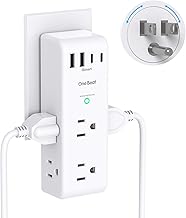
The One Beat Store 10-in-1 power extender combines six AC outlets, four USB ports (including USB-C), and a built-in 1800 Joules surge protector. Its rotating AC plug and wide-spaced outlets help accommodate large adapters without blocking others. Best for desks, dorm desks, and small office setups where USB charging and surge protection are priorities.
- Best for: Small offices and student rooms needing USB charging plus surge protection.
- Why chosen: High USB output and rotating plug simplify tight arrangements.
- Caution: Ensure manual guidance is followed; the device requires proper grounding for full protection.
Wall Charger, QINLIANF 5 Outlet Extender

This 5-outlet extender provides three-sided outlets, USB charging ports, and wall-secure mounting using a central screw. It’s best for duplex outlets in living spaces and home offices where space is at a premium. Note: It fits duplex outlets and may not secure on every non-GFCI configuration.
- Best for: Duplex outlets needing secure mounting and USB charging.
- Why chosen: Slim profile and secure wall-mount option reduce pull-out risk.
- Caution: Not compatible with all non-GFCI wall outlets; verify receptacle spacing.
LENCENT 2 Prong GFCI Power Strip

This two-prong to three-prong GFCI adapter provides an integrated circuit breaker and a 1050J surge protector. It’s suitable for older homes with non-grounded outlets requiring an added layer of safety for electronics like TVs, printers, and laptops. Better for: environments with aged wiring where GFCI protection is a safety upgrade.
- Best for: Non-grounded outlets needing GFCI protection.
- Why chosen: Combines GFCI testing, surge protection, and multiple outlets in one unit.
- Caution: The GFCI function depends on outlet compatibility and wiring; review installation needs.
Power Strip 1800J Surge Protector, 12 AC Outdoors

This rugged outdoor power strip offers 12 AC outlets plus USB-A and USB-C ports. It features IPX6 water resistance and 1800 Joules surge protection, with a 5-foot heavy-duty extension cord. Best for patios, workshops, and dorms with outdoor or semi-exposed spaces requiring weather resistance and multiple charging options.
- Best for: Outdoor spaces and garages needing weatherproof protection.
- Why chosen: High surge capacity and extensive port variety suit multi-device use.
- Caution: Outdoor use still requires safe placement away from direct water exposure.
Tower 5-Outlet GFCI Adapter

This indoor-rated GFCI adapter provides five outlets with built-in ground fault protection for interior use. It’s a straightforward option for adding safety to general-purpose outlets inside homes or offices, especially where multiple devices share a single circuit. Selected for its simple, all-in-one safety approach.
- Best for: Indoor safety in living or workspaces with multiple devices.
- Why chosen: Simple installation and robust indoor GFCI protection.
- Caution: Not designed for outdoor use or non-standard outlets.
Buying Guide
Key considerations when choosing a GFCI outlet with surge protection include outlet count, USB charging capability, and compatibility with your wall outlets. Evaluate mounting options (wall-mounted vs. free-standing), surge rating (Joules), and whether the unit supports outdoor use or indoor-only environments. For older homes with non-grounded outlets, a GFCI adapter or outlet with built-in GFCI may offer extra safety. Consider the footprint and whether rotating plugs or wide spacing helps accommodate bulky adapters.
Important questions to guide your decision:
- Do you need USB-C fast charging along with traditional outlets?
- Is the outlet intended for indoor use, outdoor use, or both?
- Does your wall outlet type require a GFCI adapter or a GFCI-protected outlet?
- How many devices will you charge or power at once?
- Is mounting stability important for preventing accidental unplugging?
- What is the total surge protection requirement for your devices?
FAQ
- What is the difference between a GFCI outlet and a surge protector?
- Can I use a GFCI adapter on any outlet?
- Are USB ports on power strips safe for phones and tablets?
- Should I use outdoor-rated power strips indoors?
- How many joules are enough for home use?
GFCI outlets protect against ground faults to prevent electric shock. Surge protectors absorb temporary voltage spikes to shield connected devices from damage.
Most GFCI adapters work on standard outlets, but compatibility varies with older or specific wiring setups. Always follow manufacturer instructions.
Yes, USB ports on certified power strips deliver safe charging when the device is within rated output per port and total rating.
Outdoor-rated strips are designed for moisture resistance; indoor strips may lack necessary sealing and protection.
For common electronics, 1000–1800 Joules covers most surge events; higher ratings provide more protection for sensitive devices.