
Best Voltage Tester: Top Picks for Safe Electrical Checks
Choosing a reliable voltage tester is essential for any electrical job, from quick home repairs to professional diagnostics. The following hand-picked models offer non-contact detection, clear indicators, and varying voltage ranges to fit different tasks. Read on to compare top options and help you pick the right tester for safety and accuracy.
| Product | Brand | Key Feature |
|---|---|---|
| Klein Tools NCVT1P Voltage Tester | KLEIN TOOLS Store | Non-contact 50–1000V, audible and LED alerts |
| KAIWEETS Voltage Tester | KAIWEETS Store | NCV probe, dual range 12–1000V, voltage percentage display |
| Fluke 2AC Alert Voltage Tester | Fluke Store | Voltbeat self-test, continuous operation check, 90–1000V |
| Digital Multimeter Tester 620C | ANENG Store | 6000-count, auto range, NCV and multiple measurements |
| Fluke 1AC II VoltAlert | Fluke Store | Non-contact 90–1000V, audible beeper, CAT IV rated |
Note: The list emphasizes non-contact detection and clear signaling, with a mix of dedicated voltage testers and multifunction meters to suit different use cases—from quick household checks to professional electrical work.
Klein Tools NCVT1P Voltage Tester Review

The Klein Tools NCVT1P offers non-contact voltage detection across a wide range. It detects AC voltage in cables, cords, circuit breakers, lighting, switches, and even non-tamper-resistant outlets. A bright LED lights green to indicate operation and flashes red with a beeping alert when voltage is detected. With a detection range of 50 to 1000V AC, this tester is suitable for most residential and light commercial tasks. The built-in pocket clip enhances portability for tradespeople and DIYers alike.
KAIWEETS Non-Contact Voltage Tester Overview

The KAIWEETS voltage tester features a NCV inductive probe for AC voltage with dual ranges (12–1000V and 70–1000V). It provides visible and audible alerts when voltage is detected, with color-coded indicators (red for live/high voltage and green for low or null). The device also offers an intuitive LCD display showing voltage intensity and a percentage readout, helping users gauge proximity to the source. A sensitivity button lets users adjust for leak-prone circuits or sensitive electronics, making it versatile for both electrical work and home inspections.
Fluke 2AC Alert Voltage Tester

Fluke’s 2AC Alert tester emphasizes continuous self-test and Voltbeat technology, ensuring ongoing operational confidence. It provides non-contact voltage detection from 90 to 1000 V AC and features a visible tip glow to indicate voltage presence. This model is compact enough for pocket carry and widely used by professionals who require reliable performance with simple, immediate feedback during checks in various environments, including electrical outlets, fixtures, and switch gear.
ANENG Digital Multimeter 620C: A Multifunction Tool

The ANENG 620C combines a digital multimeter with a broad set of functions, serving as a comprehensive tester for voltage, current, resistance, and more. It measures AC/DC voltage and current, resistance, and checks continuity, while supporting NCV testing and diodes. The Smart Mode automatically identifies measurements and selects optimal ranges, and a large LCD display with a built-in flashlight improves readability in varied lighting. A rechargeable battery and Type-C charging add portability for DIY projects and fieldwork.
Fluke 1AC II VoltAlert: Compact Voltage Tester
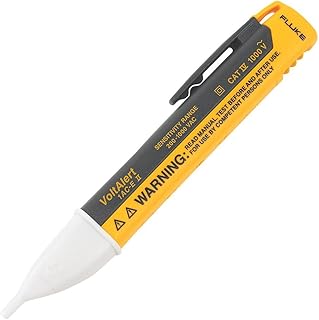
The Fluke 1AC II VoltAlert provides a compact, pocket-sized solution with continuous self-test to confirm operation. Its voltage detection range covers 90–1000V AC (and variants like 200–1000V in some configurations). The tester uses a red glow and audible beeper to signal voltage presence, making it a straightforward choice for quick diagnostics, safety checks, and on-the-spot verification in residential and light industrial settings. The CAT IV rating supports safer use at service entrances and higher-energy environments.
Buying Guide: Voltage Tester Considerations
- Voltage range: Match the tester’s detection range to your typical projects. Home wiring often falls within 90–1000V AC, while specialized tasks may require broader or narrower ranges.
- Detection method: Non-contact testers reduce risk by sensing voltage without direct contact. Some models include dual-range or contact testing modes for versatility.
- Indication style: Look for clear signals such as LED color changes, beeps, or screen readouts. Bright indicators and audible alerts improve visibility in busy or dim environments.
- Build and ergonomics: A compact, pocket-friendly design with a secure clip is beneficial for tradespeople who carry testers all day. Check for sturdy housings and easy operation with gloves on.
- Safety ratings: CAT IV or CAT III ratings indicate suitability for certain electrical environments. Higher ratings provide extra protection against transients and surges.
- Power and durability: Rechargeable batteries and long-lasting indicators reduce downtime. Consider testers with self-test features to ensure ongoing reliability.
- Multifunction options: Some devices combine a digital multimeter with NCV testing, offering more measurements in one tool. Evaluate whether you need broader diagnostic capability or a focused tester.
- Brand and support: Reputable brands often provide reliable customer support, replacement parts, and calibration options if needed for professional use.
When selecting a voltage tester, prioritize reliability, ease of use, and safety features that align with your typical tasks. For professional environments, models with rigorous safety ratings and continuous self-checks may be preferred, while home users might prioritize portability and straightforward signaling.