A bathroom light can look perfect over a mirror and still be the wrong choice for the spot you have in mind. Before comparing finishes or brightness, figure out what moisture can reach that exact position and what the fixture's own label permits.
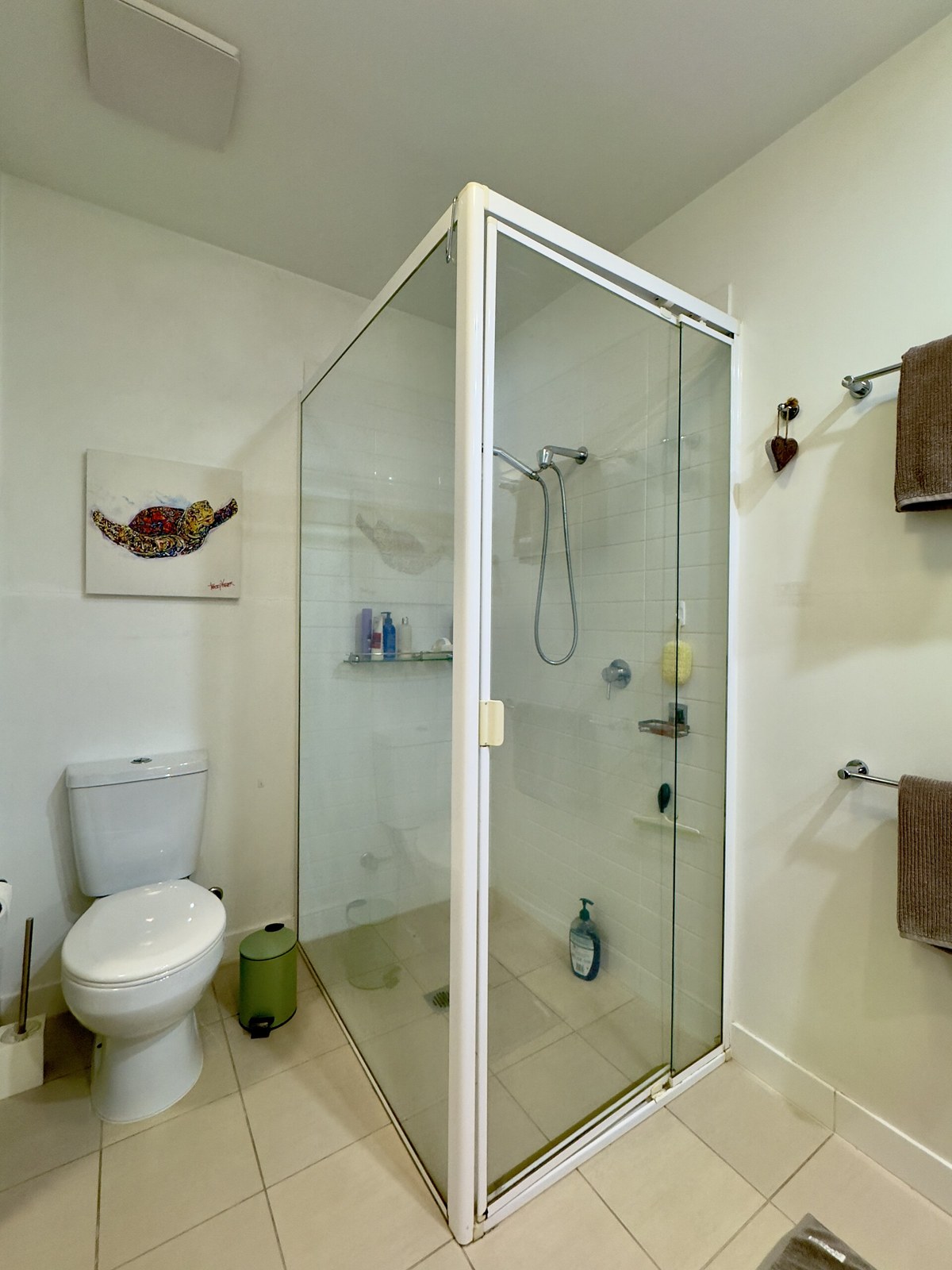
That decision starts with the room you actually use, not the staged bathroom in a product photograph. A handheld shower, a low ceiling, a glass enclosure, and a busy family routine can all change the questions you need to take to the installer.
Damp and wet describe exposure
UL's 2015–16 White Book distinguishes condensation associated with damp locations from water that can drip, splash, or flow against equipment in wet locations. Its luminaire guidance accepts damp- or wet-marked fixtures for damp locations, while wet exposure calls for the wet-location marking.
That older guide is useful for understanding the words on a label, but it is not a current local bathroom-code checklist. Your electrician needs to apply the rules adopted for your property along with the actual fixture's instructions and certification conditions.
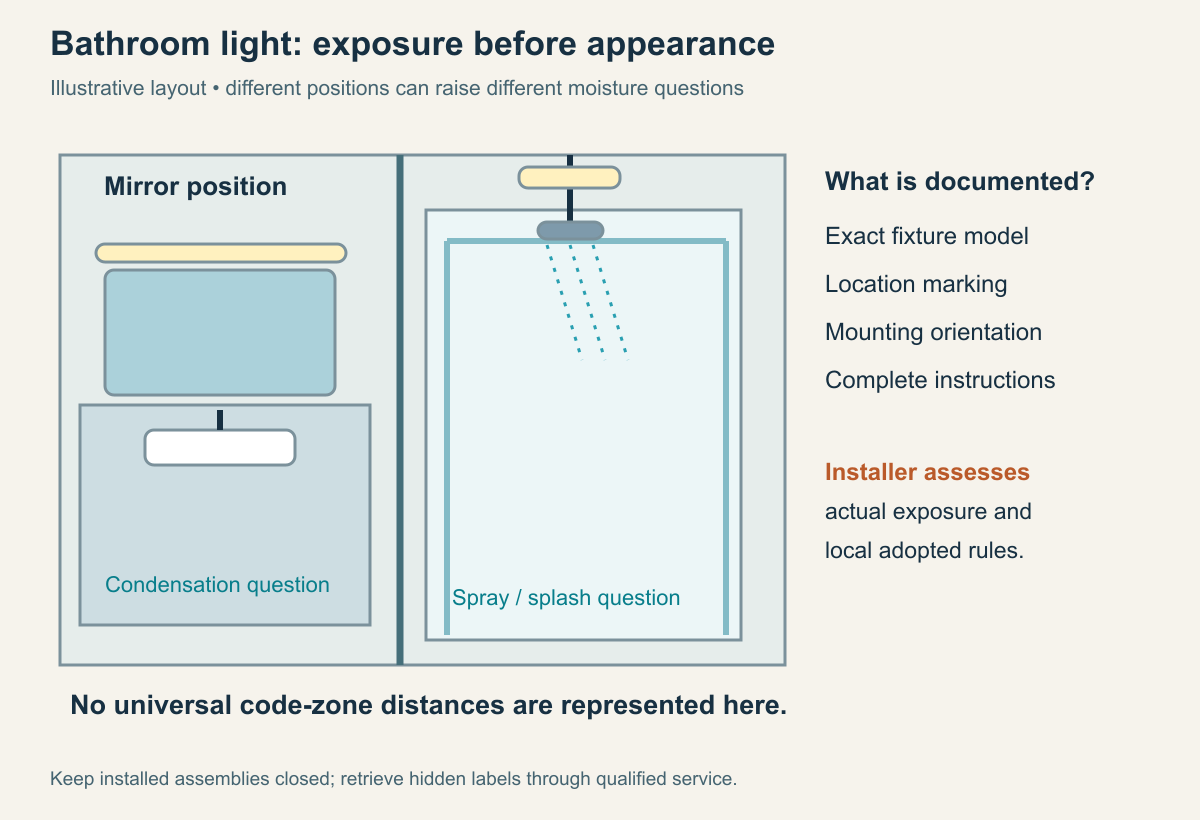
Think of the distinction as a question about contact with water rather than a vote on whether the whole room feels humid. Two lights in the same bathroom can have different exposure questions because they sit in different places and face different directions.
Imagine a mirror light across the room from an enclosed shower. Now imagine a ceiling fixture where someone can direct a handheld spray upward during cleaning; calling both products bathroom lights skips a meaningful difference.
You do not need to perform that spraying experiment to make the point. Describe the everyday use and cleaning routine, then let the installer evaluate the proposed location without exposing electrical equipment to water.
Read the fixture, not just the bulb box
The fixture is the complete lighting assembly, which manufacturers and certification documents may call a luminaire. A moisture-related claim on a replaceable bulb does not automatically establish the allowed location of the socket, enclosure, connections, or finished assembly around it.
Likewise, a decorative cover that looks sealed does not prove the finished unit has the required marking. Appearance is a useful design preference, but the identifying label and instructions are the evidence you need for location suitability.
RAB's Radiance vanity instructions provide a concrete example: the V1 family manual identifies indoor damp-location use and calls for installation by a person familiar with the product and its hazards. That is a specific permission with specific conditions, not permission to put every member of that style above a shower.
When comparing candidates, save the complete model identifier, finish suffix, and instruction document together. A listing for a related size can look almost identical while referring to a different assembly or revision.
If the online page says one thing and the supplied label says another, stop the selection process and ask the manufacturer to reconcile them. A screenshot of a general marketing headline should not overrule the markings on the exact unit that arrived.
You can read a box or accessible exterior label without taking an installed fixture apart. If identifying information is hidden inside existing equipment, have the electrician retrieve it safely rather than loosening a live assembly yourself.
Map what changes around the light
Sketch the room from above and mark the shower enclosure, tub, sink, mirror, and proposed lighting positions. Add the ceiling height and any unusual features, such as a sloped ceiling or a shower door that leaves part of the room exposed.
The sketch helps explain the problem, but it is not an installation drawing or a universal clearance chart. Keep actual measurements for the installer and avoid turning a simplified online diagram into a rule about where a fixture is allowed.
Make a separate note about cleaning access. Someone who regularly washes a wall with a handheld sprayer has a different routine from someone who wipes that wall with a cloth, even if the room dimensions are identical.
Include changes planned for later, too. Moving the shower head, replacing an enclosure, or adding a tub can alter the original assumptions behind a fixture choice; those details belong in the same discussion as the electrical work.
A useful question is whether the proposed unit is suitable for the intended exposure in its intended mounting position. That wording gives the electrician and manufacturer something specific to answer instead of asking whether a light is generally bathroom safe.
Keep lighting quality in the conversation
Once suitability is established, consider what you want the light to help you see. Shaving, applying makeup, finding towels at night, and cleaning the shower are different tasks, so one bright ceiling spot may not solve every problem.
For a mirror, stand where you normally use it and notice the direction of existing shadows. Tell the designer which part of your face or work area is hard to see rather than starting with a guessed wattage or the biggest fixture that fits.
Check how the proposed light relates to the mirror's width and cabinet doors. A fixture can fit on a wall while still blocking a door, creating distracting reflections, or leaving a shelf awkwardly dark.
If you want dimming, identify the intended control along with the exact light. Location suitability and dimmer compatibility are separate checks; getting a satisfactory answer to one does not finish the other.
For a nighttime setting, explain whether you want enough light to move through the room or enough to use the mirror. Those are different goals, and a designer can address them without treating maximum brightness as the only useful setting.
Keep the discussion grounded in your routine rather than promising a particular comfort result from a product photo. A sample view or a professionally arranged demonstration can answer visual questions that a finish name cannot.
Installation conditions stay with the product
A location marking does not erase the rest of the instructions. Orientation, compatible components, mounting arrangements, and required seals may all matter to the finished installation, so the electrician needs the whole document instead of a cropped line from it.
Do not add a homemade shield or a bead of sealant to turn a damp-only fixture into a wet-rated product. Ask for a fixture whose documented use matches the location, with any required accessories installed as its manufacturer specifies.
Replacement work deserves the same attention as a new layout. The fact that an old light occupied a position for years does not establish that the position, wiring, or replacement assembly meets the requirements for the proposed work.
If an existing light shows water entry, unusual discoloration, flickering associated with moisture, or damaged parts, stop using it and arrange qualified assessment. Document what you observed from a safe position without opening covers or testing whether another shower triggers the problem.
Give the electrician an honest timeline, including recent leaks or renovations. A symptom that began after a plumbing change is more useful information than a guess that the fixture simply needs a brighter bulb.
Make the handoff easy to check
Before ordering, put the room sketch, exact model information, location marking, and current instructions in one small project folder. Add the installer's answer about the specific location so the decision can be checked when the unit arrives.
At delivery, compare the box and accessible identifying information with that folder before scheduling installation. A substituted finish, size, or product family is worth resolving while the fixture is still uninstalled and easy to return.
After the work, keep the final model and care instructions with your home records. If the shower or enclosure changes later, you will have a clear starting point for reconsidering the lighting instead of reconstructing the selection from memory.
A good bathroom-lighting choice connects the room's actual moisture exposure with a documented fixture and a qualified installation. The finish and glow still matter, but they become useful choices once the proposed light belongs in that exact spot.
Sources and scope
- UL: 2015–16 White Book—Luminaire Environmental Location Markings
- RAB: Radiance V1 Vanity Instructions, IN-0525
Sources checked October 14, 2026. This guide uses documented information; it does not claim independent product testing or professional inspection.