
Best Electric Water Heaters for Fast, Efficient Hot Water in Your Home
Choosing an electric water heater involves balancing flow needs, space, and energy efficiency. This guide highlights five top options that deliver reliable hot water, from compact point-of-use units to whole-house systems. Each model is evaluated on performance, ease of installation, and energy efficiency to help you pick the best fit for your home.
| Product | Brand | Type | Key Benefit |
|---|---|---|---|
| EcoSmart ECO 11 | EcoSmart | Tankless | Compact, energy efficient, on-demand hot water |
| Rheem 18kW 240V | Rheem | Tankless | Advanced self-modulation for high demand |
| GE Appliances 18 Gallon | GE | Storage Tank | Versatile, easy to install in tight spaces |
| DDAYBF 110V Tankless | DDAYBF | Under-Sink Tankless | Portable, instant hot water at point of use |
| Ranein GEN II | Ranein | Tankless | High efficiency, compact for whole-home use |
EcoSmart ECO 11 Electric Tankless Water Heater

EcoSmart ECO 11 is a compact, wall-mounted tankless electric water heater designed for on-demand hot water. It features patented self-modulating technology, which adjusts power use to match demand, helping save energy. Dimensions are small, making it suitable for apartments or spaces with limited wall area. The unit provides continuous hot water at temperatures within one degree of the set point, ensuring stable performance for daily tasks like showers or dishwashing. Installation typically requires a 240-volt circuit and appropriate clearances as per local codes.
Rheem 18kW 240V Tankless Water Heater
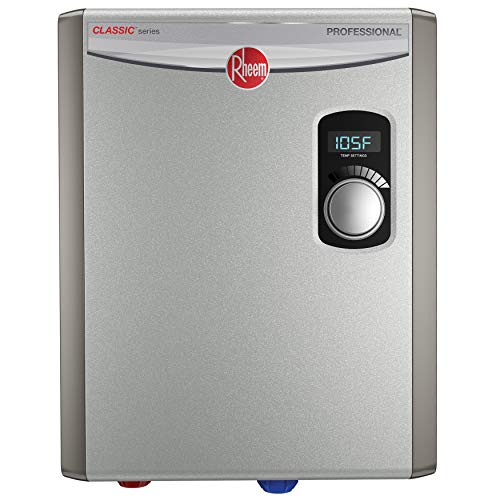
Rheem’s 18kW 240V tankless heater uses advanced self-modulation to tailor heat output to demand, balancing efficiency with performance. It includes durable copper immersion elements and an easy-to-read external digital thermostat with LED display for precise control. The unit can deliver up to approximately 4.4 GPM, making it suitable for simultaneous uses in smaller homes or condos. Prime considerations include ensuring the electrical system can support the required amperage and that proper venting, if applicable, is installed according to code.
GE Appliances 18 Gallon Versatile Electric Water Heater

GE’s 18-gallon electric water heater is designed for flexible installation in tight spaces, making it a strong option for apartments, cabins, or small homes. It is easy to install with standard plumbing connections and offers practical durability for everyday hot water needs. The compact design helps fit into laundry rooms, kitchens, or storage areas where space is at a premium, while providing reliable, on-demand hot water capacity for a single or limited number of fixtures.
DDAYBF Tankless Water Heater Electric 110V

DDAYBF offers a compact 110V under-sink tankless option with a digital display and multiple safety protections, including IPX4 waterproof rating, leakage protection, and auto-shutoff when idle. It delivers hot water quickly (in 3–5 seconds) and reaches temperatures up to 131°F, making it ideal for kitchens, bathrooms, RVs, or camping setups where space and portability matter. This point-of-use heater is designed to minimize energy waste by heating water only when needed.
Ranein GEN II Tankless Electric Water Heater

The GEN II Ranein heater is a robust 18 kW unit designed for whole-house use with on-demand hot water. It features a temperature display and control knob, enabling precise temperature management. With up to 4.3 GPM flow and high thermal efficiency, this model aims to deliver consistent hot water across multiple fixtures. It requires two dedicated 240 V circuits, making it best suited for homes with adequate electrical capacity and space for installation.
Buying Guide
- Hot water demand: Evaluate peak simultaneous usage (showers, sinks, appliances) to determine whether a tankless or storage-type unit best fits your needs.
- Electrical requirements: Tankless models often require dedicated circuits and higher amperage. Confirm electrical service and panel capacity before purchase.
- Space and installation: Tankless systems save space but may require professional installation and venting; storage tanks need more room but are simpler to retrofit in many homes.
- Energy efficiency: Tankless models reduce standby losses; look for Energy Factor (EF) ratings and self-modulating technology to gauge savings potential.
- Maintenance and lifespan: Consider filter access, mineral buildup in hard water areas, and serviceability of connections or elements.
- Water quality: In hard water areas, pretreatment or scale reduction can extend heater life and maintain performance.
- Budget and incentives: Compare upfront costs with long-term energy savings and check for local rebates or utility incentives.
- Warranty coverage: Look for comprehensive warranties on heating elements and overall unit to protect your investment.
- Installation location: For point-of-use units, ensure proximity to hot water outlets to minimize wait time and heat loss.
- Safety features: Auto shutoff, dry-fire protection, and leak detection contribute to safer operation and longer device life.