
Best Wireless Heat Detectors for Attics and Quick Fire Safety
For attic spaces, a reliable wireless heat detector adds an essential layer of early warning. This guide highlights five high-quality options that pair with common home safety setups, emphasizing durability, ease of installation, and networked alerts. Each product has distinct strengths, from fixed-temperature heat detection to interconnected smoke alarms. Use this overview to compare features and choose a model that fits your attic’s layout and your family’s safety needs.
Summary of selected products:
| Product | Brand | Key Benefit | Typical Use |
|---|---|---|---|
| System Sensor 2W-B i3 | System Sensor | Photoelectric smoke detector with 2-wire i3 compatibility | Attic smoke/heat-detection pairing |
| System Sensor 5600 5601P | System Sensor | Fixed temperature heat detector with rate-of-rise | Attic heat sensing |
| X-Sense SD20-W | X-Sense | Wireless interconnected smoke alarms with 10-year battery | Whole-home wireless network |
| XS01-WR Link+ | X-Sense | Battery-powered, wireless interconnection across multiple devices | Wired-free attic and home network |
| System Sensor 5151 | System Sensor | Fixed-rate of rise heat detector | Attic heat monitoring |
System Sensor 2W-B i3 Series 2-Wire Photoelectric Detector

The System Sensor 2W-B i3 is a two-wire photoelectric detector designed for easy wiring and reliable operation. While primarily serving as a smoke detector, its i3-compatible interface supports integration with other System Sensor devices in a single, scalable network. In attics, it can provide early smoke detection alongside heat sensors, helping to flag both smoldering and flaming fires before they spread to living spaces. This model is manufactured in the United States, reinforcing its reputation for durability and regulatory compliance.
System Sensor 5600 Series 135 Degree Fixed Temperature Heat Detector

The System Sensor 5600 line focuses on fixed-temperature heat detection with a plain housing suitable for attics. The 5601P variant provides reliable fixed-temperature triggering and is commonly used in mechanical heat detector applications. In attic environments, steady temperatures and heat rise can be captured effectively, delivering a robust line of defense when ambient temperatures surge or slow-smoldering conditions develop. A simple, durable choice for heat-only detection.
X-Sense SD20-W Wireless Interconnected Smoke Alarm, 10-Year Battery
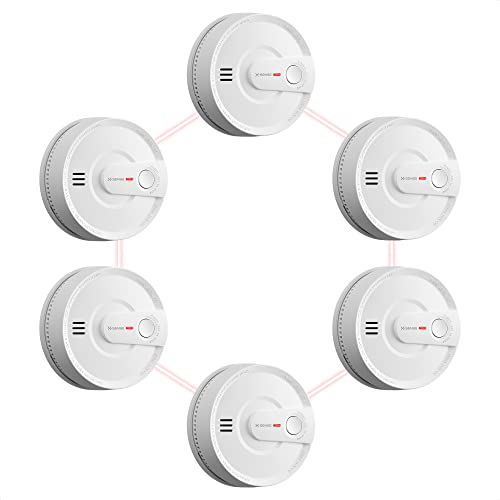
The X-Sense SD20-W combines long-life power with wireless interconnectivity, enabling a network of alarms that covers an entire home. Its 10-year battery life is ideal for attic installations where access may be limited. When one unit triggers, the entire network can sound off, improving the chances of early detection and quick evacuation. This model is well-suited for pairing with other devices in a multi-room safety plan.
X-Sense XS01-WR Link+ Wireless Interconnected Alarm Pack

The XS01-WR Link+ is designed for multi-device wireless interconnection without Wi-Fi. It creates a robust network by extending transmission range up to 24 connected alarms, which is helpful for multi-story or split attic layouts. A notable feature is the intelligent locating function, which helps identify the fire source. While it lacks built-in Wi-Fi, it excels in reliable radio networking for a comprehensive attic safety network.
System Sensor 5151 Fixed Rate Of Rise Heat Detector

The System Sensor 5151 offers a fixed-rate-of-rise heat detection capability in addition to fixed-rate operation. This plug-in heat detector is designed to provide rapid response to sudden temperature increases, making it suitable for attic environments where rapid heat accumulation can occur. The fixed-rate-of-rise concept helps in detecting fast-developing fires, complementing other smoke or heat devices in a wireless or wired network.
YoLink Water Leak Detector
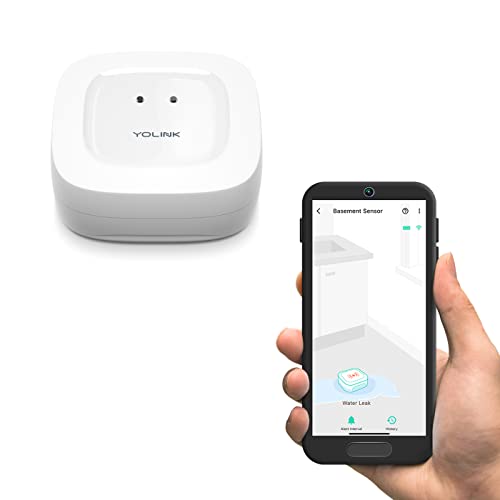
While not a heat detector, water leak sensing near an attic HVAC unit is a critical complementary device. The YoLink Water Leak Detector uses LoRa technology for long-range, low-power monitoring without Wi-Fi dependence. Its broad range makes it a strong add-on to a comprehensive attic protection plan, alerting you to leaks that could cause heat exchanger damage or electrical hazards if left unchecked.
DIGITEN Wireless Temperature Controller Plug-in Thermostat

The DIGITEN remote thermostat provides another layer of attic climate management. While primarily a temperature controller for outlets, it helps regulate attic appliances to prevent overheating and supports energy efficiency. Its wireless remote control and memory during power outages add practical value for attic setups where manual access is limited. Use it to coordinate fans or dehumidifiers with heat sensors for balanced attic safety.
Buying Guide
When selecting a wireless heat detector system for an attic, consider these factors:
- Detection Type: Choose fixed-temperature, rate-of-rise, or photoelectric detectors based on attic heat characteristics and potential fire scenarios.
- Power and Connectivity: Battery life and wireless interconnection options influence how reliably alarms communicate across floors and in hard-to-reach spaces.
- Network Coverage: For large attics or multi-story homes, prefer devices that extend range or link with multiple units to avoid dead zones.
- Regulatory Compliance: Look for US-made units and those with certifications that align with local fire codes and safety standards.
- Maintenance: Long-life batteries and easy maintenance reduce the risk of missed alerts due to aging components.
- Integration: Consider whether you need Wi-Fi, hub-based, or LoRa-based networks, and how other safety devices (smoke, heat, water sensors) will integrate.
- Environment Suitability: Attics may have dust, temperature swings, and humidity—select rugged housings and sensors rated for such conditions.
- Emergency Response: Wireless interconnection helps ensure that if one detector sounds, all connected units alert occupants, improving evacuation times.
In practice, a layered approach often works best: combine fixed-temperature heat detectors for rapid rise events with interlinked smoke alarms for broader coverage. Adding a water-leak detector near HVAC equipment helps prevent secondary damage that can complicate attic fires. Finally, a programmable thermostat or cooling device can help manage attic temperatures to reduce false alarms while preserving safety.