
Best Wind Turbines for Residential Use: Top Home Power Generators
Finding the right wind turbine for a home or small property can help reduce reliance on grid power and introduce clean, renewable energy to everyday life. This guide examines practical, residential-ready options that balance durability, noise, and power output. The selection below highlights five units that are well-suited for hobbyists, small cabins, or off-grid setups, along with a practical buying guide to help you compare performance and installation considerations.
| Product | Brand | Notes |
|---|---|---|
| Thames & Kosmos Wind Power V4.0 STEM | Thames & Kosmos | 3 ft turbine; educational kit |
| LTIGOAW 12V 500W Vertical Axis | LTIGOAW | Vertical axis; compact home use |
| pofluany 1200W Wind Generator Kit | pofluany | Three-phase PMG; higher output |
| LIAPDG 12V/24V Wind Power Turbine | LIAPDG | Compact, durable; versatile controller |
| QX Electronics Micro Wind Turbine Generator | QX Electronics | Small-scale AC output |
Thames & Kosmos Wind Power V4.0 STEM Kit
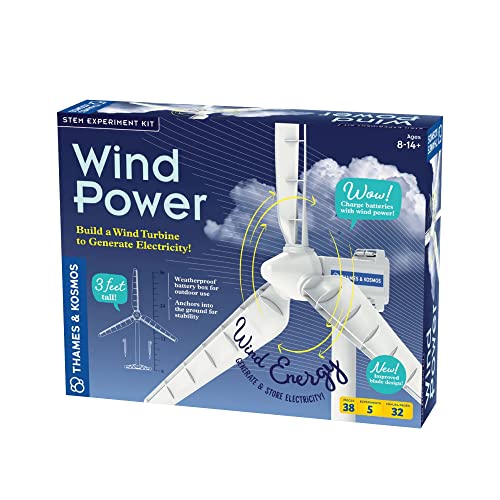
The Thames & Kosmos Wind Power V4.0 STEM Kit provides a 3-foot-tall wind turbine model designed for hands-on learning about wind energy. It demonstrates how wind can be converted into electricity to charge a battery and power a small model car. Built with a single-piece blade design, the turbine emphasizes durability and aerodynamics, aligning with educational goals and practical experimentation. This kit is suitable for demonstrations, classrooms, or hobby projects where observing wind energy principles is desired.
DIY Small Wind Turbine Generator Kit for Backyard Decoration

This kit combines wind-powered light decoration with a small turbine design, featuring auto-illuminating tape lights that respond to wind conditions. While primarily marketed for backyard ambiance, it demonstrates practical wind energy conversion at a compact scale. The system uses a brushless motor for durability and includes mounting hardware for open-air installation. It’s a visually engaging option for demonstrating wind energy concepts rather than high-power electricity generation.
Wind Turbines 9000W No Noise Vertical Magnetic Levitation

This high-capacity vertical-magnetic-levitation turbine emphasizes low-noise operation and strong wind resistance, featuring a coreless permanent magnet generator and triple-blade fiberglass construction. It is designed for higher wind environments and larger-scale residential applications. The model highlights durability and power output while aiming to minimize operational noise, a key consideration for residential locations near living spaces.
POFLUANY Wind Turbine Generator Kit 1200W

The POFLUANY 1200W kit combines a three-phase permanent magnet synchronous motor with an integrated voltage regulator to manage charging and system stability. Its rotating aluminum body, yaw adjustment, and aerodynamic tail contribute to efficient wind capture. The design emphasizes durability and weather resistance, making it a viable option for off-grid cabins or small homes seeking higher wind-energy yields. The generator’s reliability is complemented by a robust turbine assembly and straightforward controller integration.
LTIGOAW 12V 500W Vertical Axis Turbine

The LTIGOAW vertical-axis turbine is built for residential use with a 12V/24V system and a maximum approximately 500W output. Its dual-bearing design and compact form help reduce vibration and simplify installation in limited spaces. The turbine is engineered for weather resistance and quiet operation, with a focus on stability in varied wind conditions. It is suitable for off-grid setups, RVs, or small homes seeking a steady, low-noise power source.
Generic 10,000W No Noise Vertical Wind Turbine
This wind turbine emphasizes very high power capability with a focus on low-noise design and strong wind resistance. It features a three-blade system made from fiberglass and a coreless PMG for robust energy conversion. While best suited for larger property installations, it illustrates the potential of high-capacity residential wind generation when wind conditions are favorable and space allows for rotor size.
QX Electronics 1PC Micro Wind Generator

The QX Electronics micro wind generator offers a compact approach to wind energy with AC output suitable for small applications or experimental setups. It provides a basic introduction to wind-driven electrical generation and can be a practical educational tool or a component in a broader micro-grid project. Its simplicity contrasts with higher-capacity models, making it a useful stepping stone for learners or hobbyists exploring wind power fundamentals.
Buying Guide: Key Purchase Considerations For Residential Wind Turbines
- Power needs and site wind resource: Assess typical wind speeds on your site and estimate annual energy production. Higher-wattage units require stronger, steadier winds or clustering multiple generators.
- Rotor design and noise: Horizontal-axis turbines often generate more power per rotor area but can produce more noise. Vertical-axis designs tend to be quieter and easier to site in restricted spaces, though efficiency varies with wind direction.
- Durability and weather resistance: Look for weatherproof housings, corrosion-resistant materials, and blade durability. Redundancy in bearings and gear systems helps long-term reliability.
- Controller and battery integration: A robust controller protects batteries from overcharge and manages voltage. In off-grid setups, ensure compatibility with your storage system and inverters.
- Installation considerations: Installations require suitable mounting, guy wires (if applicable), and safe clearance from buildings and utilities. Some kits are designed for educational use rather than full-time power generation.
- Maintenance and accessibility: Consider ease of maintenance, availability of spare parts, and service support in your region. Regular inspection helps maximize lifespan and performance.
- Cost of ownership: Include initial cost, installation, maintenance, and potential financing or incentives for renewable energy equipment. Higher upfront costs may be offset by long-term energy savings and reliability.
- Regulatory and safety aspects: Check local codes, permitting requirements, and any restrictions on turbine height, rotor clearance, or noise limits in your area.
In evaluating these options, consider a phased approach: start with a smaller, educational or demonstration unit to understand wind behavior on your site, then expand to higher-capacity setups if your wind resource and budget allow. The blend of devices shown here demonstrates a spectrum from educational kits to higher-output turbines, helping readers compare form, function, and feasibility for residential wind power.