
Best Water Pipe Flow Switches for Reliable Fluid Control
If you need automatic flow control for pumps, heaters, or cooling systems, a water pipe flow switch offers dependable detection of water movement and can trigger safety or automation actions. This guide highlights five top options, suitable for residential, commercial, or industrial setups. Best for small to mid-scale systems, these switches help prevent dry-running, overflows, and energy waste by signaling when water is present or absent. The table below summarizes each pick for quick comparisons.
| Product | Pipe Size | Voltage Range | Best For |
|---|---|---|---|
| DIGITEN FS-C02 | 3/4″ BSP | 0-220V AC/DC | Compact systems, safety shutoff |
| HFS-25 DN25 | 1″ / DN25 | 6-380V | Industrial monitoring, durable flow sensing |
| PDT R3/4 HFS-20 | 3/4″ | 250V AC/DC | Water treatment, chiller controls |
| HFS-25 DN25 SPDT | 1″ / DN25 | 6-380V | SPDT switching with robust stainless design |
| Solimeta FQS-25 | 1″ / DN25 | 6-380V | Flexible, reliable paddle switch |
DIGITEN FS-C02 G3/4″ Flow Switch

- Features: Brass body, ROHS-compliant materials, safety device that shuts off current to connected loads when no water flow is detected. Requires a relay when connecting the load.
- Best for: Small to medium home or workshop systems where a compact, corrosion-resistant switch is needed to protect pumps or heaters.
- Limitation: Requires a separate relay for load control; built-in contact rating is not specified in the data.
HFS-25 DN25 Water Flow Switch

- Features: 1″ / DN25 size, SPDT contacts, 6-380V, robust stainless steel construction, suitable for long-term use in industrial settings.
- Best for: Environments needing stainless steel durability and a broad voltage range for various control circuits.
- Limitation: The data notes non-corrosive liquids; ensure compatibility with your fluid to avoid material degradation.
PDT R3/4 HFS-20 Flow Switch
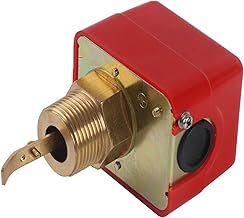
- Features: Adjustable set point, SPDT output, micro switch rated up to 15A/250VAC or DC. Suitable for water treatment, HVAC, and chillers.
- Best for: Facilities needing adjustable, precise flow thresholds and a compact paddle design.
- Limitation: Not specified for highly corrosive liquids; verify compatibility with your fluid.
HFS-25 DN25 SPDT Switch

- Features: Stainless steel paddle switch with universal 6-380V, SPDT circuit switching for reliable interlock and cut-off control.
- Best for: Industrial installations requiring durable construction and flexible voltage compatibility.
- Limitation: The listing emphasizes SPDT function; ensure your control system wiring matches the specified voltage range.
Solimeta FQS-25 Water Flow Switch

- Features: SPDT contacts, adjustable flow control, robust 6-380V rating, suitable for various industrial environments and pipe sizes.
- Best for: Applications needing adaptable flow thresholds and reliable repeat action across temperatures and pressures.
- Limitation: Ensure the liquid is compatible with paddle sensors to avoid abrasion or clogging in aggressive fluids.
Buying Guide: Key Considerations for Water Flow Switches
- Pipe connection size and type: Match to your system’s piping (3/4″ BSP, 1″ DN25, etc.) to avoid adapters that may leak.
- Electrical rating and voltage: Verify the control circuit voltage (6-380V range commonly supported) and your load requirements.
- Flow set point and adjustability: Consider whether you need a fixed or adjustable threshold to trigger the switch.
- Material compatibility: Choose brass or stainless steel bodies based on the liquid type and environment (corrosive fluids, high humidity, temperature extremes).
- Output type: SPDT vs. simple contact closures affect how you wire alarms, pumps, or relays.
- Durability and environment: For industrial use, stainless steel and IP ratings add resilience against dust, moisture, and vibrations.
FAQ
- What is a water flow switch used for? It detects fluid flow and can trigger relays or alarms to protect equipment or automate processes.
- What does SPDT mean in this context? SPDT refers to a single-pole double-throw switch, enabling two separate circuits to be controlled by one flow event.
- Can these switches handle hot water or high-pressure systems? Many listed models support up to 380V and are designed for use in industrial circuits, but verify fluid type, temperature, and pressure ratings for your application.
- Do flow switches require a separate relay? Some models provide direct switching, while others need a relay or contactor for higher current loads.
- How do I choose between 3/4″ and 1″ piping? Select based on your system’s nominal pipe size and desired flow response; larger pipes typically suit higher flow while smaller ones fit compact setups.