
Best Water Level Switches for Pumps: Top 5 Picks for Reliable Water Control
When choosing a water level switch for a pump, the goal is reliable on/off control, easy installation, and compatibility with your setup. The top picks below are best for residential sump pits, basements, aquariums, hydroponics, and outdoor water tanks. Each product is evaluated for practicality, durability, and ease of use. This guide helps buyers select the right switch type—tethered, vertical, or dual-sensor—based on application and maintenance needs. The following five products balance value with dependable performance for common pumping scenarios.
| Product | Best For | Key Benefit |
|---|---|---|
| Ximimark 3 pc Water Level Sensor Horizontal PP Side Mount Float Switch | Home aquariums, tanks, gardening | Versatile side-mount design with multiple floats |
| PumpSpy Vertical Float Switch for Sump Pumps | Sump pits, basements | Long-term reliability with quick install |
| PumpSpy Sump Pump Tethered Universal Float Switch | Sewage and effluent pumps | Universal replacement with piggyback plug |
| Sump Alarm Float Switch for Sump Pump | Groundwater tanks, bilge pumps | Hi-precision Honeywell micro switch |
| BAOMAIN 13ft Cable Float Switch Water Level Controller | Deep tanks, pools | Dual-mode level control with long waterproof cable |
Ximimark 3 pc Water Level Sensor Horizontal PP Side Mount Float Switch for Tank Pool Arduino

The Ximimark float switch is a horizontal, side-mount unit designed for tanks, pools, and hydroponics use. It operates as a simple liquid level sensor that can actuate a pump or indicator. The kit mentions multiple applications, including aquariums, gardening, and filtration control. Best for hobbyists who want a compact, adaptable setup with basic float switching. A limitation is that data emphasizes general use rather than heavy-duty industrial loads, so avoid high-cycle applications without extra protection.
Who it’s best for
- DIY hobbyists installing float-based pump control in small tanks or hydroponics systems.
- Home aquariums that need a straightforward level-trigger for a water feature or pump.
Why selected
- Versatile side-mount design supports multiple applications; easy integration with Arduino projects.
- Compact, affordable option for light to moderate use.
Caution
- Not specified for heavy industrial loads; ensure electrical compatibility with your pump controller.
- Commissioning requires correct wiring to avoid false triggering in dynamic flow conditions.
PumpSpy Vertical Float Switch for Sump Pumps
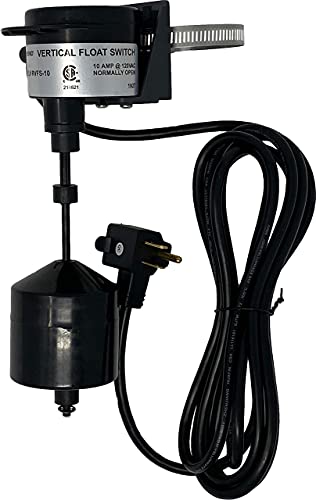
This vertical float switch is designed for sump, sewage, or effluent pumps and includes a 10-foot cord, mounting hardware, and a piggyback plug. It is built for up to 1 million cycles, delivering long-term cycling readiness. It turns the pump on as water rises and off as it falls, enabling automatic, hands-free operation. This is a strong choice for basement or crawlspace drains where space is constrained and a reliable, simple install matters.
Who it’s best for
- Homeowners with standard sump pump pits needing dependable, plug-in replacement.
- Projects requiring a universal vertical float setup with straightforward mounting.
Why selected
- Vertical orientation generally minimizes coil wear and helps with debris-laden water common in basements.
- Complete assembly with cord and mounting gear reduces setup time.
Caution
- Electrical compatibility with your pump controller must be checked; ensure the amp rating matches your system.
PumpSpy Sump Pump Tethered Universal Float Switch Replacement
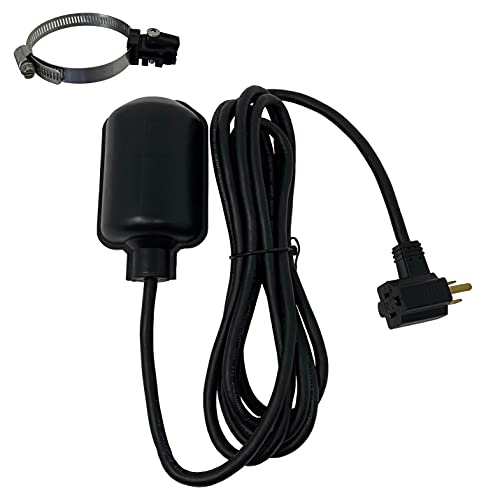
This tethered float switch features a universal replacement design with a 10-foot cord and a piggyback plug for quick wiring compatibility. It’s suitable for sump, sewage, or effluent pumps and is designed to trigger on water level changes. The high-performance build affords dependable operation in daily pump cycles. A practical limitation is that tethered designs may require careful placement to avoid tangling or line fatigue in long-term use.
Who it’s best for
- Families needing a universal, ready-to-install float switch for sump or effluent systems.
Why selected
- Universal replacement capability simplifies maintenance; adds flexibility for various pump configurations.
Caution
- Ensure the float placement avoids obstacles and ensures full range of motion to prevent jittery operation.
Sump Alarm Float Switch for Sump Pump

This float switch uses a Honeywell micro switch to provide precise, repeatable sensing and is housed in a non-corrosive polypropylene casing rated up to 13 amps. It’s designed to control water flow in tanks and bilge applications with IP68 sealing, suitable for wet environments. It’s a good pick for installations where durability and precision are priorities, but the 13-amp rating may limit use in higher-load scenarios requiring stronger pumps.
Who it’s best for
- Systems where a high-precision switch and rugged casing are needed, such as outdoor tanks or bilge pumps.
Why selected
- Industrial-grade construction with salt-water and freshwater compatibility considerations.
Caution
- Verify the load rating matches your pump to avoid overstressing the switch during high-flow events.
BAOMAIN 13ft Cable Float Switch Water Level Controller

The BAOMAIN switch offers dual-mode level control, configurable via wiring for either normally open or normally closed operation. It can monitor water levels with 0.2-meter accuracy in tanks, pools, and sewage systems, handling up to 8A at 250V or 4A at 380V. The 13-foot waterproof cable supports deep installations, and the counterweight helps with calibration. This makes it a good option for larger or deeper tanks where depth matching and reliable top/bottom threshold switching are needed.
Who it’s best for
- Users with deep tanks or pools needing precise, dual-mode level control and long cable reach.
Why selected
- Configurable NO/NC wiring provides versatility for different pump control schemes.
Caution
- Electrical ratings require correct matching to pump loads; avoid exceeding the listed amperage and voltage.
Buying Guide: Water Level Switches For Pumps
What should I consider when choosing a water level switch?
- Application environment: indoors vs outdoors, presence of debris, humidity, and temperature.
- Load rating: ensure the switch can handle the pump’s amperage and voltage.
- Mounting style: vertical, tethered, or side-mount—depends on space and tank shape.
- Cable length and wiring: longer cords provide flexibility but may introduce signal loss or complexity.
- Reliability and cycles: higher cycle ratings indicate longer service life in frequent on/off scenarios.
- Maintenance: consider whether the switch requires calibration, cleaning, or part replacements over time.
- Material compatibility: IP rating and casing material affect corrosion resistance in marine or chemical environments.
How do I decide between vertical vs tethered vs side-mount?
- Vertical switches are common for sump pits with vertical movement and long life in clear water.
- Tethered switches allow flexible placement for irregular water levels or custom float weights.
- Side-mount or horizontal switches fit shallow tanks or tight spaces where side access is easier.
What voids should I watch for?
- False triggering from splashing or debris; choose a device with appropriate sealing and repeatable actuation.
- Compatibility with your pump control method (relay, contactor, or smart controller).
FAQ
- Q: Are all these switches compatible with 120V outlets? A: Most listed switches are rated for typical 120V systems; check each product’s amperage rating before wiring.
- Q: Can I use a float switch for outdoor use? A: Yes, if the switch has appropriate IP sealing and weather resistance; verify the IP rating and material suitability.
- Q: Do I need a separate float switch for every pump? A: Not necessarily; universal replacements or modular designs can cover multiple setups if wiring permits.
- Q: What maintenance is required? A: Periodic inspection and cleaning of the float and wiring; some models are maintenance-free but verify with the product data.
- Q: How do I prevent pump cycling too quickly? A: Use appropriately sized float thresholds and, if needed, a delay or relay to smooth cycling.
- Q: Is a dual-sensor switch better than a single-sensor model? A: Dual-sensor (Hi-Lo) can optimize cycling and alert on high water, which is beneficial for flood prevention.