
Best Warm Up Underfloor Heating Thermostats for Flexible Comfort
Answer: If you want reliable control for radiant floor heating, choose a thermostat with dual sensors (air and floor), auto-adaptive voltage (120/240V), and built‑in safety features like a GFCI. This guide highlights five models that balance safety, ease of use, and compatibility with common underfloor systems. Best for remodeling or new installations, residential spaces needing precise floor temperature control, or users prioritizing energy efficiency. The following picks accommodate various wiring setups, sensor configurations, and scheduling needs to help you find the right fit for your space.
| Product | Best For | Key Feature |
|---|---|---|
| BOWSEN Programmable Thermostat | Homes with 120V/240V radiant mats | Built‑in GFCI and dual sensors |
| SunTouch CommandPLUS Floor Heating Thermostat | Easy replacement for older SunTouch | WiFi, floor sensor included |
| starEEl 7‑Day Programmable Thermostat | Energy-saving routines | Dual sensors, auto 120/240V |
| 6iE Smart WiFi Thermostat | Hands-off, app-controlled comfort | SmartGeo, touchscreen |
| LuxHeat UDG4 Kit with Thermostat | Tile/hearth room installs | GFCI, dual sensing, 7‑day program |
BOWSEN Programmable Thermostat For Radiant Underfloor Heating
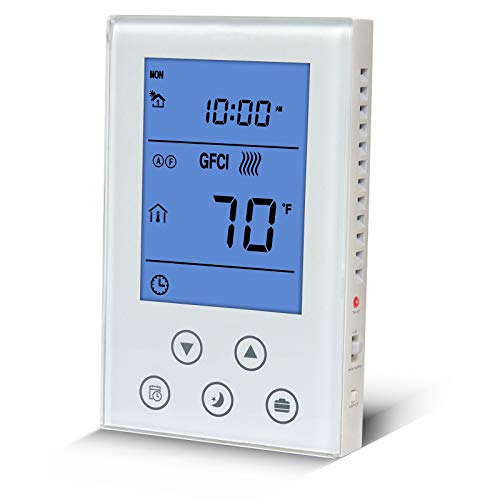
This thermostat supports 120VAC or 240VAC, with a maximum current of 15A and up to 3600W at 240V. It includes both floor and air sensors and features a built-in GFCI for occupant protection. It provides a self-adaption control suited for radiant floor mats and floor heating cables. Best for homeowners who want a robust safety feature set and dual-sensor feedback to maintain comfortable floors without overheating.
Who it’s best for: households prioritizing safety and dual-sensor accuracy in a single device. Why chosen: it combines GFCI protection with floor-aware sensing, which helps prevent damage to flooring and reduces shock risk. Caution: if the GFCI trips, troubleshoot power leakage up to 5mA and verify wiring before reactivating the thermostat.
SunTouch CommandPLUS Floor Heating Thermostat
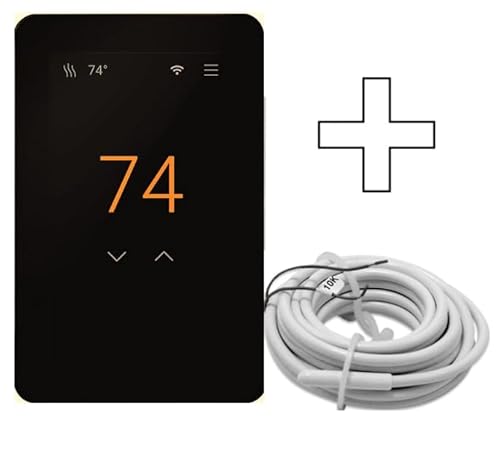
Direct replacement for many SunTouch and Warmup thermostats, with compatibility for NuHeat, Warmup, and others. Includes floor sensor wire (15 ft) and comprehensive scheduling via an intuitive app interface. This model is ideal for users upgrading an existing SunTouch system or integrating with multiple underfloor heating components.
Who it’s best for: homeowners updating an older SunTouch setup. Why chosen: broad compatibility and an included floor sensor streamline installation. Caution: ensure your existing system wiring matches 120V/240V requirements and check sensor length for your room layout.
starEEl 7‑Day Programmable Thermostat

This device supports 120V/240V auto-adaptive voltage and dual sensing (air and floor). It offers a 7-day programmable schedule and LED backlit display for easy nighttime use. It’s designed to work with most home heating mats and cables, and provides a balance of ease of installation and energy-saving features.
Who it’s best for: households seeking reliable, week‑long programming with precise floor control. Why chosen: dual sensors ensure the floor and room stay in harmony. Caution: not explicitly labeled as OEM-authorized for certain third-party thermostats; verify compatibility with your exact mat system before pairing.
6iE Smart WiFi Thermostat for Underfloor Heating

Premium option with a smartphone touchscreen and SmartGeo technology. The app-based control supports automatic temperature adjustments based on location and occupancy, aiming to reduce energy usage by up to 25%. Ideal for users who want a hands-free, connected solution that learns your patterns.
Who it’s best for: tech-savvy homeowners seeking mobile control and energy savings. Why chosen: SmartGeo and touchscreen interface provide modern convenience. Caution: data connectivity depends on WiFi reliability; consider backup control options in case of network outages.
LuxHeat 40sqft Electric Radiant Floor Kit

Includes a 40 sq ft heating cable kit with UDG4 programmable thermostat featuring built‑in GFCI, dual sensing, and a 7‑day program. The kit also provides an uncoupling membrane, sensor, and an alarm for enhanced tile installations. Best for tiled floors wanting a complete, tile-ready solution.
Who it’s best for: tile installations requiring integrated protection and a ready-to-go control solution. Why chosen: all‑in‑one kit with GFCI and dual sensors simplifies setup. Caution: ensure proper embedding under thinset or self‑leveler per the installation guide to avoid damage to the uncoupling membrane.
Buying Guide: Key Considerations For Underfloor Heating Thermostats
- Voltage compatibility: Most systems support 120V and 240V. Choose auto-adaptive models if your home uses both voltages or you plan to change circuits.
- Sensor configuration: Dual sensors (air and floor) offer better floor protection and more accurate comfort. Floor sensors help prevent overheating of tiles or wood.
- Safety features: Built-in GFCI is essential for water-prone spaces. Check for clear instructions on testing the GFCI function after install.
- Smart controls: Apps or WiFi connectivity add scheduling and remote adjustments. Ensure compatibility with your phone and home network.
- Installation and compatibility: Some thermostats are direct replacements for existing models; others require wiring changes. Review wiring diagrams and sensor lengths before buying.
- Floor type and coverage: Confirm the kit includes appropriate floor sensors and that the heater area matches the room footprint. For tile and stone, a robust uncoupling membrane helps prevent cracking.
- Programming and energy savings: Look for 7-day or more advanced schedules. Auto-off and preheat features help reduce energy waste.
Frequently Asked Questions
- What is a dual-sensor thermostat? A device with both air and floor sensors to monitor room temperature and the floor surface, improving comfort and protecting floors.
- Is a GFCI required for underfloor heating? In many regions, GFCI protection is strongly recommended or required, especially in bathrooms and kitchens, to reduce shock risk.
- Can I replace an old thermostat easily? Some models are direct replacements; others may need wiring changes. Verify compatibility with your current system.
- Do these thermostats save energy? Many include scheduling and adaptive features that reduce unnecessary heating, potentially lowering energy usage over time.
- What should I consider for tile floors? Sensor placement and an uncoupling membrane help protect tiles from heat-related cracks and provide a smooth installation.
- Do I need a professional to install? If you’re comfortable with basic electrical work and follow the manufacturer’s wiring instructions, some models are DIY-friendly; others may require a licensed electrician.