
Best Thermostats for Stoves and Ovens: Reliable Temperature Control for Home Kitchens
The right oven or stove thermostat helps maintain consistent cooking temperatures, improve bake results, and reduce energy use. This guide highlights top thermostats and temperature sensors designed for gas and electric ranges, focusing on accuracy, compatibility, and durability. Each product section provides a quick snapshot, key features, and practical considerations to help you choose with confidence.
| Product | Brand | Key Use |
|---|---|---|
| Robertshaw KKTB-18-48 Stove Oven Range Thermostat | Awoco | Bake and broil control, 5A 120 VAC |
| GE WB20K10026 Temperature Control Thermostat | GE | OEM oven temperature control |
| DG32-00002B Oven Temperature Sensor Thermistor | Funmit | Samsung/LG oven sensor compatibility |
| Red Hound Auto 1 Oven Range Thermostat Knob | Red Hound Auto | Knob replacement for GE/Hotpoint/RCA |
| KKTB-7-48 Wolf Stove Oven Range Thermostat | Awoco | High temp control, 5A 120 VAC |
Robertshaw KKTB-18-48 Stove Oven Range Thermostat

The KKTB-18-48 is a dedicated oven thermostat designed for bake and broil operations on compatible Awoco and gas range stoves. It features a 5A, 120 VAC current rating and a 48-inch capillary with a 3/16″ x 11″ copper bulb, nickel-plated. This device focuses on maintaining consistent oven temperatures to support even cooking and repeatable results. Its design emphasizes compatibility with ovens that require a robust bake/broil control and a reliable temperature-sensing element.
GE WB20K10026 Genuine OEM Temperature Control Thermostat

GE’s WB20K10026 is a Genuine OEM thermostat designed for GE stove/oven units. It is specified as an oven temperature control component (not for top burners) and is compatible with multiple GE models. The OEM designation suggests it matches original performance and calibration standards, supporting reliable temperature regulation within the oven cavity. This part can help restore accurate bake and broil temperatures when the original control has drifted or failed.
DG32-00002B Oven Temperature Sensor Thermistor
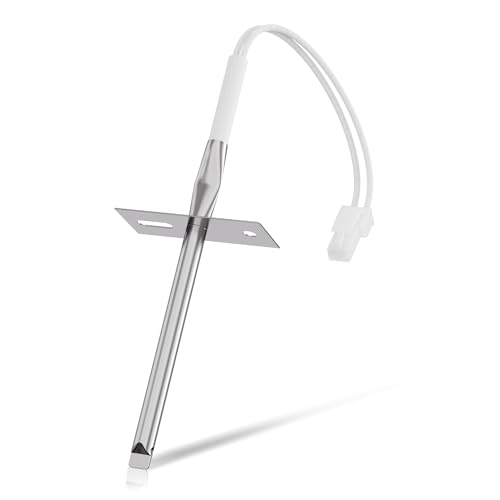
The Funmit DG32-00002B is a dedicated oven temperature sensor thermistor intended to replace several Samsung/LG range sensors, including EBG61305805 and DG32-00002A. It lists broad compatibility with multiple model families and provides an adjustable, responsive temperature sensing mechanism to help ovens reach and maintain set temperatures. This sensor supports stable readouts and can reduce temperature fluctuations during baking and roasting.
Red Hound Auto 1 Oven Range Thermostat Knob

This product is a white replacement oven thermostat knob designed for GE/Hotpoint/RCA ranges. While it is a knob rather than a thermostat component itself, it is essential for maintaining precise temperature settings when the original knob is worn or broken. It covers a typical warm-to-broil range and offers straightforward, tool-free installation, helping cooks regain control over oven temperatures with ease.
KKTB-7-48 Wolf Stove Oven Range Thermostat

The KKTB-7-48 is another Awoco-designed thermostat for stove ovens, compatible with bake and broil modes and rated at 5A, 120 VAC. With a maximum temperature of 599°F and a 48″ capillary, this model mirrors the core design philosophy of its sibling, the KKTB-18-48, emphasizing stable oven temperature control across a range of gas-stove configurations. The 3/16″ x 11″ copper bulb and nickel plating support reliable operation in typical kitchen environments.
RKJFHIUR PB010036 KKB-9-48 Thermostat for Viking Awoco Ranges

The RKJFHIUR replacement PB010036/KKB-9-48 thermostat is positioned for Viking and Awoco range stoves. It supports 120-250 VAC operation with a high maximum temperature of 606°F. The part emphasizes a robust build, including guidance against excessive bending of the capillary and ensuring the liquid/ oil inside remains intact. This is suitable for users seeking precise bake and broil control in high-temperature cooking scenarios.
Buying Guide: Key Purchase Considerations
- Compatibility: Verify oven model compatibility with the thermostat or sensor. OEM parts typically align with the original calibration, while aftermarket parts may fit a broader range but require model verification.
- Current and Voltage: Most oven thermostats for home stoves operate at 5A and 120 VAC. Confirm the electrical requirements for safe, reliable operation in your appliance.
- Temperature Range: Consider the maximum temperature rating (commonly around 599°F to 606°F) to ensure it covers your cooking needs, especially for broiling or high-heat baking.
- Capillary Length and Bulb Size: Longer capillaries (e.g., 48″) preserve placement flexibility, while the copper bulb and nickel plating influence durability and response time. Do not bend capillaries excessively; damage can affect accuracy.
- Sensor vs. Thermostat: Some parts are sensors (thermistors) that feed the control board, while others are complete thermostats. Determine whether you need a replacement sensor, a full thermostat, or a knob for manual adjustment.
- Installation and Calibration: Some parts require professional installation or recalibration to restore precise oven temperatures. OEM parts may simplify re-calibration due to matched specifications.
- Material Quality and Durability: Nickel-plated bulbs, copper probes, and robust housings support longevity in hot, humid kitchen environments. Look for parts described as durable or high-quality.
- Brand Support and Compatibility Notes: If possible, rely on manufacturer guidance or seller support when models fall near model-year transitions or vary by region.
- Price vs. Value: While prices are not listed here, compare the cost of OEM versus aftermarket parts against expected service life and reliability for your oven.
When replacing an oven thermostat or sensor, use the product’s listed features as a baseline for expected performance. Cross-check your oven model number and the exact part number to minimize the risk of incorrect fit. For critical bake and broil accuracy, a properly matched thermostat or an OEM part often yields the best long-term results.