As an Amazon Associate I earn from qualifying purchases. These links may earn this site a commission when you buy, at no extra cost to you.
Choosing the right TCT (tungsten carbide tipped) circular saw blade can dramatically improve cut quality, progress speed, and tool life. This guide highlights five top-performing blades suited for wood, plastics, and soft-to-hard materials. Each option balances durability, kerf width, and RPM compatibility to help you pick the best blade for your saw and project.
| Product | Brand | Diameter | Teeth | Arbor | Notes |
|---|---|---|---|---|---|
| Revvstark 5-1/2″ 24T & 48T | Revvstark | 5.5″ | 24T / 48T | 10 mm | Carbide-tipped for wood, plastic, composites |
| OA-BRES 4-1/2″ 40T | OA-BRES | 4.5″ | 40T | 7/8″ (22.23 mm), reducer rings | Polished chrome surface |
| Luckyway 5-1/2″ 24T | Luckyway | 5.5″ | 24T | 10 mm | 2-pack; includes reducers |
| NOVORIK 6-1/2″ 60T | novorik | 6.5″ | 60T | 5/8″ (15.88 mm) | Anti-stick coating |
| MAZING 7-1/4″ 24/40/60T | MAZING | 7.25″ | 24T / 40T / 60T | 5/8″ | ATB design set |
These selections cover a range of common cuts, from fast ripping to smooth finishing. They’re suitable for table saws, miter saws, and portable circular saws, depending on arbor compatibility and RPM limits. Below you’ll find detailed product sections with key features and practical guidance to compare each blade’s strengths for typical American workshop tasks.
Revvstark 5-1/2″ 24T & 48T Blade Set

The Revvstark blades use premium alloy steel with carbide teeth designed for both framing and finish work. The 24T and 48T configurations deliver versatility: 24T for fast ripping through wood and composites, 48T for smoother finishes on trim or plywood edges. The 10 mm arbor supports common small-diameter tools, and a max RPM of 8000 ensures robust performance in typical home-shop saws. The laser-cut kerf reduces waste while keeping cuts clean and precise. These blades are positioned for multi-material projects, where quick transitions between rough and refined surfaces are common.
Key considerations: durable carbide tips resist heat buildup, and thin kerf minimizes drag on the motor. The dual-tooth options let you tailor the cut for material type and finish level. For safe operation, verify compatibility with your saw’s RPM rating and arbor size before mounting.
OA-BRES 4-1/2-Inch 40T TCT Blade
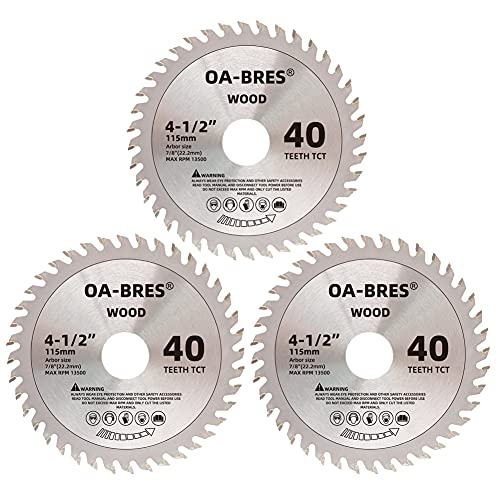
The OA-BRES 4-1/2″ blade is built for durability with a chrome-polished surface and tungsten carbide teeth that stay sharp in hardwood and softwood alike. A 40T configuration gives a balanced cut: faster material removal with smoother edges than a low-tooth blade, making it suitable for general purpose work. The 7/8″ arbor with a reducer ring provides flexibility for a variety of small to mid-size saws, commonly used in portable circular saws or compact miter saws. The blade’s design aims to minimize heat buildup and kerf resistance, helping maintain accuracy during extended cuts.
Practical notes: check if your tool accepts a 7/8″ arbor or requires a reducer sleeve. The blade’s thinner kerf reduces load on the motor, but for very dense materials, consider a 60T blade for finer finishes, or a dedicated ripping blade for aggressive material removal.
Luckyway 5-1/2″ 24T Double Pack

Luckyway’s 5-1/2″ blades feature a 24T design with a 10 mm arbor, packaged as a convenient two-pack for consistent spare-use or multi-saw setups. The blades are described as durable with C3 tungsten carbide tips and a kerf around 1.8 mm, helping to minimize waste while maintaining steady cutting speed. These blades are well-suited to ripping along the grain, especially in softer woods, plywood, or boards with modest nail content, provided you’re within the tool’s RPM specifications (up to 10,000 RPM).
Purchase considerations: the two-pack reduces downtime between blades, but ensure the reducer rings fit your tool if you switch between arbors. For tasks requiring a finer finish, pairing with a higher-tooth blade or a dedicated finishing blade may be beneficial.
NOVORIK 6-1/2″ 60T ATB Blade

The NOVORIK blade uses high-hardness manganese-containing high-carbon steel with a 92 HRA rating, delivering clean cuts through wood—even through nails. The 60T arrangement and anti-stick coating reduce heat buildup and minimize friction, contributing to quieter and smoother operation at up to 9300 RPM. The ATB configuration helps deliver precise, splinter-free edges in finish-grade cuts, making this blade suitable for trim work and cabinetmaking where a refined surface is important.
Considerations: anti-stick coating is beneficial in dense, resinous woods or damp conditions. With higher tooth counts, you’ll see slower material removal compared with lower-tooth blades, so select this blade when a fine finish is the priority over rapid stock removal.
MAZING 7-1/4″ 24/40/60T Trio

This MAZING set includes 24T, 40T, and 60T blades for 7-1/4″ saws, pairing ATB design with a 5/8″ arbor. The three blades offer a broad range of cut choices: 24T for fast ripping, 40T for balanced finishing, and 60T for refined crosscuts and trim work. The 1.8 mm kerf minimizes waste and reduces motor load, while the 8400 RPM maximum supports a variety of miter and table saw applications. The tungsten carbide teeth provide durability and resistance to heat during extended cutting sessions, even with tougher woods or boards with nails.
Choosing among the trio depends on your project mix: for a workshop that handles rough framing and then furniture adjustments, rotating blades by use-case (ripping vs. finishing) can improve efficiency and cut quality without swapping blades constantly.
Gunpla 4-1/2″ 40T Alloy Steel Blade
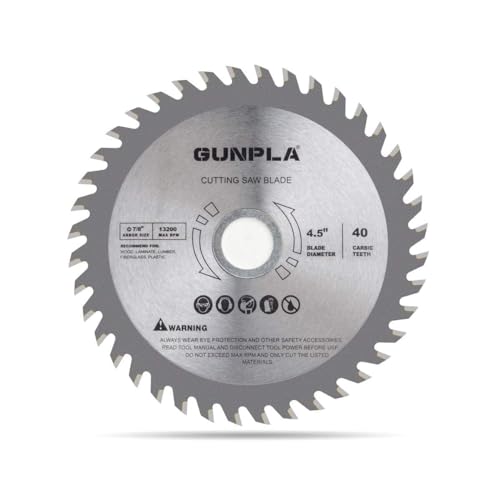
The Gunpla blade emphasizes durability with alloy steel and carbide teeth designed for fast, accurate cutting. The 40T tooth count strikes a balance between material removal and finishing ability, making it versatile for general woodworking across various saws, including circular, miter, and table saws. The blade’s thin kerf reduces resistance, allowing smoother operation, and the design accommodates high-speed cuts with reliable results.
Usage tips: ensure compatibility with your tool’s arbor and RPM rating. For rough work, a lower-tooth blade may be preferred; for fine finish tasks, pair with a high-tooth blade in the same material family to refine edges.
Buying Guide: Key Considerations When Choosing TCT Circular Saw Blades
- Material and tooth count: Higher tooth counts (40–60T) yield smoother finishes but slower stock removal; lower counts (24T) remove material quickly and are ideal for rough ripping. Choose based on your primary tasks (rough framing vs. finishing).
- Blade geometry: ATB (Alternating Top Bevel) teeth deliver cleaner crosscuts and reduced splintering, while TCG or flat-top designs have different benefits for specific materials. Look for ATB if you work with softwoods or plywood.
- Kerf width: A thinner kerf reduces motor load and waste, enhancing cut speed, but ensure your saw can accommodate the kerf. Thinner kerfs are common on modern blades designed for light-to-moderate tasks.
- Arbor compatibility: Common arbors include 5/8″ and 1/2″ with adapters. If you have a smaller saw, confirm the arbor size and if reducer rings are included to fit your tool.
- Coatings and wear resistance: Anti-stick coatings help in resinous woods; carbide tips differ in hardness and bonding quality. A high-quality blade holds its edge longer in typical woodworking environments.
- RPM compatibility: Verify your tool’s maximum RPM aligns with the blade’s rated RPM (e.g., 8000–9300 RPM). Using a blade beyond its rated speed can reduce performance or cause safety concerns.
- Intended use and testing: Some blades excel at straight cuts, others at crosscuts or finish work. For mixed tasks, consider a blade set or a high-quality general-purpose blade with good finishing capacity.
- Durability and warranty: Look for blades with reinforced tooth geometry and durable backing materials. A manufacturer warranty can reflect reliable construction and confidence in performance.
While individual blades offer specific advantages, your best choice depends on the typical materials you cut, the needed finish quality, and the saws you own. In many American workshops, a combination of a fast-ripping blade for framing and a high-tooth blade for finish tasks delivers consistent results with reasonable blade life.