As an Amazon Associate I earn from qualifying purchases. These links may earn this site a commission when you buy, at no extra cost to you.
For woodworkers aiming for perfect cuts, calibration tools are essential. The right gauge, dial indicator, or alignment tool helps ensure your blade, fence, and sled stay true to your setup. Below is a curated guide to five trusted options that fit standard miter slots and deliver high-precision readings. Each product is designed to improve parallelism, reduce run-out, and streamline repeatable setups in a busy shop.
| Product | Brand | Key Benefit |
|---|---|---|
| GOINGMAKE Table Saw Gauge Dial Indicator | goingmake | 0.01 mm accuracy with easy alignment to miter slot and blade |
| Peachtree A-LINE-IT Basic Kit | Peachtree Woodworking Supply | Self-adjusting Smart Bar for snug slot fit and precise readings |
| AltitudeCraft Precision Table Saw Alignment Gauge | AltitudeCraft | 0.001″ dial indicator in rugged CNC aluminum for repeatable alignments |
| DFM Tool Works Saw Height Gauge | DFM Tool Works | 1/4″ steps in 1/8″ increments with self-standing design |
| HDLNKAK Table Saw Dial Indicator Gauge | HDLNKAK | 0-1″ range with 0.001″ resolution; standard miter slot compatibility |
GOINGMAKE Table Saw Gauge Dial Indicator

Designed for precision calibration, this GOINGMAKE gauge offers 0.01 mm accuracy and is easy to align between the table saw blade and miter slot. It helps set rip fences parallel to the slot and includes an extra support base to stabilize the slider. Two adjustment rings in the miter bar minimize slop to zero fit the slot, providing repeatable readings for blade run-out and fence alignment. The setup is straightforward: slide into the miter slot, adjust rings to eliminate play, and press the dial against the blade or fence to check alignment.
Peachtree A-LINE-IT Basic Kit

The A-LINE-IT Basic Kit is a solid starter for hobbyists and small shops. It includes hardware, a hex wrench, and assembly instructions to guide you toward optimal performance and accuracy. Its self-adjusting “Smart Bar” stays snug in slots that vary in width along their length, removing the need for constant shimming. A precision 1″ dial indicator reads in .001″ increments, enabling precise measurements of blade run-out and fence-to-slot parallelism. This kit emphasizes efficient measurement without complexity.
AltitudeCraft Precision Table Saw Alignment Gauge

AltitudeCraft offers a CNC-machined 6061 aluminum body with a hard anodized finish for enduring workshop use. The tool features a 0.001″ dial indicator for exact calibration across blade, fence, and sled alignment. It fits standard 3/4″ miter slots and includes adjustable ball screws to eliminate play, ensuring zero-wobble alignment and repeatable results. This gauge is suitable for cabinetmakers and serious hobbyists seeking long-term stability and precision.
DFM Tool Works Saw Height Gauge
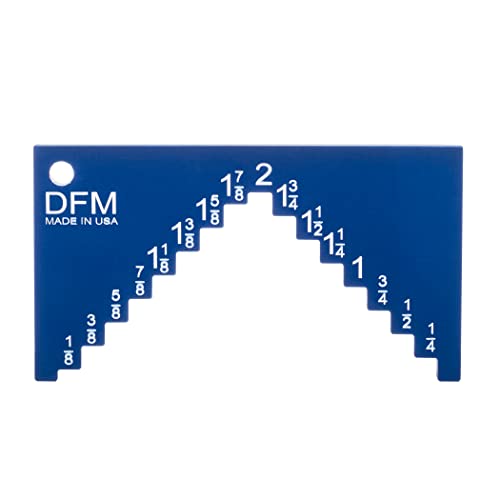
DFM Tool Works presents a saw blade height gauge with exceptional accuracy for table saw calibration. It emphasizes under 1/64″ precision, facilitating exact height settings critical for clean, consistent cuts. The tool’s 1/4″ steps in 1/8″ increments support diverse gauge configurations, and its solid construction is designed to withstand routine router table and saw use. It’s compatible with common alignment tasks for fences and sleds, contributing to repeatable, high-quality woodworking results.
Buying Guide: Key Considerations For Choosing Calibration Tools
- Measurement resolution: Look for readings in thousandths of an inch (0.001″) or tenths of a millimeter (0.01 mm) for the tightest tolerances. This matters when aligning blade parallelism and fence alignment.
- Slot compatibility: Ensure the tool fits standard 3/4″ or 3/8″ miter slots used in most table saws. A snug, wobble-free fit reduces measurement drift during use.
- Build quality: CNC-machined aluminum bodies and hardened finishes offer durability in busy shops. Consistency and repeatability depend on rigid construction and minimal flex.
- Ease of setup: Self-adjusting or smart-bar designs reduce shim requirements and speed up setup, especially for new users or frequent tool changes.
- Versatility: Some gauges work across saws, band saws, routers, and jigs. If you use multiple machines, a universal tool can save space and cost.
- Clarity of indicators: A large, legible dial with clear graduations minimizes misreads during quick checks in a busy workshop.
- Accessibility: Check for clear instructions and included hardware. A well-documented tool can shorten training time for new operators.
When selecting a table saw calibration tool, balance cost against precision, compatibility, and intended use. For hobbyists focusing on occasional blade run-out and fence alignment, a basic dial indicator with a secure miter-slot fit may be sufficient. For professional shops, CNC-machined aluminum gauges with 0.001″ or 0.01 mm resolution and robust adjustment mechanisms provide the most repeatable results over time.