As an Amazon Associate I earn from qualifying purchases. These links may earn this site a commission when you buy, at no extra cost to you.
Choosing the right combination of table and miter saw tables can dramatically improve precision, portability, and workflow on any job site or in a home workshop. This guide highlights five top options that blend stability, versatility, and value. Each product is designed to support various saw types—from portable jobsite tables to robust miter saw stands—so you can tailor your setup to your projects. Read on to compare features, mobility, and compatibility, then use the buying guide to refine your purchase decisions.
Comparison snapshot for quick reference:
| Product | Brand | Key Benefit | Notable Feature |
|---|---|---|---|
| SKIL 15 Amp 10 Inch Portable Jobsite Table Saw with Folding Stand | Skil | Portable jobsite readiness with folding stand | Rack and pinion fence rails for accuracy |
| Metabo HPT 10-Inch Single Bevel Compound Miter Saw | Metabo HPT | Powerful, precise miter cutting on the go | Xact Cut shadow line and 0–45° bevel |
| DEWALT Miter Saw Stand With Wheels (DWX726) | DEWALT | Mobility and fast setup on site | Three-position pneumatic lift for easy height adjust |
| DEWALT 10-Inch Table Saw With Rolling Stand | DEWALT | Rugged rolling stand for larger jobs | Rack & pinion fence, 32-1/2″ rip capacity |
| Evolution R8MTS 8-1/4” Convertible Miter/Table Saw | EVOLUTION | 2-in-1 convertible for tight spaces | 0–45° bevel, +/- 45° miter, multi-material cutting |
SKIL 15 Amp 10 Inch Portable Jobsite Table Saw With Folding Stand
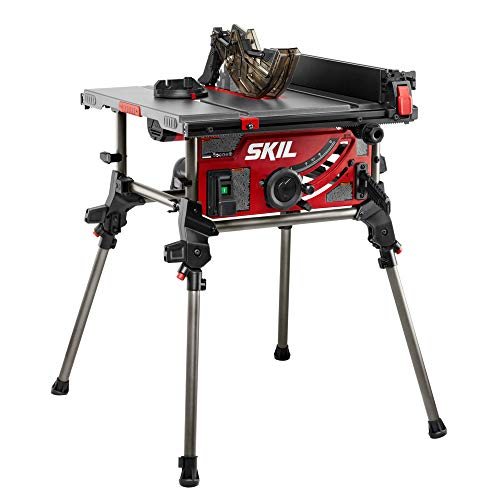
The SKIL TS6307-00 combines portability with practical table saw features designed for on-site use. Its folding stand integrates quickly for storage and transportation, making it ideal for contractors and DIYers who move between sites. The rack and pinion fence rails help keep the fence aligned with the blade, a key factor for repeatable cuts. Micro-adjustments allow the blade to run parallel to the rip fence and miter slot, reducing alignment drift during long sessions. While compact, this saw supports common workshop tasks and provides a stable base when the stand is deployed. The design emphasizes ease of setup, portability, and dependable alignment for everyday project work.
What to consider: If you frequently travel to job sites, the folding stand and lightweight profile are attractive. For larger, hardwood ripping or frequent high-volume cuts, evaluate whether the 10-inch blade and overall cutting capacity meet your material needs. Noise, dust collection compatibility, and available accessories can also influence long-term satisfaction.
Metabo HPT 10-Inch Single Bevel Compound Miter Saw
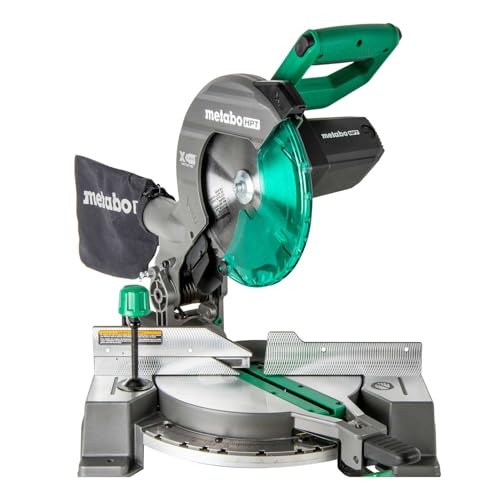
Metabo HPT’s C10FCG2 miter saw centers on power and precision with a 15-amp motor and up to 5,000 RPM, delivering clean, accurate cuts across common woodworking tasks. The large table and improved miter scale enhance material support and adjustment accuracy, while the vice clamping system helps secure workpieces for safety. At about 24 pounds, the saw prioritizes portability without sacrificing performance, making it suitable for on-site tasks and quick workshop setup. The single bevel mechanism supports straightforward bevel cuts from 0 to 45 degrees, offering reliable capability in a compact package.
Key considerations: While the lightweight design aids transport, ensure the blade size and throat capacity meet your most challenging cuts. The user-friendly controls are a plus for quick changes, though some professional users may prefer a dual-bevel option for more complex bevel sequences.
DEWALT Miter Saw Stand With Wheels (DWX726)

The DEWALT DWX726 stand prioritizes mobility and quick setup. Its wide rubber grip wheels enable easy movement across job sites, while the three-position pneumatic assistance simplifies raising and lowering for different users and working heights. The stand’s adjustable mounting rails broaden compatibility with various miter saws, making it a flexible foundation for multiple tools. This option is especially valuable for users who move between projects and need reliable stability with straightforward setup, especially when paired with a compatible miter saw.
Considerations: Check compatibility with your specific miter saw model and weight. Even with wheels, stability on uneven ground matters, so pairing with a sturdy surface or a leveling method can improve performance on rough sites.
DEWALT 10-Inch Table Saw With Rolling Stand

This DEWALT unit pairs a robust 10-inch table saw with a rolling stand designed for demanding projects. The Rack & Pinion Telescoping Fence System supports fast, smooth, and accurate fence adjustments, which are essential for repeatable crosscuts and rip cuts. A patented material support helps stabilize longer workpieces, enabling safe handling of narrow boards and large sheets alike. With a 32-1/2 inch rip capacity, this setup handles midsize lumber and trim materials, expanding its utility for cabinetry, shelving, and shop projects. The combination of mobility and precision makes it a strong all-around choice for versatile woodworking environments.
Practical notes: While this setup suits many tasks, heavier ripping or sheet material work may require a larger, stationary table. Remember to assess your shop footprint and lifting capabilities when choosing a rolling stand configuration.
Evolution R8MTS Convertible Miter/Table Saw

The Evolution R8MTS is designed for compact spaces while delivering dual-mode capability. This 8-1/4” unit combines a miter saw and a table saw into one versatile tool, allowing quick transitions between modes with simple locking pins. Its ability to cut multiple materials—wood, plastic, mild steel, aluminum, and composites—without blade changes offers significant workflow efficiency for DIY projects and light professional work. The 0–45 degree bevel and +/- 45 degree miter range, paired with a solid aluminum table top, support accurate, repeatable cuts. The dual-locking rip fence further improves alignment for precision tasks.
Important considerations: The R8MTS shines in small workshops or portable setups. If you frequently work with large panels or require deeper rip capacities, a larger dedicated table saw might be preferable. The integrated blade compatibility and noise levels are also worth evaluating for longer sessions.
Buying Guide: Key Purchase Considerations
- Worksite needs: Evaluate whether portability or fixed installation best fits your routine. Folding stands and wheels are ideal for contractors who move between jobs; stationary bases suit studio workshops.
- Cutting capacity: Consider blade size, rip capacity, and bevel/miter range. Larger tables and longer rails enable broader material handling, while compact models excel in tight spaces.
- Fence precision and support: A rack-and-pinion or telescoping fence system reduces drift and improves repeatability. Integrated material support helps with long or wide boards.
- Compatibility and versatility: If you own both a table saw and a miter saw, look for stands or tables that accommodate multiple tools or offer quick conversion between modes.
- Weight and portability: Heavier stands provide stability but are harder to move. Lightweight options favor portability, especially for job sites, but may compromise on sturdiness on uneven ground.
- Durability and materials: Steel frames, solid aluminum components, and robust hardware contribute to longer tool life. Pay attention to locking mechanisms and fasteners for reliable performance over time.
- Safety and ease of use: Look for secure workpiece clamping, stable bases, clear scales, and user-friendly adjustment controls. Dust collection compatibility can reduce cleanup time on site.
- Budget and accessories: Compare value across brands—some bundles include stands, extension tables, or clamps. Consider whether you need replacement blades, stops, or sacrificial boards.
These options cover a broad range of use cases—from portable job sites to compact workshops—balancing precision, mobility, and versatility. When choosing, align features with your typical materials, space constraints, and how often you switch between saw types. The right setup improves accuracy, reduces setup time, and supports safer operation across projects.