
Best Sump Pump Backup Systems for Reliable Basement Flood Protection
If you need a dependable sump pump backup system, these five options are designed to protect basements during power outages and severe weather. They’re suitable for homeowners in flood-prone areas, finished basements, and properties seeking uninterrupted water removal. Below is a quick summary to help you compare at a glance.
| Product | Best For | Power Type | Key Benefit |
|---|---|---|---|
| OLTEANP 2500W Sump Pump Backup | Homes needing fast charging and smart protection | Battery Backup | 25A fast charger and auto transfer switch |
| Basement Watchdog Combo CITS-50 | Preassembled, easy install, WiFi monitoring | Battery Backup | Preassembled, 24/7 monitoring |
| DNShorix 1500W LCD Backup | Cost-conscious, reliable operation | Battery Backup | Pure sine wave output and fast charging |
| Star Basement Sentry Combo | All-in-one protection with alarm | Battery Backup | Battery box and charger included |
| PumpSpy Dual Pump Install Kit | Easy dual-pump connection | Accessory kit | Simple two-pump integration |
OLTEANP 2500W Sump Pump Backup System

This 2500W system is designed for basement flood protection during outages. It automatically switches from grid power to a 12V deep cycle battery to maintain continuous water removal. It’s best for homeowners in flood-prone areas who need rapid, reliable transfer during power failures and who plan for hurricane or severe storm scenarios. Battery type is external and compatible with several deep-cycle options, including LiFePO4, AGM, GEL, and flooded batteries.
Best use case: homes with a primary sump pump and a need for quick, automatic battery switching. The built-in 25A multi-stage charger protects against overcharge, low voltage, overloads, shorts, and overheating, supporting long storm seasons. Limitations: battery not included, so upfront battery selection matters for overall performance.
Basement Watchdog Combo Preassembled Primary & Battery Backup
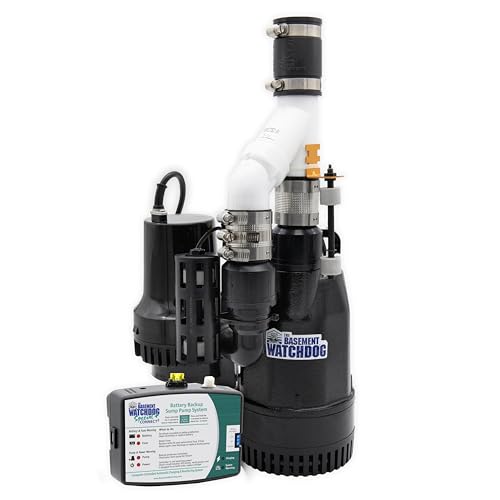
The Basement Watchdog system arrives preassembled and plumbed for a quick setup, featuring a durable copper-wound PSC motor for efficiency and long life. It includes a WiFi-capable battery backup with 24/7 monitoring of pump, power, and battery status, along with an alarm and warning indicators for maintenance. This option is best for homeowners who value remote monitoring and a straightforward install.
Best use case: those who want continuous watchdog-style monitoring and quick setup. Caution: initial WiFi setup requires basic network access; ensure compatibility with your router if you rely on remote alerts.
DNShorix 1500W Sump Pump Backup with LCD

This 1500W backup system provides a clean sine-wave output for smoother operation and higher compatibility with a range of pumps. It features a built-in 20A charger for fast charging, supports deep-cycle lithium and AGM batteries, and maintains a trickle charge when full. It is well suited for homes needing reliable operation with a modest backup power requirement.
Best use case: moderate power needs where clean sine-wave output is valuable. Caution: not all non-deep-cycle batteries are compatible; verify battery type before use.
Star Basement Sentry Battery Backup Sump Pump System Combo
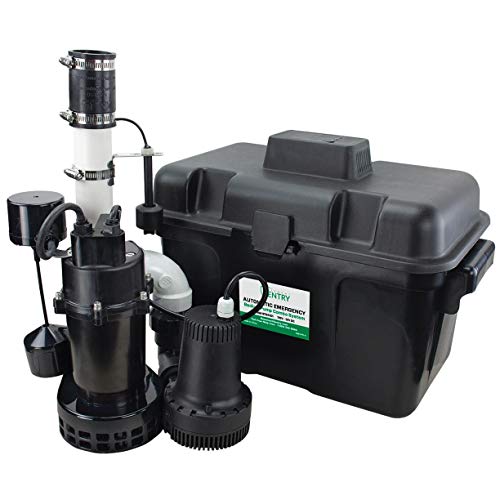
This combo includes a primary sump pump, a backup pump, controller, alarm system, charger, float switch, and a battery box to extend life and speed up charging. It provides robust protection during power outages with audible and visual alerts for immediate action. It’s best for users who want a comprehensive, all-in-one solution with built-in alerting.
Best use case: installations where a complete backup package with alerting is preferred. Limitation: battery box size and charger rate may affect how quickly the system recovers after outage durations.
PumpSpy Dual Pump Install Kit

The PumpSpy kit is designed to connect two sump pumps to a single discharge line, improving redundancy and reliability. It’s a practical upgrade for homes with two pumps or for those planning to run a backup alongside a primary without complex piping. It’s best for DIYers who want a straightforward install with minimal tools.
Best use case: easy, quick integration of dual backup capability. Caution: kit requires compatible discharge sizing and may need additional fittings not included in the box.
Buying Guide: Key Considerations for Choosing a Sub Pump Backup System
- Power source compatibility: Decide between fully electric, battery-backed, or dual-source backup to fit your outage expectations and power availability.
- Transfer method and automation: Look for automatic transfer switches or smart chargers that minimize manual intervention during outages.
- Charger and battery life: Higher amp-hour ratings and multi-stage charging extend run time and battery lifespan, especially in storm-prone seasons.
- Water removal capacity: Check pump wattage, GPH, and compatibility with your existing primary pump to ensure effective basement drainage.
- Monitoring and alerts: WiFi or alert features help you respond quickly to pump status and battery health.
- Installation effort: Preassembled systems save time; modular kits offer flexibility but may require more setup work.
- Battery type and compatibility: Ensure compatibility with LiFePO4, AGM, GEL, or flooded deep-cycle batteries as specified by the unit.
Frequently Asked Questions
- What is a sump pump backup system? A backup system provides power to your sump pump during outages, preventing basement flooding when the main power source fails.
- Do I need a battery back-up or a dual-pump setup? A battery backup is essential for outages, while a dual-pump setup adds redundancy for critical scenarios.
- Which battery type is best for backup pumps? Deep-cycle batteries such as LiFePO4 or AGM are common choices; check the system’s compatibility before purchasing.
- Can I install a backup system myself? Many kits are designed for DIY installation, especially preassembled or plug-and-play options, but some installations may benefit from professional help.
- How do I maintain a sump pump backup system? Regularly test the system, inspect the battery and charger, and keep the discharge line clear of obstructions.
- What maintenance alerts should I expect? Look for alarms, indicator lights, or mobile notifications that show pump status and battery health.