As an Amazon Associate I earn from qualifying purchases. These links may earn this site a commission when you buy, at no extra cost to you.
Choosing the right jigsaw blade can dramatically improve metal-cutting results, from stainless steel to thick sheet metal. This article highlights top blades designed for steel, including bi-metal, high-speed steel, and carbide-edge options. Each blade is evaluated for durability, cutting speed, and clean finishes, helping you select a blade that matches your project needs and tool compatibility.
| Product | Brand | Key Benefit | URL |
|---|---|---|---|
| Bosch TPM005 5 pc. Pro-Metal T-Shank Jig Saw Blade Set | Bosch | Multiple blade types for stainless steel and metal; carbide edge for hard materials | View |
| Diablo Bi-Metal Jig Saw Blades for Thick Metal – 3-5/8″, 12 TPI, 5-Pack | Diablo | Ultra-hardened edge with up to 5X life; smooth cuts in thick metal | View |
| Bosch T118GFS 5-Piece 3-1/4 in. 36 TPI Basic for Stainless Steel T-Shank Jig Saw Blades | BOSCH | Economical stainless steel cuts with clean, smooth edges | View |
| Diablo High Speed Steel Jig Saw Blades for Thick Metal – T-Shank, 3-5/8″ – 17/14 TPI | Diablo | Long-lasting HSS edge; fast, stable cuts in thick metal | View |
| Bosch T118G 5 pc. 3-5/8 in. 36 TPI Basic for Metal T-Shank Jig Saw Blades | Bosch | Sheets metal with thin gauges; smooth straight cuts | View |
Below are detailed evaluations of five blades that are especially effective for steel cutting, focusing on metal-specific performance, durability, and installation compatibility with common jig saws.
Bosch TPM005 5 pc. Pro-Metal T-Shank Set

The Bosch TPM005 Pro-Metal set includes multiple blade types designed specifically for cutting stainless steel and metal. Its carbide-edge blades deliver outstanding performance in hard materials, while the Progresser blade for metal offers a progressive tooth design that enables fast cuts and longer blade life across varying metal thicknesses. The T-shank design ensures secure fitment with most modern jig saws, reducing slippage during operation.
Diablo Bi-Metal Jig Saw Blades for Thick Metal

These thick-metal blades feature a reinforced bi-metal construction and an ultra-hardened cutting edge. With up to five times longer blade life than standard bi-metal blades, they are optimized for smooth, melt-free cuts in thicker metal. The tooth geometry supports fast, clean cuts, delivering professional finishes on heavy gauge steel and other thick metals.
Bosch T118GFS 5-Piece Stainless Steel Blades

This set offers an economical option for straight cuts in stainless steel, particularly within 8-26 gauge ranges. The 36 TPI wavy set and milled teeth deliver clean, smooth edges, and the bi-metal construction enhances durability and longevity for ongoing metalworking tasks. Suitable for precise metal cutting where edge quality is critical.
Diablo High Speed Steel Thick Metal Blades

These high-speed steel blades are engineered for long-lasting performance in medium thick metal cutting. The high-speed steel tooth design promotes fast cutting and stable operation, while the universal T-shank fit ensures compatibility with most jig saws. This combination yields efficient metal cutting with reliable edge quality over time.
Bosch T118G 5-Piece Metal Blades
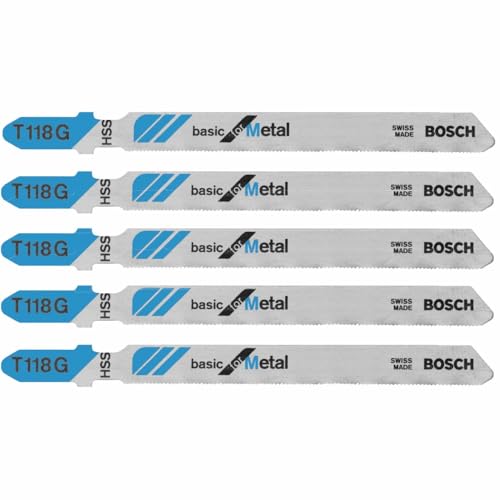
Designed for very thin metals and sheet stock, these 36 TPI blades deliver smooth, straight cuts in metal ranges from 17-26 gauge. The high-speed steel construction offers maximum blade life for straight cuts in ferrous and non-ferrous metals. The T-shank design ensures a secure, tool-free blade change on compatible jig saws.
Buying Guide: Key Considerations for Steel Cutting Jigsaw Blades
- Material compatibility: Choose blades designed for steel, especially stainless steel or alloyed metals, to prevent premature dulling and ensure clean edges.
- Tooth design and pitch: Higher TPI (teeth per inch) blades provide smoother finishes on sheet metal, while lower TPI blades cut faster through thicker metal. Bi-metal blades balance durability with flexibility for metal cutting.
- Blade construction: Carbide-edge blades last longer on hard metals; high-speed steel blades are versatile for medium-thickness metal. For very tough materials, consider reinforced or layered blade designs.
- Tooth geometry: Progressive teeth and alternate-push designs help reduce heat buildup and improve finish quality on metal work.
- Shank compatibility: Most American jig saws use T-shank blades; ensure your tool accepts T-shank blades for secure seating and easy changes.
- Application range: If cutting stainless steel, prioritize blades explicitly labeled for stainless or hard metals; for thicker metal, select blades rated for thick metal applications.
- Durability vs. cost: Higher-quality blades often deliver longer life and smoother cuts on metal, potentially saving time on large projects despite a higher upfront cost.
- Blade life and cooling: Some blades stay cooler during cutting; this reduces heat-related blade wear and improves performance on metals that heat quickly during cutting.
- Warranty and brand support: Reputable brands with blade warranties can offer more dependable performance and replacement options if blades wear prematurely.
In metalworking projects, selecting the right blade involves balancing material type, thickness, desired finish, and compatibility with your jig saw. The blades listed above provide a mix of carbide-edge, bi-metal, and high-speed steel options designed to optimize steel cutting performance while maintaining control and edge quality.