
Best Standalone Solar Panel System for Home Off-Grid Power
Answering the demand for reliable off-grid power, this guide highlights five standalone solar panel systems that are well-suited for homes and remote locations. Each option is described for practical buyers: homeowners seeking whole-house backup, RVers needing mobile power, and hobbyists building independent energy setups. You’ll find concise comparisons, key strengths, and clear cautions to help you choose confidently.
Summary table of selected products:
| Product | Type | Capacity | Best For | Limitations |
|---|---|---|---|---|
| ECO WORTHY 10kW All‑In‑One Off-Grid System | Complete home system | 10kW output / 16.1kWh storage | Full home backup, larger loads | Higher upfront complexity |
| ECO-WORTHY 10KW Off-Grid Kit | Complete kit | 9.36kWh daily (2340W panels) | Homes needing strong daily supply | Requires adequate space |
| ECO-WORTHY 200W Panel Kit | Panel kit | 200W panel + controller | Compact off-grid or RV use | Limited energy storage |
| ECO-WORTHY 200W Starter Kit | Starter kit | 200W panel set + inverter + battery | Beginner off-grid projects | Smaller capacity for peak loads |
| Renogy 200W Starter Kit | Starter kit | 200W panel pair + PWM controller | RV, boats, small off-grid cabins | Limited storage capacity |
ECO WORTHY 10kW All‑In‑One Off-Grid System

This all-in-one system provides up to 10kW continuous output with 120V/240V split-phase support. It includes five 590W solar panels (total PV capacity 2950W) and a 48V 314Ah LiFePO4 battery with 16.1 kWh storage. The inverter supports up to six units in parallel for higher power needs. Best for: homeowners seeking a scalable, through-line solution for whole-home backup and daytime loads with reliable monitoring via built-in connectivity. Limitation: setup complexity and space requirements for full installation.
ECO-WORTHY 10KW Off-Grid Kit

This kit targets reliable daily power with 2340W solar panels delivering an estimated 9.36 kWh per day under favorable sun. It supports parallel operation (up to six units) and 120V/240V AC output, suitable for homes, sheds, or cabins that need resilient energy during outages. Best for: medium-load households and rural properties. Caution: ensure adequate space and proper electrical integration for safe parallel setup.
ECO-WORTHY 200 Watts Panel Kit
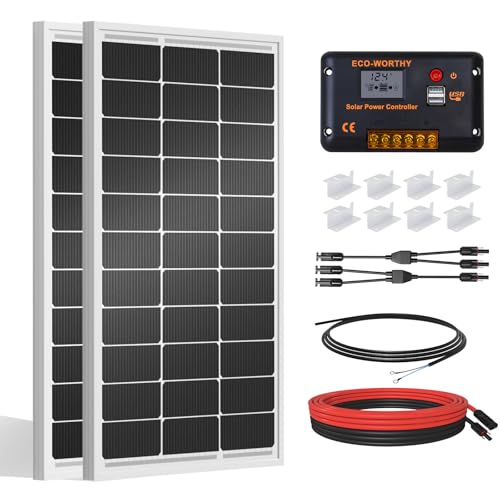
Designed for compact off-grid use, this 200W kit includes a high-efficiency monocrystalline panel and a 30A PWM charge controller. Best for: RVs, cabins, or small off-grid applications where mobility and simple setup matter. Limitation: modest daily energy yield without additional storage or larger inverter capacity.
ECO-WORTHY 200W Complete Starter Kit
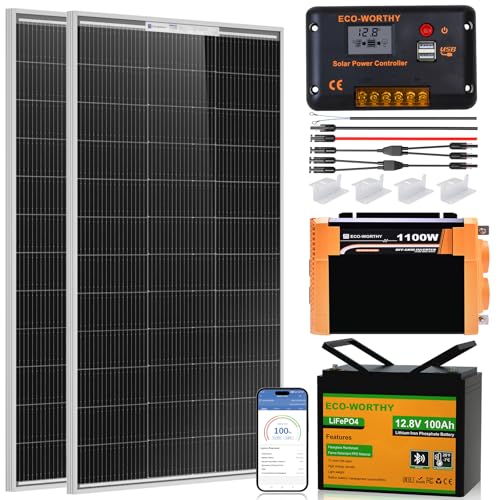
This 200W starter kit bundles two 100W panels, a 1100W inverter, a 100Ah lithium battery, and a 30A PWM controller. Best for: RV trips or small off-grid setups where a plug-and-play system is desired. Choose this if you want a straightforward integration with a balanced storage and inverter option. Caution: check compatible batteries and secure mounting for mobile use.
Renogy 200W Starter Kit

The Renogy starter kit includes two 100W panels and a PWM charge controller, offering efficient performance with a 22% cell efficiency rating under ideal conditions. Best for: beginners and small off-grid projects like RVs, boats, or campers. Limitation: without integrated energy storage, it relies on a separate battery setup for nighttime use.
Buying Guide: Key Considerations For Standalone Solar Systems
What should you ask before buying a standalone solar system? Consider total daily energy needs, space for panels, and the desire for mobility or fixed installation. If you need whole-house resilience, a full system with battery storage and a robust inverter is ideal. For portable applications, look for foldable panels, light-weight enclosures, and integrated controllers.
- System Capacity: Match panel wattage and inverter size to anticipated loads. Higher continuous power is better for climate control, refrigeration, and electronics during outages.
- Storage: Lithium batteries offer longer life and better depth-of-discharge. Ensure the battery voltage aligns with the inverter and system controller.
- Inverter Type: Pure sine wave inverters handle sensitive electronics; split-phase units support 120V/240V loads necessary for many homes.
- Expandability: If you foresee future growth, choose modular systems that allow additional panels or batteries in parallel.
- Monitoring: Built-in WiFi or Bluetooth monitoring helps track performance and energy usage in real time.
- Durability: Look for weather-resistant frames, IP-rated junction boxes, and robust cables to withstand wind and snow loads.
- Installation Context: Roof vs. ground mount or portable setups each have unique mounting and safety considerations.
Frequently Asked Questions
- What is a standalone solar panel system? Answer: A system designed to generate, store, and deliver electricity independently from the grid, typically including panels, a battery, and an inverter.
- Do I need batteries with a solar kit? Answer: Batteries enable nighttime power and outage resilience. Without storage, power only during daylight.
- Can I expand a starter kit later? Answer: Many kits support parallel expansion for more capacity, but confirm inverter and controller compatibility.
- Is solar power worth it for a small cabin? Answer: Yes, especially when paired with a storage system to cover evening and cloudy days.
- What maintenance is required? Answer: Regular inspections of panels, connections, and battery health, plus cleaning to remove dust and debris.
- Which kit is best for RV use? Answer: Portable or compact starter kits with integrated controllers and light frames are ideal for mobile applications.