
Best RV Solar System Kits for Off-Grid Living on the Road
Find the right all-in-one solar kit to power RV life off the grid. This guide highlights five reliable RV solar system kits designed for different needs—large-capacity setups for full-time travelers, compact kits for weekend explorers, and rugged options for harsh environments. The top picks are best for full RV appliances, everyday camping, or backup power during trips. Use the quick comparison table to compare capacity, inverter power, and battery size at a glance.
| Product | System Type | Daily Output | Battery Size | Inverter |
|---|---|---|---|---|
| ECO-WORTHY 7.168KWH Complete System | Off-grid, UPS | Up to 3.2 kWh/day | 4 × 12.8V 280Ah Li | 3000W |
| [Ultra] ECO-WORTHY 400W Kit | Off-grid, Compact | Up to 1.6 kWh/day | 12V 280Ah Li | 2000W |
| ECO-WORTHY 1.6KWH Kit | Mid-Size System | Up to 1.6 kWh/day | 12V 200Ah Li | 2000W |
| ECO-WORTHY 1200W Kit | Six Panels, Robust | Up to 4,800Wh/day | 2 × 12.8V 400Ah Li | 3000W |
| Renogy Premium Kit | High-End Grid | 2–2.5 kWh/day | Battery not fixed | Up to 2,000W+ |
ECO-WORTHY 7.168KWH 800W Solar Panel Kit for RV

Best for full-time RVing with high power needs. This complete system uses four 200W bifacial panels and a 3000W inverter charger, plus two large 12.8V 280Ah lithium batteries. It supports UPS switching between solar and mains, enabling fast, seamless power for appliances like refrigerators and air conditioners. Ideal for long trips or seasonal camping where you require dependable, continuous energy. A potential limitation is the heavier install due to multiple components and the need for proper wiring and space.
ECO-WORTHY 200 Watt 12V Complete Starter Kit
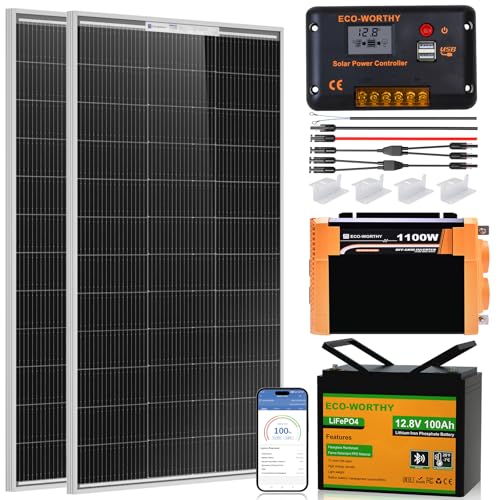
Best for beginners or a compact RV setup. Includes two 100W panels, a 100Ah lithium battery, a 1100W inverter, and a 30A PWM controller. The kit emphasizes easy, four-step installation and novice-friendly operation. Choose this if you want a simple, affordable entry point without sacrificing essential off-grid function. Limitation: lower total power suitable for light loads and daytime-only usage if not paired with a second battery bank.
ECO-WORTHY 200 Watts 12 Volt Panel Kit
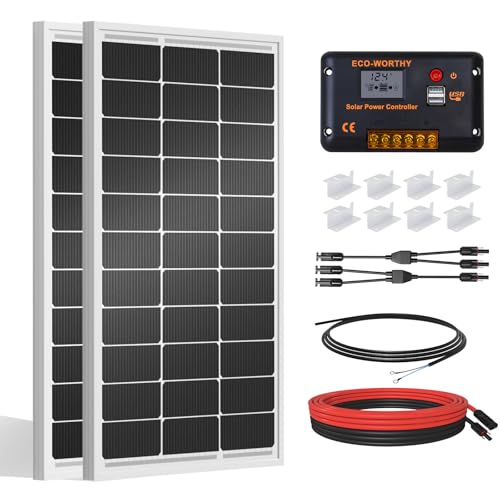
Best for small RVs or supplemental solar. This kit uses high-efficiency monocrystalline panels with a robust frame and IP65-rated junction box. It’s a practical choice when space is limited but supplementary power is still desired, such as lighting and charging devices. Limitation: designed for smaller loads and may require additional panels for higher energy needs.
[Ultra] ECO-WORTHY 12V 400W Complete Kit
![[Ultra] 400W Kit](https://m.media-amazon.com/images/I/51tN2xCl1eL._SL500_.jpg)
Best for mid-size RVs needing stronger power without extreme complexity. The kit includes four 100W panels, a 280Ah lithium battery, a 2000W inverter, and a 40A MPPT controller. It’s a strong all-in-one option for daily heavy use and off-grid trips. Caution: higher wattage increases installation and space requirements.
ECO-WORTHY 1200W Complete Solar Kit

Best for extended RV adventures with high energy demands. This kit features six 195W panels, two 12.8V 400Ah lithium batteries, a 3000W charger/inverter, and a 60A MPPT controller. It stores up to 8 kWh and daily output can reach several kilowatt-hours, supporting air conditioners and other high-draw appliances. Limitation: larger system requires more space and more complex setup.
Buying Guide
What size kit do you actually need?
Evaluate daily energy usage of your RV appliances. A larger kit provides more runtime during cloudy days or longer trips, but requires more roof space, wiring, and weight. Start by listing essential loads and estimate average daily watt-hours.
How important is battery capacity?
Battery size determines how long you can run appliances without sun. Higher amp-hour ratings store more energy for nighttime use or extended cloudy periods. Consider lithium batteries for longer life and deeper discharge tolerances.
Inverter power matters
Inverter wattage should exceed the peak draw of all devices you might run at once. A higher-watt inverter supports air conditioners, microwaves, and power-hungry tools, but adds weight and cost. Consider 2000W to 3000W for full RV comfort, or 1000W for basics.
Do you need UPS or steady mains backup?
Some kits offer UPS features to switch between solar and grid/mains quickly. This is beneficial for preserving battery life and ensuring uninterrupted power during transitions.
Ease of installation and expansion
Novice-friendly kits reduce wiring complexity and include step-by-step guidance. If you plan to grow your system later, look for modular kits with expandable battery and panel options.
Durability and weather resistance
Rugged frames, IP-rated junction boxes, and good wind/snow load tolerances improve longevity for RV use in various climates. Aluminum frames and tempered glass panels are common durable choices.
FAQ
- What is the best RV solar kit for large power needs? Kits with 1000W+ inverter capacity and multiple panels, plus high-capacity lithium batteries, are best for powering refrigerators, air conditioners, and TVs simultaneously.
- Can I upgrade an RV solar kit later? Yes, choose modular kits designed for expansion, including additional panels and bigger battery banks.
- Do I need batteries if I have a shore power connection? Batteries provide off-grid power and backup during transitions; shore power supplements or charges the system when available.
- Are lithium batteries worth it for RV solar? Lithium batteries offer deeper discharge, longer life, and lighter weight, which benefits mobile setups, though they can be pricier upfront.
- How important is MPPT in an RV kit? MPPT controllers maximize energy harvest in varying sunlight, improving efficiency compared to PWM controllers, especially in RV roof installations.
- What maintenance is required? Regular inspection, cleaning of panels, secure cabling, and monitoring system performance help maintain reliability.