
Best Solar Pump for Agriculture: Efficient Off‑Grid Watering Solutions
Answering the search for reliable solar irrigation pumps, this guide highlights five solar-powered options that suit farms, orchards, and remote gardens. Each pump is described for who it’s best for, why it’s selected, and practical limitations to consider. The top picks feature submersible deep-well designs, robust heads, and efficient MPPT or controller setups for dependable daytime pumping. Ideal buyers include small to medium farms, orchard managers, and off-grid homesteads aiming to reduce fuel use and maintenance while maintaining steady water supply.
| Product | Best For | Key Benefit |
|---|---|---|
| JENENSERIES Pump 500W DC 48V | farms and larger gardens needing deep‑well performance | High head and solid flow with MPPT controller |
| ECO-WORTHY Solar Water Well Pump Kit | Beginners to mid‑scale irrigation setups | All‑in‑one kit with solar panel and Li battery |
| Tuhorse 2″ 370W Solar Submersible Kit | Compact wells and flexible field deployment | Two 100W panels and full kit for quick setup |
| BTQSOL Deep Well Submersible Pump | Heavy-duty irrigation and home use | High head and solid stainless construction |
| Poggyyi 24V Deep Well Submersible | Long daylight operations and LED‑friendly power | High flow with 98 ft head and energy efficiency |
JENENSERIES 500W DC 48V Solar Pump
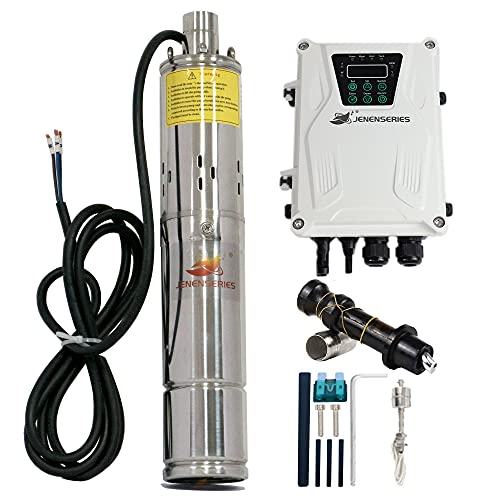
This 48V DC deep-well pump combines a 3-inch installation diameter with a max head of about 120 meters and a flow up to 1.8 m³/h. It includes an MPPT controller and a float switch kit for automatic operation, making it suitable for farms where deep groundwater is reliable. Best for mid‑to‑large irrigation zones and installations that demand higher head and consistent daytime pumping. A potential limitation is reliance on solar input and controller compatibility with battery storage if pumping on demand at night.
Who it’s best for: farms or large garden operations needing deep-well performance and automatic water level management. Why selected: robust head, decent flow, MPPT optimization, and integration options for off-grid rigs.
Caution: Ensure adequate well capacity and water availability; a water shortage sensor can stop the pump if the well runs dry, which is helpful but may interrupt irrigation if not monitored.
ECO-WORTHY Solar Water Well Pump Kit

This all‑in‑one solar well pump kit combines a 200W solar panel, a 1.6 GPM deep-well pump (96W), and a 30Ah Li battery with controller. It is designed for off‑grid irrigation and tank filling, offering a compact, easy‑setup system with battery storage for daytime pumping into low- or no-grid locations. Best for beginners or small farms seeking an integrated solar package with mobility and simple maintenance. A potential limitation is battery management; ensure the LiFePO4 battery stays within recommended cycling ranges for longevity.
Who it’s best for: small to medium agricultural operations and off‑grid homesteads seeking a turnkey solar pumping solution. Why selected: all components included, easy setup, and battery storage for nighttime use.
Caution: The system is sized for limited pumping scenarios; verify your annual irrigation needs against the kit’s maximum flow and panel output.
Tuhorse 2″ 370W Solar Submersible Kit
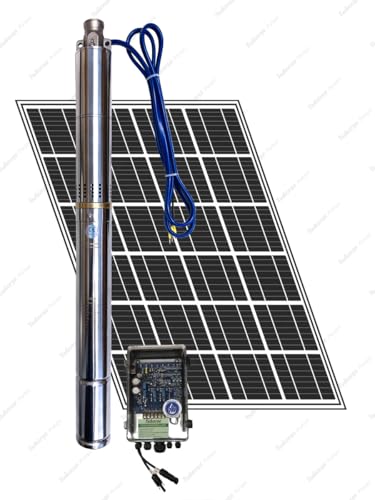
Built around a 2-inch well pump and two 100W solar panels, this kit offers clear performance projections: from approximately 10 ft to 100 ft pumping ranges, with a modest flow at deeper depths. It’s a practical choice for compact wells and remote irrigation tasks. Best for hobby farms or small plots where a fully bundled solar pumping solution is preferred. A limitation is that pump performance varies with sun exposure and the well’s lift height, so plan for potential seasonal flow changes.
Who it’s best for: small-acreage farms and remote water supply projects needing a complete, portable solar kit. Why selected: complete kit with panels and straightforward installation, suitable for shallow to moderate wells.
Caution: Flow rates drop with depth; confirm your target lift and daily water demand to avoid undersizing.
BTQSOL Deep Well Submersible Pump with Control Box

BTQSOL models pair a 3-inch screw‑well design with 1.5HP, 72V brushless DC motors, delivering up to 9.7 GPM and a remarkable 590 feet head. The 304 stainless steel body and double bearing structure support durability in demanding irrigation and home-use scenarios. Best for heavy‑duty irrigation or livestock watering at significant lift. A limitation is higher voltage and potential complexity in electrical integration; ensure proper safety and wiring standards are followed.
Who it’s best for: farms needing high‑head pumping and robust construction. Why selected: high head, strong flow, and corrosion‑resistant materials for long‑term use.
Caution: Not ideal for very shallow wells or low head requirements; select a model aligned with your actual lift needs.
Poggyyi 24V Deep Well Pump Kit

This 24V pump offers up to 200W of power with a maximum head around 98.43 ft and a high flow potential, making it suitable for mid-range irrigation and livestock watering. It emphasizes efficiency and daylight-driven operation with a focus on reliable pumping during sunny periods. Best for off‑grid farms that prioritize energy efficiency and a relatively simple solar setup. A limitation is lower head compared to some 48V systems, which may matter for deeper wells or high‑lift requirements.
Who it’s best for: off‑grid farms needing dependable daytime pumping with moderate head. Why selected: good balance of flow, head, and solar efficiency in a compact package.
Caution: If your irrigation needs exceed 100 feet of lift, this model may not meet demand; plan for deeper wells or higher‑voltage options.
Buying Guide: Solar Water Pumps for Agriculture
What size pump do I need for my farm?
Match pump head (vertical lift) and flow rate to your irrigation demands. Higher heads require more power; deeper wells typically need submersible pumps designed for greater lift. Consider your average daily water requirement and peak demand to avoid undersizing.
What type of solar configuration is best?
All‑in‑one kits with panels and battery storage are easiest for beginners. Larger operations may prefer modular setups with MPPT controllers for efficient energy conversion and battery storage to extend pumping into the evening.
Is a battery necessary?
Batteries provide night‑time pumping and back‑up during cloudy days. LiFePO4 batteries are common for durability and cycle life, but you must ensure proper battery management and charging controls for long life.
What maintenance should I expect?
Keep solar panels clean, inspect seals on submersible pumps, and monitor electrical connections. Submersible units may require occasional impeller checks and flow verification. Environmentally, solar pumping reduces fuel use, but reliability depends on sun exposure and water availability.
How do I size for irrigation types?
Drip systems, sprinklers, and tanks have different flow requirements. For drip irrigation, lower but steady flow may suffice; for sprinklers, higher flow and head are often necessary. Plan piping diameter, valve placement, and surge protection accordingly.
Comparison snapshot
- Best overall head and automation: JENENSERIES 500W with MPPT controller.
- Best all‑in‑one starter kit: ECO-WORTHY Solar Water Well Pump Kit.
- Best compact kit for shallow wells: Tuhorse complete kit.
- Best for heavy‑duty, long head needs: BTQSOL Deep Well Submersible Pump.
- Best energy‑efficient option: Poggyyi 24V kit for mid‑range lift.
Frequently Asked Questions
- What factors determine a solar pump’s suitability for agriculture?
Answer: head, flow rate, battery support, controller efficiency, and reliability in your climate. - Do solar pumps work if it’s cloudy?
Answer: Batteries or larger panel arrays help maintain pumping, but overall flow may decrease without sufficient sun. - Is a controller necessary?
Answer: Controllers optimize solar energy use and protect the pump, especially at varying irradiance levels. - Can these pumps handle livestock water needs?
Answer: Yes, when sized properly for daily consumption and head, some models are designed for livestock watering. - What maintenance schedule is recommended?
Answer: Inspect seals, clean panels, check electrical connections, and verify water intake regularly to prevent clogging or air leaks. - Are solar pumps compatible with existing irrigation systems?
Answer: In many cases, yes, but verify pump compatibility with your piping, valves, and controllers.