
Best Solar Power Kit for Cabin: Reliable Off-Grid Power Solutions
Finding the right solar power kit for a cabin involves balancing output, reliability, and ease of installation. This guide showcases five top-rated kits designed to keep cabins comfortable during outages, extended weekends, or remote living. Each selection highlights different strengths—from high daily output and easy plug-and-play setups to trackers that maximize sun exposure. Read on to compare offerings and learn what matters most when planning a cabin solar system.
| Product | |||
|---|---|---|---|
| ECO-WORTHY 9.36KWH Kit | 9.36 kWh | Hybrid charging with high capacity | All-in-one inverter and 12 panels |
| ECO-WORTHY 1600W Tracker System | ~8.7 kWh | Dual-axis sun-tracking | 270° tracking for max sun exposure |
| ECO-WORTHY 4.68KWH Complete Kit Pro | 4.68 kWh | Integrated inverter and battery | WiFi monitoring and 80A MPPT |
| Renogy 400W Premium Kit | 2–2.5 kWh | High-quality components | Advanced MPPT controller |
| ECO-WORTHY 48V Off Grid Complete Kit | 4.68 kWh | Parallel-ready, scalable | 6 panels, 48V LiFePO4 battery |
The following sections profile five cabin-ready solar kits. Each includes an image and a concise overview of why it fits a cabin setup, with a focus on reliability, expandability, and ease of installation. While prices vary, these kits are designed to deliver steady off-grid power for cabins, sheds, and remote retreats.
ECO-WORTHY 9.36KWH Off-Grid System

Powerful and self-contained, this 9.36KWh per day system pairs a 48V DC-110V AC pure sine wave inverter with a 100A MPPT controller. The kit includes a 2300W solar panel array designed to deliver substantial daytime output under four sun hours, making it suitable for cabins needing reliable energy for essential devices like air conditioners, refrigerators, TVs, coffee makers, and microwaves. A durable 195W monocrystalline panel design and corrosion-resistant aluminum framing support long-term outdoor use in cabins, sheds, or remote cabins.
Key considerations for cabin use include the hybrid solar charger inverter and multiple charging modes, enabling solar-only, mains backup, or hybrid operation. This setup reduces grid dependence while offering protection for appliances through high-efficiency, low- EMI operation.
ECO-WORTHY 1600W Solar Tracker System

This expanded version uses eight 195W panels and a dual-axis tracker to maximize daily output. With an estimated 8.68 kWh per day under optimal sun, it powers cabins with all-day energy for common appliances. The 270° tracker keeps panels oriented toward the sun, boosting energy harvest by roughly 39% compared to fixed mounts. Space efficiency is a bonus, as the tracker occupies a small footprint while delivering a larger energy harvest, ideal for limited cabin plots or yard spaces.
For cabins with limited space, the tracker’s ability to maximize sun exposure without sprawling layouts is a practical advantage. Installation should consider weather exposure and the need for a stable mounting base to ensure reliability in windy climates.
ECO-WORTHY 200W Starter Kit for RVs
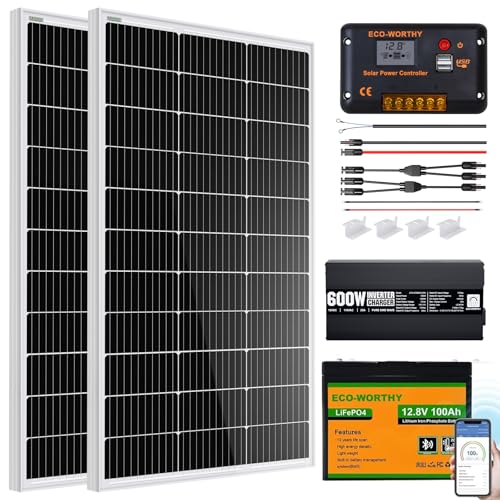
A compact, all-in-one option suitable for small cabins or seasonal retreats. The kit features two 100W panels, a 100Ah lithium battery, a 30A charge controller, and a premium inverter. It’s designed for moderate daily use, delivering about 800Wh per day with four sun hours. The lithium battery improves cycle life and reduces maintenance, making it a solid entry point for cabin owners beginning their off-grid journey.
The included lithium battery with BMS helps guard against overcharge and overdischarge, while the high-efficiency panels maintain good performance in varying climates. This kit supports easy expansion as energy needs grow, a practical path for a growing cabin setup.
Renogy 400W Premium Kit

Renogy’s premium kit provides robust solar capacity with smart charging tech. The package includes four 100W panels, a 40A MPPT controller, and mounting hardware with Z brackets. The system emphasizes efficiency and long-term reliability, featuring a 22.5% panel efficiency rating and a strong warranty on panels and controller. MPPT tracking increases energy harvest, especially during shoulder seasons when sun angles are lower. The kit is well-suited for cabins seeking dependable daily energy and easier expansion with parallel wiring options over time.
Its sturdy frame, high-quality components, and comprehensive wiring make it a practical choice for DIY installers who want a balance between performance and long-term support.
ECO-WORTHY 4.68KWH Complete Kit Pro

This complete kit targets cabin comfort with a 1200W solar array and a 3500W inverter, paired with an 80A MPPT controller and remote WiFi monitoring. The 4.68 kWh daily output is suitable for common cabin appliances, including air conditioners and refrigerators, during clear days. A 50Ah LiFePO4 battery gives solid storage capacity and long cycle life, with the ability to scale by adding more batteries or panels as cabin energy demands rise. The built-in monitoring helps track performance and optimize usage for off-grid living.
Consider this option if you value remote monitoring, robust surge handling, and a balanced mix of solar input and energy storage to keep a cabin comfortable without grid power.
Buying Guide
- Output needs: Assess typical daily energy consumption in your cabin, including heating, cooling, refrigeration, lighting, and electronics. Choose a kit whose daily output comfortably exceeds your 4-6 hour sun window to avoid frequent recharging gaps.
- System type and scalability: Decide between all-in-one kits (simpler installation) and modular kits (flexible expansion). For cabins, a scalable system that can grow with needs is advantageous as you add appliances or solar exposure changes with seasons.
- Storage and battery chemistry: Lithium-based batteries (including LiFePO4) offer longer life and better cycle stability than lead-acid. Ensure the BMS and safety protections align with your maintenance preferences and climate.
- Inverter capacity and waveform: A pure sine wave inverter ensures compatibility with sensitive electronics and appliances. Check surge ratings to accommodate startup power for devices like refrigerators and AC units.
- Mounting and space: Trackers provide higher energy capture but require more space and robust mounting. Fixed racks are simpler and durable for remote cabins. Consider wind loading and snow exposure where your cabin is located.
- Monitoring and control: WiFi or Bluetooth monitoring helps you track performance remotely and adjust settings for efficiency. Look for systems with app-based dashboards and remote shutoff features for security.
- Maintenance and durability: Choose components with corrosion-resistant frames and weatherproof enclosures. Confirm warranties on panels and inverters for long-term reliability in remote locations.
- Installation footprint: Evaluate land use and proximity to cabin utilities. Some kits offer compact footprints (trackers with minimal ground area) that fit tight cabin yards and decks.
In choosing the best solar kit for a cabin, prioritize reliability, expandability, and how well the system meets your typical energy profile. The kits highlighted here provide diverse approaches—from plug-and-play power for a small cabin to scalable, high-output systems suitable for larger retreats. For future-proofing, consider a kit with a strong MPPT controller, solid battery management, and robust mounting options to withstand local weather and seasonal changes.