
Best Solar Panels for Campervans: High-Efficiency Off-Grid Power Solutions
Powering a campervan confidently requires compact, efficient, and durable solar panels that perform well in varying conditions. This guide highlights five top picks designed for RVs, vans, and off-grid setups, focusing on high efficiency, lightweight design, and flexible mounting. Each option supports multiple output types for charging power stations, batteries, and devices, while offering weather resistance and easy handling for mobile living. Read on to compare features and find the best match for your campervan lifestyle.
| Product | Brand | Key Strength | Output |
|---|---|---|---|
| Renogy 200W Portable Solar Panel | Renogy | High efficiency; lightweight foldable design | 200W |
| Callsun 200W Flexible Solar Panel | Callsun | Flexible, ultra-light; high efficiency | 200W |
| HQST 200W Solar Panel | HQST | Compact footprint; up to 25% efficiency | 200W |
| SOKIOVOLA 200W Portable Solar Panel | SOKIOVOLA | Foldable; IP68 waterproof | 200W |
| Ecosonique 200W Portable Solar Panel | Ecosonique Technology | Ultra-compact; USB-C PD3.0 | 200W |
Renogy 200W Portable Solar Panel

Renogy’s 200W foldable solar panel features high-efficiency 16BB N-Type cells, delivering up to 25% efficiency. The foldable unit weighs about 13.89 lbs and folds to a compact profile, enabling easy transport and storage in tight camper spaces. It supports charging multiple devices: 1 USB-C PD (45W max) and 2 USB-A ports (18W and 15W), plus MC4 output for power stations or 12V batteries. Ideal for RVs, trailers, and emergency backups, the panel balances performance with portability for off-grid travel.
Callsun 200W Flexible Solar Panel

This 200W flexible kit uses 182 PERC cells and 11 busbars to boost output, achieving up to 23% efficiency. The unit employs ETFE coating for durability, abrasion resistance, and extended service life. Its ultra-lightweight, flexible design allows mounting on curved surfaces, expanding usable roof area for campervans and boats. A robust, low-profile solution for maximizing solar capture in limited roof space.
HQST 200 Watt Solar Panel

HQST’s 200W panel utilizes Grade A+ mono cells with up to 25% efficiency and low-light performance through PERC technology. The compact footprint reduces installation complexity while maintaining high output. Bypass diodes protect against overheating and shading, helping maintain energy generation when portions of the panel are shaded by trees or buildings. This panel is suited for RVs, campers, boats, and off-grid homes seeking reliable daytime power with simplified wiring.
SOKIOVOLA N-Type 200W Portable Solar Panel
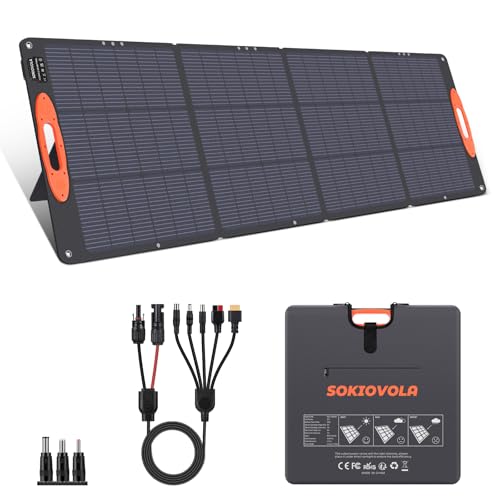
This panel weighs 16.31 pounds and folds to a compact 21 x 23 inches, featuring a magnetic handle and four mounting holes for RV installation. It employs A+ grade mono cells with up to 25% efficiency and uses IP68-rated ETFE for waterproofing and durability. The high conversion efficiency and rugged construction make it suitable for campers who frequently travel in varied weather conditions.
Ecosonique 200W Portable Solar Panel

Weighing 10.6 lbs and folding to 18″ x 16.3″, this 200W panel is ultra-compact for campervans and tents. It includes 20V MC4 output with a 3M MC4 cable and compatibility with multiple power stations via adapters, plus USB-C PD3.0 and USB-A QC3.0 fast charging. The four kickstands optimize sun exposure, and the panel claims up to 23.5% conversion efficiency, supporting robust daytime charging for devices and small power packs.
Buying Guide: Key Purchase Considerations For Campervan Solar
- Power needs and portability: Assess daily energy consumption, typical peak draw, and space available for panels on the roof or interior transport. Flexible panels offer surface versatility, while rigid panels provide rugged durability.
- Efficiency and cell technology: Look for PERC or N-Type cells for improved low-light performance and higher open-circuit voltage. Higher efficiency means more watts from a smaller footprint.
- Durability and weather resistance: IP ratings, ETFE facings, and robust frames help panels withstand sun, wind, and rain. Consider anti-shading features if you park near trees or structures.
- Weight and mounting: For small vans or tight layouts, lighter panels with simple mounting hardware reduce installation effort and vibrations during travel.
- Outputs and compatibility: Ensure the panel provides USB-C PD and USB-A options, plus MC4 or other power-station connections compatible with your battery bank or generator.
- Maintenance and longevity: ETFE panels resist abrasion and dirt; wipe-clean surfaces and protective coatings extend service life in outdoor environments.
- System sizing strategy: For off-grid use, pairing a solar panel with a capable power station or battery bank ensures continuous operation during cloudy days or extended trips.
- Warranty and support: Check manufacturer warranties, replacement policies, and customer support responsiveness for long-term reliability in mobile settings.
When selecting solar panels for a campervan, balance wattage against weight, flexibility, and installation ease. For frequent travelers, a modular approach—coupling one high-efficiency panel with additional smaller panels—can provide scalable power without overloading roof space. Evaluate how your gear, appliances, and charging habits align with the panel’s output and system efficiencies to maintain consistent performance across diverse climates and routes.