
Best Solar Panels for Boat: Top Marine Power Solutions for 12V Systems
For boaters, reliable solar power means longer time on the water with fewer battery concerns. The following five products offer marine-ready solar panels and smart controllers designed to charge 12V systems efficiently, withstand harsh conditions, and adapt to different vessels. Each option includes durable construction, smart charging features, and compatibility with common marine batteries. Read on to compare key capabilities and find the best fit for your boat setup.
| Product | Brand | Key Benefit |
|---|---|---|
| SOLPERK Solar Panel Kit 20W 12V | SOLPERK Store | High efficiency with durable, waterproof build |
| Voltset 12V Solar Battery Charger – 20W | Voltset Store | Smart MPPT, fast charging, multi-battery compatibility |
| Renogy 200 Watts 12 Volts Kit | Renogy Store | High efficiency, reliable N-Type cells |
| Renogy 100W Solar Panel N-Type | Renogy Store | Compact high-efficiency module for boats |
| Renogy 200 Watt 24 Volt Kit | Renogy Store | Higher voltage options for larger systems |
SOLPERK Solar Panel Kit 20W 12V

The SOLPERK 20W panel uses monocrystalline A+ cells with an efficiency range of 21%–30%, designed to charge and maintain 12V batteries such as LiFePO4, Lithium Ion, AGM, and more. Its waterproof, corrosion-resistant aluminum frame and low-iron tempered glass provide long-term durability suitable for marine environments. The panel is rated to withstand demanding weather, including high winds and snow load. A built-in smart MPPT controller optimizes charging, delivering a measured improvement in efficiency and battery health through three-stage charging. Two indicator lights convey charging status without drawing power from the battery.
Key features include: robust waterproof construction, 25-year lifespan expectation, and an 8A smart controller that targets overcharge, over-voltage, and short circuit protection. The system is well-suited for trailer, boat, RV, and other 12V applications on the water. This kit offers a compact solution when space is limited on smaller vessels or as a supplementary charging source for larger boats.
Voltset 12V Solar Battery Charger – 20W

The Voltset 12V Solar Battery Charger uses a 20W waterproof panel and an intelligent MPPT controller. It integrates protection against overcharge, over-discharge, short circuits, and reverse polarity, ensuring compatibility with LiFePO4, Lithium Ion, AGM, SLA, GEL, and flooded batteries. Its smart internal protection helps prevent nighttime battery drain, enabling a “set it and forget it” approach for daily drivers or weekend boats. The MPPT technology claims high tracking efficiency and a 20–30% faster charging rate than older controllers, making it a practical choice for consistent marine charging.
With a 12V system focus, this charger works well as a boat battery maintainer, RV solar setup, or trailer system. Its three-stage charging algorithm (Bulk, Absorption, Float) supports efficient power management when the boat is in port or on anchor. The unit is designed for versatile use—from boats and trailers to trucks and motorcycles—reducing the need for multiple chargers across vehicles. It is a compact solution that fits a range of marine electrical diagrams.
Renogy 200 Watts 12 Volts Kit

The Renogy 200W kit delivers substantial power with 16BB N-type cells, promoting higher efficiency and reduced hot spots. This configuration helps boat owners generate more energy in the same sunlight exposure, improving performance in hot climates or on longer trips. The package typically includes mounting brackets and hardware designed for boats, trailers, RVs, and off-grid marine applications. The panel’s high-efficiency design translates into greater daily energy production, supporting battery banks for lighting, refrigeration, and electronics across longer sailing periods.
Renogy emphasizes durability and reliability with improved temperature performance and a focus on long-term service life. The 200W kit is well-suited for mid- to larger-boat electrical systems that require dependable solar input, especially when cruising or living aboard. The combination of robust construction and proven efficiency makes this option a common choice for boat owners seeking scalable solar power solutions.
Renogy 100W Solar Panel N-Type

The Renogy 100W N-Type panel offers a high-efficiency solution with 25% conversion and advanced 16BB cell technology. The N-Type cells reduce hot spots and improve durability, which is advantageous for boats exposed to varying weather and temperatures. The panel is designed to integrate into marine electrical systems and is sized to fit on many boat rooftops or deck setups while providing reliable charging for 12V battery banks.
Advantages center around efficiency under heat, longevity, and compatibility with common 12V battery chemistries. The 100W size can be a practical choice for smaller to mid-sized vessels that need a dependable solar input without overloading their space or weight budget. Boat owners can pair this panel with a matching charge controller to manage charging cycles and protect battery health during long voyages.
Renogy Solar Panel 200 Watt 24 Volt Kit
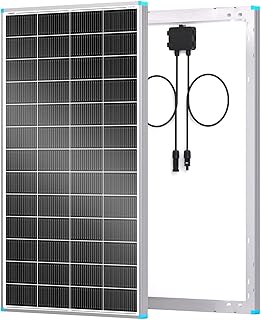
This Renogy 200W 24V kit is designed for higher voltage marine systems, enabling efficient charging for larger battery banks or inverter setups. The 16BB N-Type cells improve overall performance, particularly in hot climates where voltage stability matters. The kit typically includes mounting hardware suitable for RVs, boats, trailers, and other off-grid marine applications, enabling flexible installation on rooftops or deck areas. The 24V configuration can reduce losses over longer runs to inverters or batteries located away from the panel array.
In marine contexts, higher voltage systems can be advantageous for reducing current and heat on long cable runs. This kit supports scalable energy, making it a fit for boats that require sustained power for refrigeration, electronics, and living quarters. The combination of efficiency, reliability, and marine-ready hardware makes this option appealing for serious boaters who plan to rely more heavily on solar power during extended voyages.
Buying Guide: Key Purchase Considerations For Boat Solar Panels
- Power needs and system size: Assess your boat’s battery bank, energy consumption, and whether you need a primary charging source or a supplementary input. Higher wattage panels and multi-panel arrays suit larger vessels or long-term cruising.
- Panel type and efficiency: Monocrystalline panels offer high efficiency and better performance in limited space, while polycrystalline panels may be more affordable but are typically less efficient.
- Durability and weather resistance: Look for waterproof enclosures, corrosion-resistant frames, tempered glass, and tested wind and snow loads appropriate for marine use.
- Charge controller technology: MPPT controllers maximize charging efficiency, especially in variable sunlight. Ensure compatibility with your battery chemistry (LiFePO4, AGM, flooded, etc.).
- Installation and mounting: Consider space on deck or superstructure, weight limits, and mounting hardware designed for boats. Some kits include brackets and hardware for easy mounting.
- System expansion: If you anticipate growing your solar array, select modular kits or panels compatible with future add-ons and compatible charge controllers.
- Maintenance and monitoring: Look for indicators or companion apps that simplify monitoring charging status, battery health, and alerts for anomalies while at sea.
- Warranty and service: A robust warranty and access to replacement parts can reduce long-term ownership risk on water.
When evaluating options, compare panel efficiency, controller features, weatherproof ratings, and compatibility with your existing marine electrical setup. For boats with limited space, compact 12V panels can effectively maintain smaller battery banks, while larger 24V systems better suit bigger electrical loads. Always ensure proper wiring, fusing, and venting for safe integration with your onboard electrical system.