
Best Solar Panels With Battery for Outdoor Cameras
Discover top solar panel solutions that pair with built-in or backup batteries to keep outdoor security systems powered. This guide highlights five reliable options, covering different setups—from compact, 10W panels to portable 300W kits and purpose-built camera chargers. Each choice emphasizes efficiency, safety features, and weather resilience to support continuous monitoring without frequent battery changes.
Summary of Selected Products
| Product | Power Output | Battery/Storage | Best For |
|---|---|---|---|
| Blink Solar Panel with 4000mAh Battery | Not specified (panel with 28% efficiency) | Built-in 4000mAh battery | Blink Outdoor cameras (various gen) |
| Zivif 10W Trail Camera Solar Charger | 10W | 10400mAh battery | Trail/security cameras with 5V/12V output |
| DOKIO 300W Portable Foldable Solar Panel Kit | 300W | Standalone controller included | RVs, camping, off-grid backup |
| Portable Solar Generator, 300W with Panel | 60W panel included, 300W capacity | 280Wh battery in unit | Camping, off-grid power needs |
| FUTUREZEN 10W Solar Panel for Trail Camera | 10W | 10400mAh battery | Trail cameras, outdoor use |
Blink Solar Panel With Battery For Blink Cameras

The Blink solar panel is designed to support Blink Outdoor cameras across multiple generations. It offers two connector types to fit different camera models and provides a continuous power supply by storing solar energy in a built-in 4000mAh battery. The system is engineered for outdoor use with IP65-style ruggedness and a 28% solar conversion efficiency. A smart IC manages charging to prevent overcharge and overheating, extending the life of connected Blink devices. Note that camera batteries should be removed before use with the solar panel.
Key features include smart safety protections, a stable 5V/1A output, and compatibility with Blink Outdoor 3rd and 4th generations, including XT variants. The setup reduces maintenance by minimizing battery swaps and ensures reliable operation during cloudy days and nighttime hours thanks to its backup energy storage.
Zivif 10W Trail Camera Solar Charger

The Zivif 10W solar panel is built for versatility, featuring dual output options: USB-C and DC ports. It supports a broad range of security and trail cameras with common connector standards, including 5V and 12V configurations. The device provides adjustable voltage via an integrated slide switch to optimize charging for different devices. An upgraded monocrystalline panel delivers high efficiency, and a 360° adjustable mount helps capture maximum sunlight. Note only one output can be used at a time, preserving power while avoiding overloads.
DOKIO 300W Portable Foldable Solar Panel Kit
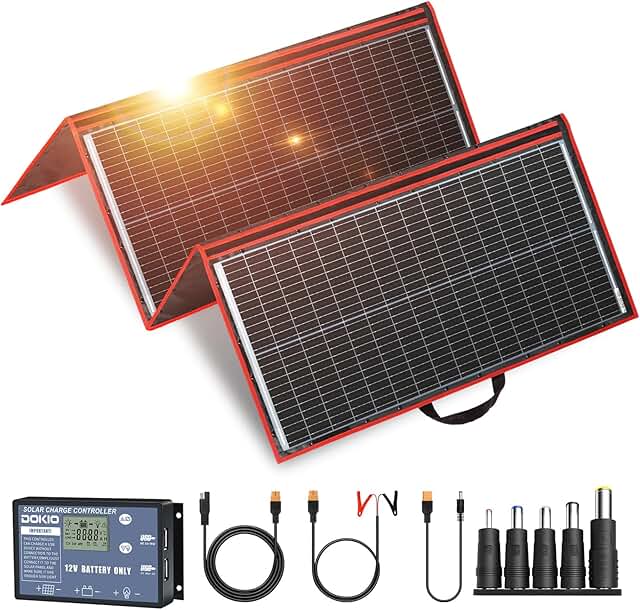
Designed for serious power needs, the DOKIO 300W kit folds to a compact form for transport and storage. The set includes a standalone PWM controller to protect 12V systems from reverse polarity, overcharge, and short circuits, providing safer charging for batteries and devices. Its robust monocrystalline solar cells deliver reliable energy for RVs, boats, and emergency backup. The separate controller design allows easier upgrades or replacements when needed, ensuring continued compatibility with evolving equipment while maintaining safe operation.
ZeroKor Portable Solar Generator With 60W Panel

The ZeroKor solar generator combines a 60W panel with a 300W portable power station to deliver versatile off-grid charging. It features multiple outlets, including 110V AC, DC, USB, and a quick-charge USB port, making it suitable for camping, trail use, and emergency readiness. The built-in battery pack stores energy for cloudy days, with the ability to charge devices directly from the wall or solar input. Its off-grid design supports a range of smart devices and camping essentials, offering a compact solution for mobile power needs without heavy infrastructure.
FUTUREZEN 10W Solar Panel For Trail Camera

The FUTUREZEN panel offers broad compatibility with 5V and 12V cameras, featuring multiple connectors and a USB-C option to fit many devices. Its built-in 10400mAh battery stores energy to power trail cameras during cloudy days or nighttime hours, reducing the need for frequent battery changes. An IP66 waterproof rating ensures durability in wet environments. The panel uses a simple switch to select the appropriate voltage for reliable charging, making it a practical choice for remote or rugged outdoor setups.
Buying Guide: Key Purchase Considerations
- Power compatibility: Verify whether the system supports 5V, 12V, or both. Consider devices requiring USB-C or DC connectors and ensure the panel provides appropriate output connectors and adapters.
- Battery capacity and storage: Larger mAh or Wh ratings provide longer operation during low light. Assess whether a built-in battery is needed or if external storage is used.
- Efficiency and weather resilience: Look for high-efficiency solar cells and protection against overheating, overcharging, and short circuits. IP or waterproof ratings matter for outdoor exposure.
- Portability vs. power: Portable kits suit RVs and camping, while higher-watt panels better power multiple devices. Balance weight, portability, and desired charge rate.
- System safety: Standalone controllers or smart ICs can safeguard equipment. Ensure compatibility with existing cameras and accessories, and confirm whether batteries need to be removed during installation.
- Ease of setup: Adjustable mounts or brackets help maximize sun exposure. Check included cables, connectors, and whether additional adapters are necessary.
- Durability and warranty: Outdoor use demands rugged construction. Consider warranty length and the vendor’s support for replacements or upgrades.
- Support for cloudy days: Panels with larger storage or higher efficiency perform better on overcast days; built-in backups reduce downtime.
In selecting a solar panel with battery for outdoor cameras, weigh integration with your camera model, climate conditions, and how much you value portability versus continuous, autonomous power. The options above cover popular approaches—from camera-specific panels with built-in storage to flexible, higher-capacity solar kits suitable for broader off-grid applications.