
Best Soft Starters for AC Motors to Reduce Startup Strain
Choosing the right soft starter for an air conditioner or AC motor can extend equipment life, reduce electrical stress, and improve overall efficiency. This guide highlights top options designed to gently ramp up compressor and fan motors, helping HVAC systems run more reliably. The selections cover residential, RV, and packaged setups, with considerations for compatibility, installation, and performance. Below you’ll find five well-regarded choices, each with a quick snapshot of features to help you compare at a glance.
Summary of Selected Products
- AIRGO AC Soft Starter: Reverse Motor Protection, Install Kit, 16-32A
- AIRGO AC Soft Starter: 08-16A, Inside-Unit Installation Kit
- MICRO-AIR EasyStart Breeze 399: RV A/C Soft Start with Bluetooth, Kit Included
- SoftStartRV Soft Start for RV A/C: Waterproof, Small-Form, High Compatibility
- Bxmgr Air Conditioner Soft Start 16-32A: 5-Year Warranty, 4–7 Ton Range
AIRGO AC Soft Starter 16-32A With Install Kit

AIRGO’s soft starter offers built-in reverse motor protection and a compact surge-protection design, with installation inside the unit for minimal footprint. The soft-start technology gently ramps up the air conditioner compressor to extend unit life by reducing startup stress. It’s designed to work with most residential systems in the 1.75–3.5 ton range, making it a versatile choice for many homes. The included install kit simplifies DIY setup, while the device can help reduce nuisance voltage drops during startup. For troubleshooting or installation questions, the seller provides direct support.
AIRGO AC Soft Starter 08-16A Inside Unit Kit

This AIRGO model emphasizes internal mounting with a small form factor and a wire kit included, designed for a straightforward DIY installation. It provides soft-start capabilities that gently ramp the compressor, helping extend life by reducing start-up stress. Compatible with common residential units in the 1.75–3.5 ton range, this option is suitable for users seeking a compact, easy-to-install solution that prioritizes protection during power fluctuations and startup surges.
MICRO-AIR EasyStart Breeze 399 With Bluetooth

The Micro-AIR EasyStart Breeze 399 is designed for RV air conditioners, supporting units up to 13k–15k BTU and compatible with 2200-watt generators. It includes an installation kit and Bluetooth control for quieter, smoother starts. The compact design enables easier installation in tight RV spaces, and it can allow running two ACs under certain power limitations on a 30-amp cord. Bluetooth capability helps monitor performance and settings during operation.
SoftStartRV Soft Start for RV A/C

SoftStartRV focuses on RV and trailer HVAC systems, offering waterproofing and a smaller footprint to fit low-profile rooftop units. The tech allows 30-amp setups to start two A/C units, or one on a smaller generator, while preventing overloading with a smoother startup profile. The kit claims strong vibration and noise reduction, helping maintain comfort and minimizing disruption during campsites or travel. It’s positioned as a versatile option for RV owners who need dependable performance on limited power.
Bxmgr Air Conditioner Soft Start 16-32A
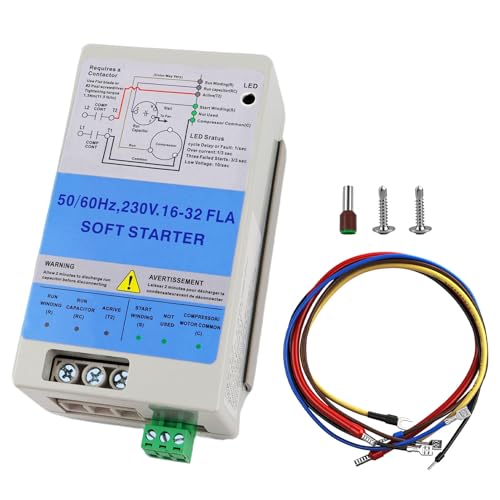
Bxmgr offers a 16-32A soft-start solution with a five-year warranty and a wide compatibility range for home air conditioners from 4 to 7 tons. The kit claims to reduce starting current by up to 75%, lower noise, and minimize flicker, contributing to a quieter, more stable electrical environment. It’s positioned as a reliable, long-term option for homeowners seeking a robust protective device with strong after-sales support and clear operating parameters.
Buying Guide
- Compatibility: Confirm tonnage and voltage requirements of your AC system. Many soft starters target residential units in the 1.75–3.5 ton range, while RV versions may be tuned for 13k–15k BTU units. Match the device to your equipment’s power draw and electrical setup.
- Protection Features: Look for reverse motor protection, overload safeguards, and surge handling. These features help extend compressor life and prevent circuit fluctuations from tripping breakers.
- Installation Considerations: Some units mount inside the air handler or outside, while others come with complete installation kits. Consider your space, access for wiring, and whether a DIY install is feasible or professional help is advisable.
- Noise and Vibration Reduction: Soft-start tech can lower startup noise and reduce vibrations. This is particularly beneficial for RV setups or quiet home environments where noise is a concern.
- Bluetooth and Monitoring: Some models (like Mini-Bluetooth-enabled units) offer remote monitoring and control, which can be helpful for mobile or off-grid installations.
- Warranty and Support: A longer warranty plus responsive customer support adds value, especially for units used in remote locations or critical climate control scenarios.
- Power Availability: If you operate on generators or limited power supplies, verify the device’s ability to start under such constraints and its impact on other appliances on the same circuit.
- Maintenance and Longevity: Check for service life expectations, ease of replacement parts, and the availability of upgrade paths should your HVAC needs change.
In evaluating these options, consider your primary usage: home HVAC, RV living, or portable/mobile needs. For permanent installations in a residence, running more robust, permanently mounted units with solid warranties may be preferred. For RVs and trailers, compact designs, waterproofing, and ease of installation become decisive. Always follow manufacturer wiring diagrams and safety guidelines when integrating a soft starter into an existing electrical system.