
Best Socket Weld Reducing Couplings for Tight, Durable Pipe Connections
Finding the right socket weld reducing coupling depends on material, pressure, and the need to join different pipe sizes. This guide highlights five reliable options and who each one serves best. The products below are suited for medium- to high-pressure systems, clean water lines, and industrial piping where a smooth bore and strong welds are essential. The buyer is typically an maintenance engineer, contractor, or plumber handling welded steel or stainless systems. Use this overview to compare material, size ranges, and installation considerations at a glance.
| Product | Material | Connection | Best For | Notes |
|---|---|---|---|---|
| Anvil 2156 Forged Steel, 3/4″ x 1/2″ | Forged Steel | Socket Weld | High-durability, general steel systems | Class 3000, suitable for standard duty |
| Anvil 2156 Forged Steel, 1″ x 3/4″ | Forged Steel | Socket Weld | Medium to larger pipe runs | Class 3000, robust joint |
| 316/316L Stainless, 1/2″ x 1/8″ | Stainless Steel 316/316L | Socket Weld | Corrosion-prone or sanitary environments | Excellent corrosion resistance |
| 3″ x 2″ Socket Weld Reducing Coupling | Forged Steel | Socket Weld | Large-diameter piping | Common in industrial plants |
| Anvil 1-1/2″ x 3/4″ Forged Steel | Forged Steel | Socket Weld | High-pressure lines | Class 3000 |
Anvil 2156 Forged Steel Pipe Fitting, 3/4″ x 1/2″

Features: Reducing coupling for connecting two pipes with different diameters, Socket-weld ends for welding to unthreaded pipes, Forged steel for weldability, rust resistance, and durability.
Best for: General steel piping needing strong, weldable joints. Ideal for mid-size systems where both lines require a secure socket weld.
Caution: Verify that the pressure class aligns with system requirements; forged steel provides strength but installation must ensure clean, square cuts for fillet welds.
Anvil 2156 Forged Steel Pipe Fitting, 1″ x 3/4″
Features: Reducing coupling for connecting two pipes with different diameters; Socket-weld ends for welding to unthreaded pipes; Forged steel for weldability, rust resistance, and durability.
Best for: Medium-to-large diameter transitions in steel piping. Choose this when a robust 1″ line needs to feed into a 3/4″ branch with a single weld.
Caution: Ensure correct orientation and alignment during weld to maintain a smooth bore and avoid misalignment that could impede flow.
316/316L Stainless Steel Reducing Coupling, 1/2″ x 1/8″
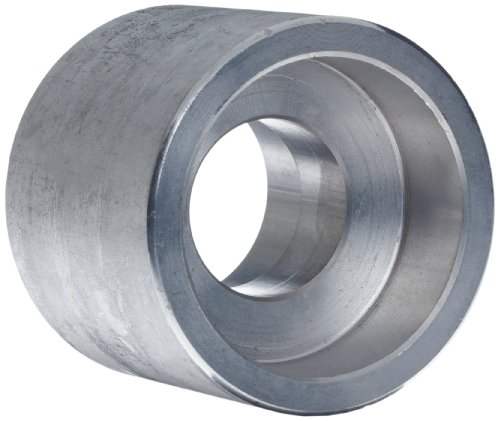
Features: Reducing coupling pipe fitting for extending and connecting pipes of different sizes; Socket weld connections for smooth bore; Made from stainless steel 316/316L for corrosion resistance.
Best for: Environments with corrosive exposure or where sanitary cleanliness matters, such as chemical processing or food-grade systems.
Caution: Stainless steel is more prone to galling if misaligned; ensure proper fit and full penetration welds for longevity.
3″ x 2″ Socket Weld Reducing Coupling
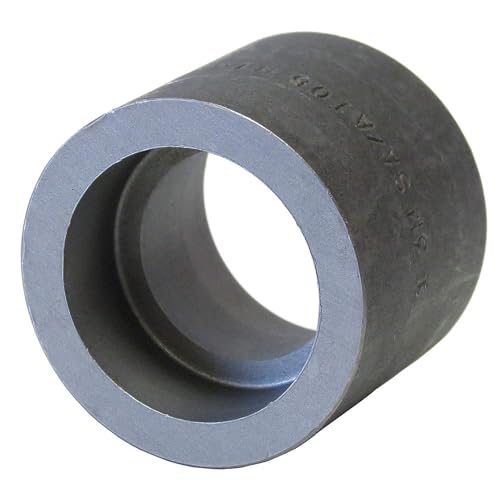
Features: Price for each unit; Forged steel construction; Socket weld ends designed for quick, strong welds on unthreaded pipes.
Best for: Large-diameter piping steps in industrial plants where a compact, welded transition is needed between 3″ and 2″ lines.
Caution: Consider the lead time and availability if you’re stocking for maintenance; large fittings can be less accessible in urgent repairs.
Anvil 2156 Forged Steel, 1-1/2″ x 3/4″

Features: Class 3000 socket weld fittings connect with medium- to high-pressure pipe; Socket weld fittings attach by inserting pipe into the recessed area; Square-cut pipe and fitting for easy fillet welding and installation.
Best for: Systems requiring stronger, higher-pressure connections between larger and smaller lines. This size supports more demanding piping layouts.
Caution: Ensure correct alignment and that the recessed socket is clean and free of burrs before welding to avoid leaks.
3/4″ Socket Weld Coupling (4 Pieces)

Features: Price For: Pack of 4; Socket weld couplings designed for quick, strong welded connections on 3/4″ lines.
Best for: Stocking up for maintenance kits or projects with multiple identical connections where a cost-benefit matters.
Caution: When using multiple units, check for consistent bore size and wall thickness to maintain uniform flow characteristics across the system.
1″ Socket Weld Coupling (3 Pieces)
Features: Multiple-pack option; The listing includes items with various detailed specifications for Class 3000, Socket Weld; Pack contains 3 fittings.
Best for: Systems that require several identical 1″ weld-ready couplings without frequent reordering.
Caution: Confirm the exact pipe size and class (Class 3000) to match your project specifications and avoid mismatches in pressure ratings.
Buying Guide: Socket Weld Reducing Couplings
- Material matters. Forged steel offers strength and durability for high-pressure water or oil systems. Stainless steel resists corrosion in aggressive environments. Choose alloy based on fluid compatibility and local code requirements.
- Pressure class. Class 3000 fittings are common for medium to high pressures. Confirm your system’s operating pressure and temperature to avoid overloading the joint.
- Connection type. Socket weld joints provide a smoother bore and easier welding on unthreaded pipes. They’re typically used in closed systems where leakage risk must be minimized.
- Size transitions. Reducing couplings must match both pipe outer diameters (OD) and wall thickness. Plan the sequence of sizes to minimize disruption in flow and ensure proper weld access.
- Corrosion considerations. In corrosive or sanitary environments, stainless steel options offer superior resistance. Conversely, forged steel may be more economical for non-corrosive service.
- Installation factors. Ensure square cuts, clean bore, proper fit-up, and adequate weld penetration. Misalignment or burrs can cause leaks or flow restrictions.
- Availability and lead times. Larger sizes or specialty materials may affect delivery times. Maintain inventory for planned projects and typical maintenance cycles.
Frequently Asked Questions
- What is a socket weld reducing coupling used for? It connects two pipes of different diameters with a welded joint, typical in medium- to high-pressure systems.
- Which material should I choose? Forged steel is strong and durable for general steel piping; stainless steel is best for corrosion-prone environments.
- What is Class 3000 in these fittings? It describes the pressure rating, indicating suitability for medium to high-pressure applications.
- Are socket welds easy to install? Yes, with square cuts and clean bores, but ensure proper alignment and penetration to prevent leaks.
- Can these fittings handle hot fluids? They are designed for a range of temperatures, but confirm temperature limits for your specific material and class.
- How many fittings should I buy? Plan for project scope, maintenance needs, and stocking without over-ordering; consider packs for common sizes.