
Best Small 120V Electric Motors for DIY Projects and Home Use
When selecting a compact 120V motor for hobby projects, home appliances, or small machines, you want reliable performance, clear specs, and practical limitations stated upfront. The following five products represent a range of common 120V motor options, from synchronous AC motors to speed-controllable units. This guide helps buyers choose who each motor is best for, why it stands out, and any simple caveats to consider.
| Product | Best For | Key Benefit |
|---|---|---|
| Twidec/Synchronous Turntable Motor | DIY cuptisserie or small rotators | Low power consumption with solid torque |
| CHANCS Slow Speed Synchronous Motor | Home heaters, rotating displays | Low speed with quiet operation |
| Topoox DC 1.5-3V 15000RPM Mini Motor | Science projects and toys | Very high RPM in a tiny package |
| EUDAX Motor Kit 6 Set | Educational kits and DIY builders | Multiple voltages and configurations |
| CDMALL Brushed AC Motor Speed Controller | Fans, drills, and simple brushed motors | Real-time voltage readout and overload protection |
Twidec Synchronous Turntable Motor 4W 100-127V

The Twidec model is a compact synchronous motor designed for 100–127V operation. It emphasizes low power consumption while delivering adequate torque for small rotate-and-turn applications. This unit is described as suitable for hand-made projects, cuptisserie rotators, or other small appliances where continuous operation might be needed. It uses a mix of metal, rubber, and plastic components and is noted for low noise and straightforward installation.
Best for: hobbyists building small turntables or cuptisserie devices that require a simple, quiet, energy-efficient motor. Choose this if you want a basic AC motor with minimal fuss and a compact form factor.
Caution: the description blends several use cases (home appliances, lighting, fans) and includes a 6-foot black lamp cord, which may suggest additional wiring needs outside the motor assembly. Verify your power wiring plan before integrating into a project.
CHANCS Slow Speed Synchronous Motor TYC-50 110V

This model is a TYC-50 AC motor rated at 110V with a CW direction and a slow speed of 15–18 RPM. Specifications include a 4W power rating, 7mm shaft, and a 50/60Hz frequency. The gear system blends metal and plastic to balance durability and quiet operation for continuous use. It’s positioned for devices like electric fireplaces, heaters, rotating displays, and similar low-speed applications.
Best for: projects that need slow, deliberate rotation or a gentle turning action where noise must be minimized. It’s a good match for decorative or display purposes that require slow motion with stable torque.
Caution: the unit is specified for 110–130V; ensure your supply matches to avoid performance issues. Thoroughly check shaft alignment and gearing when attaching any load to avoid accelerated wear.
Topoox 6 Pack DC 1.5-3V 15000RPM Mini Motors

Topoox offers six small DC motors intended for science projects, DIY toys, and other experiments. These operate at 0.5–3V with an implied high-speed capability up to 15,000 RPM, driven by small 2×1.5V AA battery power for testing. They are compact, easy to install, and intended for quick projects, making them suitable for classrooms and hobbyists who want high speed in a diminutive form factor.
Best for: quick experiments and small hobby projects where high RPM matters more than load-bearing strength. Choose this when you need compact motors to spin small propellers or toy components.
Caution: running these at higher voltages or under load beyond designs may generate excess heat. Store sealed when not in use to prevent rusting or moisture exposure.
EUDAX DC Motor Set With Accessories

EUDAX presents a six-motor kit with 3V–12V operation and speeds from 9,000 to 25,000 RPM, including a selection of shaft sizes, propellers, and mounting hardware. The set emphasizes a high variety of configurations for DIY science projects and light robotics. It comes with cautionary notes about avoiding short circuits and ensuring correct circuit diagrams to prevent overheating and component damage.
Best for: educational kits and hobbyists who want multiple motor configurations in one package. It’s ideal for teachers or students building simple machines, models, or demonstrations with varied motors.
Caution: data warns about short circuits and potential overheating if circuits are miswired. Proper wiring and circuit planning are essential for safe operation.
CDMALL AC Motor Speed Controller 120V 15A
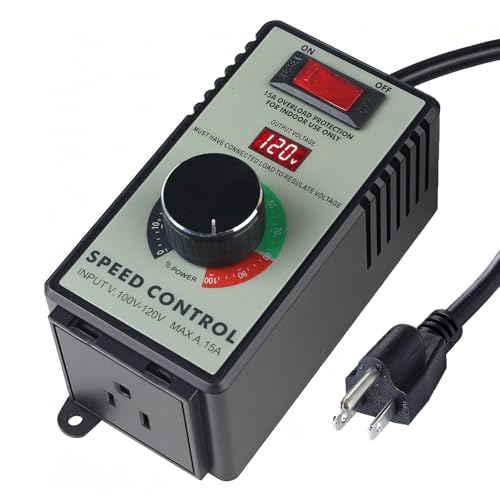
This speed controller is designed for brushed AC motors and provides real-time LED voltage readouts, overload protection via a built-in circuit breaker, and a 0–120V output range. It is compatible with inline duct fans, exhaust fans, ceiling fans, routers, drills, and similar brushed devices. It’s a straightforward option when you need adjustable speed without changing the motor itself.
Best for: users who want to fine-tune the speed of small brushed AC motors and need a clear voltage readout with a safety reset feature. It’s useful for basic lab or workshop experiments and simple home projects.
Caution: not compatible with brushless motors, DC motors, or devices with internal electronics. Verify motor type before purchasing to ensure compatibility.
IGEYAPA AC Motor Speed Controller with LED Display

This 120V controller provides multi-function protection features, including surge and overvoltage protection, with an LED voltage display to monitor output. It has a 6-foot cable and practical plastic housing. The device is aimed at fans, small appliances, and other resistive or inductive loads where controlled voltage is beneficial. It is compatible with devices that do not require electronic speed control beyond simple voltage adjustment.
Best for: users needing a robust, visible speed control solution for small AC motors in home and workshop setups. It’s advantageous when you want to monitor exact voltage while adjusting speed.
Caution: ensure your load aligns with the controller’s 15A maximum and that the motor type is compatible with voltage-based throttling rather than electronic control modes.
Buying Guide: Key Purchase Considerations
- Motor type and load: Choose synchronous AC motors for steady, low-noise rotation at fixed low speeds, or DC motors for high RPM in compact packages. For variable speed needs, use a controller designed for brushed AC motors.
- Voltage and frequency: Verify the supply matches 120V and 50/60 Hz requirements. Some models note 110–130V ranges; ensure your outlet aligns with this specification.
- Speed and torque: Consider the RPM range and torque rating relative to your load. High RPM motors are great for toys and exhibits, while higher torque is essential for cuptisserie or display devices.
- Physical fit: Shaft diameter, length, and mounting provisions matter for installation. Check shaft size (often 7 mm) and mounting holes.
- Protection and safety: Controllers with overload protection and real-time voltage readouts add a safety margin for DIY projects. Look for clear wiring diagrams to avoid short circuits.
- Accessories and wiring: Some kits include wiring cords, battery holders, or propellers. Ensure these accessories match your project needs or plan for compatible alternatives.
FAQ
- What is the main difference between synchronous motors and DC motors at 120V? – Synchronous motors are typically used for constant-speed rotation with lower noise, while DC motors provide higher speed ranges and can be used with simple voltage controllers.
- Do I need a speed controller for a 120V motor? – If you require adjustable speed, yes. Controllers can reduce voltage or adjust current to control motor speed, but check compatibility with brushed vs. brushless designs.
- Can these motors run continuously? – Many small synchronous motors are designed for continuous operation, but always follow the manufacturer’s guidelines and ensure proper cooling in enclosed or high-load setups.
- What safety checks should I perform before wiring a motor? – Confirm voltage rating matches your outlet, inspect shaft alignment, and use proper wiring diagrams to prevent short circuits and overheating.
- Which motor is best for a DIY cuptisserie? – A small, low-noise synchronous motor with compatible shaft size and torque, such as the 4W 100–127V model, is typically well-suited for steady rotation without frequent adjustments.
- Are these motors suitable for beginners? – Yes, especially kits with clear wiring guides and included accessories, but start with a simple project to learn wiring and safe operation.