
Best Short Open Circuit Testers for Automotive Wiring and 12-42v Systems
Looking for a reliable tester to locate shorts and opens in automotive wiring? This guide highlights five top open/short testers that help diagnose circuits without panel removal. The best picks are suited for automotive technicians, DIY enthusiasts, and professional electricians. Each product is evaluated for accuracy, ease of use, and practical limitations to help you choose the right tool for your needs.
Comparison Snapshot
- Power Probe 3000 Circuit Tracer for Shorts and Opens — Best overall for automotive diagnostics and intermittent issues.
- EM415Pro Automotive Wire Tracer — Best for fast tracing behind panels with 6-42V DC systems.
- AWBLIN Wire Tracer — Best value with multi-mode signaling and low battery alert.
- VDIAGTOOL V200 Pro — Best all-in-one tester with comprehensive tests and live voltage display.
- CrysGuard EM415PRO — Best for durable, non-invasive wire tracing with clear open/short indication.
Power Probe 3000 Circuit Tracer for Shorts and Opens
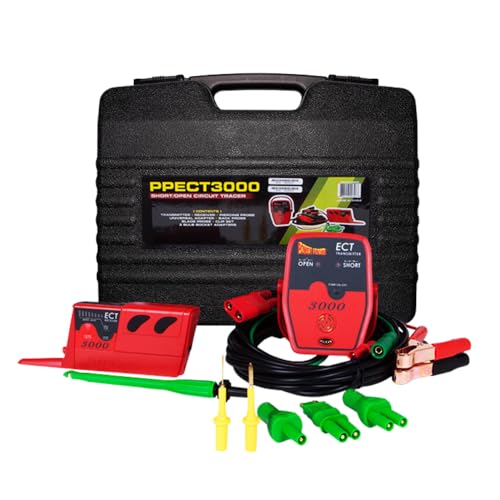
Best for: professional automotive technicians and serious DIYers who need quick, precise localization of shorts, opens, and battery drains without disassembling panels. This unit combines an intelligent transmitter and receiver with direction indicators to identify grounded versus open signals, supporting intermittent conditions and circuit isolation.
Why selected: It provides a focused workflow for tracing shorts and opens with minimal panel removal, which speeds up repairs in complex wiring harnesses. The direction indicators help ensure you’re tracing the correct path in real-world layouts.
Limitation: Details about compatibility with non-automotive 12V systems aren’t specified, so verify your application before purchase.
EM415Pro Automotive Wire Tracer

Best for: automotive technicians who need fast open/short detection and flexible tracing across panels and harnesses. Works with 6-42V DC systems and includes a flexible probe for hard-to-reach areas.
Why selected: This tester emphasizes speed and ease of locating hidden wiring paths, reducing the need to cut or remove insulation. Its voltage range aligns with most automotive electrical systems, trailers, and small vehicles.
Limitation: The description does not detail certifications or long-term durability, so expect standard field reliability rather than industrial-grade guarantees.
AWBLIN Wire Tracer Automotive Electrical Open & Short Finder
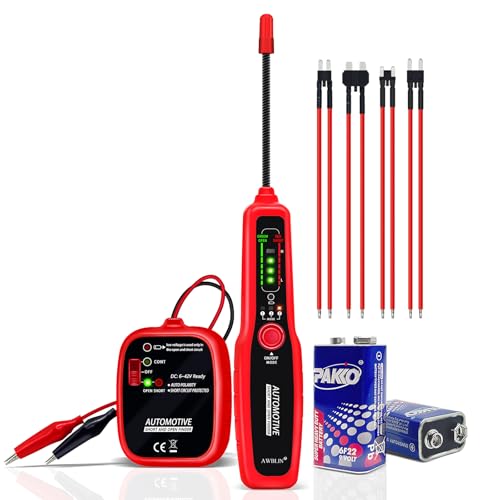
Best for: DIYers and technicians who want a multi-functional tracer with audible and visual signals plus a battery indicator and insulated-wire safety. It’s versatile for locating open connections, broken wires, and current leaks.
Why selected: The device emphasizes clear sound and LED indicators, a low battery alert, and a user-friendly mode for open circuit detection. It’s a practical choice for quick field diagnostics without noise interference.
Caution: Depending on the environment, ambient noise or signal interference could affect sensitive readings; ensure proper probe positioning for accurate results.
VDIAGTOOL V200 Pro Automotive Circuit Tester

Best for: users who want an all-in-one tester capable of diagnosing a wide range of circuit issues, including open/short testing, diode checks, resistance, polarity, and trailer/fuse tests in 12V and 24V systems.
Why selected: It consolidates many tests into one tool with a clear display, allowing quick verification of live status and circuit paths. This reduces the need for multiple devices on a job.
Limitation: The kit relies on vehicle power sources, and there is no mention of standalone battery operation, which may be a constraint in some testing scenarios.
Automotive Circuit Tracer & Wire Tracker EM415PRO

Best for: drivers and technicians needing precise open/short detection with an emphasis on non-invasive tracing behind dashboards, carpets, and engine compartments.
Why selected: This model emphasizes accurate detection and non-invasive tracing, which is ideal for vehicles with tightly packaged wiring. It helps locate opens and shorts without disassembly.
Limitation: The description highlights practice-friendly use but does not specify durability under rough workshop conditions, so treat as a field tool with reasonable wear capability.
Buying Guide: How To Choose The Right Short/Open Tester
Understand your typical work environment, power system, and the level of detail you need. Use these practical questions to compare models.
- What voltage range do I need? Most automotive systems use 6-42V DC. Choose a tester that covers at least this range for broad compatibility.
- Do I need non-invasive tracing? If panel removal is costly or impractical, opt for a tool designed for back-panel tracing and minimal insulation disruption.
- Is an all-in-one tester valuable? For shop efficiency, a device that performs multiple tests (voltage, continuity, diode, resistance, polarity) can save time.
- How important are signaling methods? Strong LED indicators and audible beeps are helpful in noisy environments. Consider a model with clear low-battery alerts.
- What about battery life and power source? Some tools run on vehicle power, others on internal batteries. Ensure compatibility with your preferred workflow.
- Durability and ergonomics: Look for robust housings and comfortable grips for long diagnostic sessions in workshops and on-site jobs.
Practical Tips for Using Short/Open Testers
- Test in a known-good circuit first to verify signal clarity and your probe handling.
- Label wires and connectors as you locate opens and shorts to avoid backtracking.
- Document findings with simple notes or diagrams to guide subsequent repair steps.
Common Scenarios And Recommendations
- Intermittent faults in dashboards or lighting: Power Probe 3000 or EM415Pro are strong choices for tracing hidden wiring paths without invasive disassembly.
- Open circuits behind panels: AWBLIN or VSTM offer clear signal indicators and non-invasive tracing, suitable for in-vehicle use.
- Shop-wide diagnostic suites: VDIAGTOOL V200 Pro provides a broad array of tests in one handheld device, ideal for technicians who need versatility.
FAQ
- What is the primary use of a short/open tester? They locate wiring faults, including open circuits, shorts, and current leaks, across automotive systems.
- Can these testers be used on boats or motorcycles? Many models support 6-42V DC systems, which covers cars, motorcycles, trailers, and some boats. Always verify the device’s voltage range.
- Should I buy multiple testers or a single all-in-one tool? For frequent, varied diagnostics, an all-in-one tool reduces setup time; for focused tasks, a dedicated tester may be faster.
- Do testers require external power? Some rely on the vehicle’s battery, while others may use internal batteries or adapters. Check your model’s power requirements.
- Are there safety considerations? Follow manufacturer guidelines, ensure power is off when needed, and wear appropriate protective gear when wiring is live.
- Will these testers damage vehicle electronics? Proper use and proper probe technique minimize risk, but avoid high-current paths and follow the device’s instructions.