
Best 24V Scooter Battery Chargers for Quick, Reliable Power
Finding a reliable 24V scooter battery charger is essential for keeping mobility devices running smoothly. This guide highlights five compatible chargers, covering popular brands and models to help you choose the right fit for Jazzy, Pride Mobility, ShopRider, Drive Medical, and more. Each option prioritizes safety and compatibility, with features like over-current protection, UL safety certifications, and XLR 3-pin connectivity.
| Product | Brand | Key Feature | Link |
|---|---|---|---|
| 24V 5A 3-Pin Male XLR Charger | Fancy Buying | 5A output, wide compatibility | View |
| 24V 2A Electric Scooter Battery Charger | nvmw | 2A with wide model support | View |
| Pride Mobility ELE1803400 | Pride Mobility | 3.5A, compatible with Jazzy | View |
| LotFancy 24V 2A Battery Charger | LotFancy | UL listed, 3-pin XLR | View |
| QKIIP 24V 5A Fast Charger | QKIIP | 5A fast charging, 3-pin XLR | View |
Note: Product availability and compatibility can vary by device, battery type, and connector. Verify that your battery chemistry is lead-acid and that the connector matches your scooter’s charging port before purchasing.
24V 5A 3-Pin XLR Charger for Jazzy and More

This 24V 5A charger is designed for lead-acid batteries in mobility devices including Jazzy Power Chairs and various Pride mobility products. It uses a 3-pin XLR connector and supports AC input of 100-240V at 50/60Hz, delivering up to 120W for faster charging. The charger is marketed as OEM-compatible and suitable for a broad range of models such as Rascal, Shoprider, Golden Technologies, and Pride lines. It emphasizes safety features like built-in protection against short circuits and over-current situations.
24V 2A Electric Scooter Battery Charger

This 24V 2A charger targets common mobility devices and EZip models, featuring a 3-pin XLR male connector and an input range of 100-240V AC. It claims faster charging than lower-amperage alternatives and includes a 4.9-foot power cord for flexible use. The listing emphasizes compatibility with a range of e-scooters and mobility chairs, though model applicability may vary. It provides standard protections to help prevent overcurrent and short circuits during charging.
Pride Mobility ELE1803400 Charger
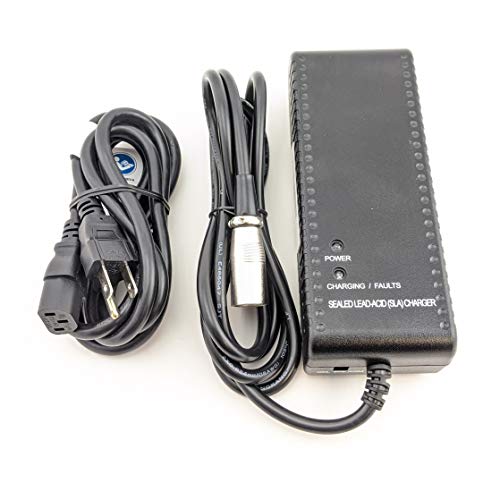
The Pride ELE1803400 is a 24V charger rated at 3.5A, designed to work with Jazzy models and other Pride devices. It is positioned as a replacement and upgrade option for older Maximizer chargers, and is compatible with Jazzy joystick ports and scooter charger ports. This charger emphasizes reliability and compatibility with a broad Pride/Jazzy ecosystem and includes protections common in mobility charging accessories.
LotFancy 24V 2A Battery Charger

LotFancy’s 24V 2A charger is UL-listed and designed for lead-acid batteries in mobility devices, including Jazzy, Pride, and Shoprider lines. It features a 3-pin XLR male connector and safety protections for short circuits and overvoltage. The product is marketed as a standard replacement option for compatible mobility chairs and scooters, offering a balanced charging rate suitable for many daily users.
QKIIP 24V 5A Fast Charger

The QKIIP 24V 5A fast charger is built for rapid charging of lead-acid batteries in mobility devices. It uses a 3-pin male XLR connector and an 8-foot cord, with an input range of 100-240V. The charger distinguishes itself with a higher amperage for quicker top-ups and emphasizes safety features such as over-voltage and short-circuit protection. Users should confirm compatibility with their specific model and battery chemistry before use.
Buying Guide: Key Purchase Considerations
- Battery chemistry compatibility: Most chargers in this category target lead-acid batteries. If your device uses LiFePO4 or another chemistry, verify compatibility or choose a charger designed for that chemistry, such as models marketed for LiFePO4.
- Connector type and polarity: All listed options use a 3-pin XLR connector. Confirm that your scooter’s charging port matches this configuration and that the connector fits snugly to avoid interruptions during charging.
- Charger amperage and charging speed: Chargers range from 2A to 5A. A higher amperage charges faster but may generate more heat; ensure your battery’s capacity supports the chosen rate, and avoid overcharging by following device specifications.
- Input voltage range: Most chargers support 100-240V AC, suitable for international or domestic use. If traveling, verify voltage compatibility and plug type for your region.
- Safety protections: Look for overcurrent, short-circuit, and overvoltage protection. UL listing or other safety certifications indicate adherence to established standards.
- Model compatibility: Some chargers list broad compatibility across Pride, Jazzy, ShopRider, Go-Go, eZip, Drive Medical, and others. Cross-check your device model and battery type to avoid incompatibility.
- Brand reliability and OEM compatibility: Replacement-style chargers may be marketed as OEM-compatible. Consider user reviews and warranty terms to assess reliability and fit for your device.
- Lead-acid vs. other chemistries: Most 24V chargers in this set target lead-acid batteries. If your scooter uses LiFePO4 or another chemistry, select a charger explicitly designed for that chemistry to optimize performance and lifespan.
Practical tips for choosing and using a 24V charger
- Confirm battery voltage and capacity before purchase to ensure the charger’s output aligns with your battery. Mismatches can reduce charging efficiency or cause damage.
- Inspect the connector and port for signs of wear. A loose or damaged connector can lead to poor contact and heat buildup.
- Follow manufacturer guidance for charging cycles. Some chargers support smart charging with LED indicators; monitor the indicators to know when charging completes.
- Store chargers in a cool, dry place away from flammable materials. Heat and moisture can degrade electrical components over time.
For readers evaluating options, the five highlighted chargers balance compatibility, safety, and charging performance for a wide range of mobility devices. When selecting, prioritize compatibility with your battery chemistry, verify connector fits, and consider how quickly you need a full charge in daily use.