
Best RV Generator to Run a/C on the Road
Answer: For keeping your RV’s air conditioner running reliably, look for a portable generator that can deliver 3000-4500+ starting watts and provide RV-ready outlets. The top picks below are RV-ready models with appropriate outlets and fuel options, suitable for different camping needs and budgets. This guide targets road travelers, weekend campers, and small-to-mid-size RV owners who want a practical, safe power source for cooling while parked or traveling.
| Product | Fuel / Power | RV Outlet | Best For |
|---|---|---|---|
| Westinghouse 4650 Peak Watt Portable Generator (Gas) | Gasoline; 3600 running / 4650 peak | TT-30R 30A RV outlet | RVers needing a strong, out-of-the-box RV power option |
| Champion Power Equipment 4000-Watt Dual Fuel RV Ready | Gas/Propane; 4000 starting / 3000 running (gas); 2700 running / 25h (propane) | RV-ready outlets; parallel-ready option | Users wanting dual-fuel flexibility and quiet operation |
| Oxseryn Power Equipment 4400 Watts Inverter Generator | Gasoline; 4400 peak / 3400 running | RV port + standard outlets | Quiet, fuel-efficient option for RVs and small homes |
| Westinghouse 4650 Peak Watt Dual Fuel (Gas/Propane) | Gasoline or Propane; 3600/3240 running (propane) | TT-30R 30A RV outlet | Versatile fuel choice with RV readiness |
| Aceup Energy 4000 Watt Portable Inverter Generator | Gasoline; 4000 peak / 3200 running | RV receptacle + 120V outlets | Compact, quiet option with parallel-ready capability |
Westinghouse 4650 Peak Watt Portable Generator
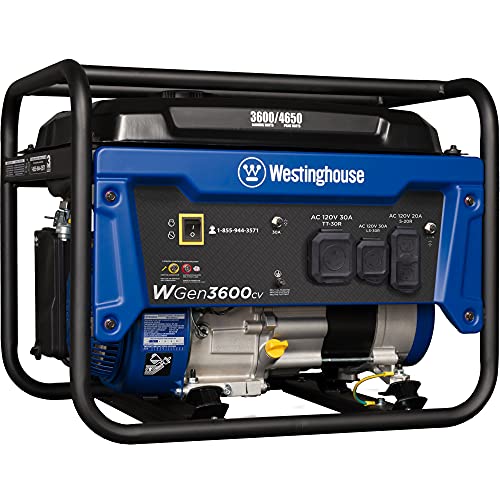
Best for: RV owners who want a robust, single-unit power source with a dedicated RV outlet. This model provides a 30A RV-capable TT-30R receptacle alongside standard 120V outlets, allowing a campsite air conditioner to run without needing a separate power station. It includes a CO sensor for safety and a 4-gallon tank for longer run times. Caution: Heavy enough to require careful handling and proper transfer to storage.
Champion Power Equipment 4000-Watt Dual Fuel RV Ready Portable Inverter

Best for: Campers who value fuel flexibility and quiet operation. This inverter generator runs on gasoline or propane, offers CO Shield auto shutoff, and provides up to 10 hours on gasoline and up to 25 hours on propane. It is RV-ready and can be paralleled for more power, making it a solid choice when long, hot days demand air conditioning in an RV. Limitation: Parallel kit sold separately, so expansion requires additional purchase.
Oxseryn Power Equipment 4400 Watts Inverter Generator

Best for: RVers who need a compact, light-on-fuel, low-noise generator for camping or emergencies. It delivers 4400 peak watts and 3400 running watts, includes multiple output options (two 120V outlets, a 12V DC port, and an RV port), and offers up to 14 hours at 25% load with ECO mode. Caution: Open-frame design requires careful placement to avoid fuel leaks in high-wind conditions.
Westinghouse 4650 Peak Watt Dual Fuel Portable Generator
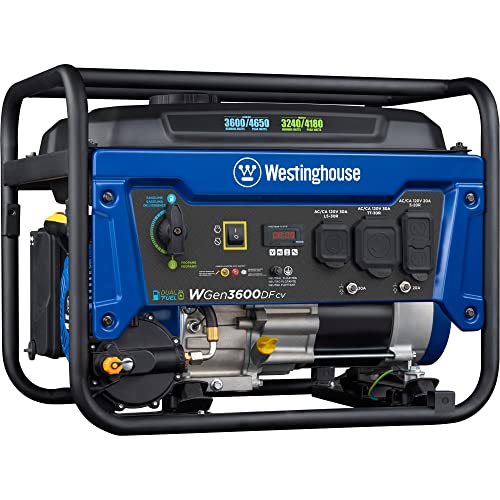
Best for: RV owners who want dual-fuel capability with a consistent RV-30A outlet and robust run times. This generator delivers 4650 peak watts with a practical 3600 running watts on gasoline and 3240 running watts on propane, plus a 4-gallon tank. Safety and readiness are enhanced by rubber-outlet covers and included starter tools. Caution: Propane performance can vary with tank size and temperature.
Aceup Energy 4000 Watt Portable Inverter Generator

Best for: RVers seeking a quiet, compact, and parallel-ready option. This 4000-watt inverter generator provides a 3200 running watt rating with a 149cc engine and includes an RV receptacle plus standard outlets. It supports parallel operation with a separate kit. Caution: Parallel kit sold separately; not all loads will run simultaneously at peak watts.
Buying Guide: Key Considerations For Running A/C In An RV
Power needs depend on air conditioner size, startup surge, and other loads. Use these checks to compare models:
- Starting Watts vs Running Watts: Air conditioners require a surge at start. Look for generators with a startup watt rating well above the AC’s starting requirement.
- RV-Specific Outlets: Choose units with TT-30R 30A RV outlets and appropriate 120V outlets for your RV’s circuits.
- Fuel Type and Run Time: Gas and dual-fuel options offer flexibility. Longer run times reduce refueling during stays.
- Noise Level: Inverter generators tend to be quieter, making them better for campgrounds and nighttime use.
- Portability and Weight: Heavier models may require assistance during setup and transport; plan for storage space in the RV.
- Safety Features: CO sensors, automatic shutdown on low oil or CO, and rubber outlet covers increase safety for RV use.
- Parallel Capability: If your air conditioner is larger, consider a generator that can be paralleled with another unit for extra power.
Practical Tips for Using Your RV Generator Safely
- Operate outdoors and keep vents away from doors and windows.
- Use heavy-duty extension cords rated for outdoor use when connecting to the RV inlet.
- Maintain proper ventilation and avoid overloading the unit with nonessential devices.
FAQ
- What size generator do I need to run an RV air conditioner? – A typical RV air conditioner may require 3000-4500 starting watts; choose a generator with a higher surge capacity and adequate running watts to cover other loads.
- Is a dual-fuel generator worth it for RV use? – Dual-fuel offers flexibility, especially when propane is readily available at campsites, but gasoline generally provides better performance for AC startup.
- Do inverter generators work for RV air conditioning? – Yes, many inverter generators provide enough starting watts and stable power for RV AC units while offering quieter operation.
- Can I run two generators in parallel for more power? – Some models support parallel operation with a separate kit, which can be useful for larger loads, including AC.
- What safety features should I look for? – CO sensors, auto shutoff, oil alerts, and outlet covers are important for safe RV use.