
Best Residential Sewer Grinder Pumps for Reliable Wastewater Management
When choosing a residential sewer grinder pump, select a model designed to shred solids and deliver dependable flow for basement or below-grade systems. The top picks below are best for homeowners needing solid-handling capability, reliable cast-iron construction, and automatic operation. These pumps help prevent clogs in sewage ejector lines and sump basins, enabling smoother everyday wastewater management. The buyers below are organized to fit typical needs like basement installations, below-grade drainage, and durable performance in harsh wastewater environments.
| Product | Horsepower | Voltage | Discharge | Key Benefit |
|---|---|---|---|---|
| Dewinston 2HP 220V | 2 HP | 220V | 2 in | High flow; robust cast iron |
| Aquastrong 1 HP | 1 HP | 115V | 2 in | Compact, solid performance |
| Liberty PRG101A ProVore | 1 HP | 115V | 2 in | V-Slice cutter tech |
| Zoeller M802 | 1/2 HP | 115V | 2 in | Economical upgrade |
| Yutmatin 2HP 110V | 2 HP | 110V | 2 in | High 6498 GPH flow |
Dewinston 2HP 220V Sewage Grinder Pump

The Dewinston 2HP 220V grinder pump is built to shred debris, reducing clogs in sump tanks and sewage lines. It uses stainless steel blades to cut through wipes, twigs, and zip ties. Best for homes with moderate to high wastewater volume where a 6498 GPH capacity is advantageous. The cast iron construction supports durability and long life in challenging wastewater environments. The 15 m lift and 66 ft discharge hose expand installation flexibility. Best for homeowners seeking high flow and robust build in a 220V system.
Who it’s best for: households with frequent solid waste in the line and need a strong 2HP option. Choose this if you require high flow and heavy-duty materials; avoid rubber-only loads or thick towels that blades might struggle with.
Limitation: do not rely on rubber items or thick towels to avoid blade wear. The unit comes with a 26 ft power cord and a 66 ft water discharge hose for versatile setups.
Aquastrong 1 HP Sewage Grinder Pump
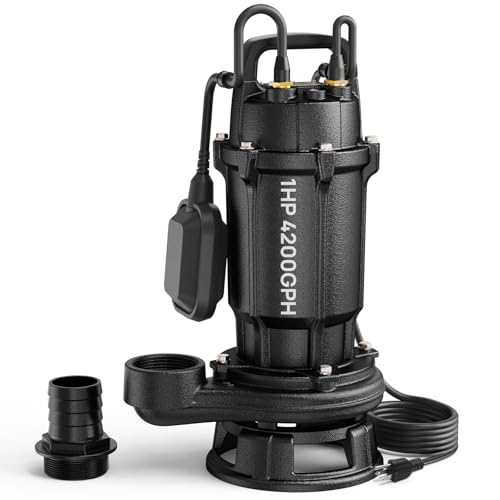
The Aquastrong 1 HP grinder pump delivers about 4200 GPH with a 2-inch discharge, making it a solid choice for basements and sump ejector setups. Stainless steel blades shred soft and semi-rigid debris to prevent clogs, while a cast iron body adds durability. Its 115V single-phase power is convenient for typical residential circuits. Best for smaller basements or areas with lighter wastewater, where 2″ discharge supports efficient flow and easier piping. Note: avoid gasoline, alcohol, or biogas environments.
Who it’s best for: homeowners needing reliable lower-cost operation with steady performance and a compact footprint. Better for basement sump contexts than larger, multi-story systems; avoid heavy, solid waste loads that a smaller motor may struggle with.
Liberty Pumps PRG101A ProVore Grinder

The Liberty PRG101A ProVore series uses heavy cast iron construction and a patented V-Slice cutter technology. This 115V single-phase pump is designed for residential use with reliable solids reduction and consistent wastewater handling. Best for homes needing a durable, efficient grinder that can handle typical household solids with less maintenance. Choose this if you want a straightforward upgrade from standard ejector pumps while prioritizing long-term reliability. Limitation: the system is not marketed for large commercial-duty loads.
Zoeller M802 Automatic Grinder Pump

The Zoeller M802 is a 1/2 HP residential grinder pump featuring a robust grinding system and a durable cast iron housing. It provides a practical solution for homes seeking improved solids reduction over traditional ejector pumps, with dependable wastewater handling in a compact unit. Best for budget-conscious homeowners who still want a solid upgrade in clog prevention. Better for smaller basements or below-grade spaces; avoid oversized installations where higher horsepower is needed for large volumes or very tough solids.
Yutmatin 2HP 110V Sewage Grinder Pump

The Yutmatin model offers 2HP at 110V with 6498 GPH flow and a 2″ discharge. It uses blades for shredding debris and has a 66 ft implied discharge compatibility in its data. Best for homeowners who require high flow in a 110V setup, particularly where 2″ discharge is needed. Choose this if you need strong performance without stepping up to 220V. Limitation: higher power demand may require a suitable circuit and wiring check prior to installation.
Buying Guide: Key Considerations For Residential Grinder Pumps
What size should I choose? Consider horsepower, flow rate (GPH), and lift height. Higher horsepower and GPH are better for busy homes or multiple fixtures, while lift height matters for below-grade installations.
What discharge size do I need? Most systems use 2″ discharge; ensure your piping matches to prevent bottlenecks and maximize efficiency.
Which material matters? Cast iron housings provide durability and corrosion resistance in wastewater environments; stainless steel blades help cut through stubborn solids but evaluate cost versus benefit.
What about automatic operation? Models with automatic float switches reduce maintenance by turning on only when water rises, improving energy efficiency and pump life.
Is a submersible pump suitable for my space? Submersible designs fit basements, crawl spaces, and sump pits; verify that a model is rated for submersion and check warranty terms if applicable.
Practical Comparison Tips
- Best for high-volume homes: 2HP units like Dewinston or Yutmatin in appropriate voltages.
- Better for budget upgrades: Zoeller M802 or Liberty PRG101A with proven longevity.
- Avoid if you regularly flush non-solid items: even grinders struggle with thick trash or rubbery materials.
FAQ
- What is a residential sewer grinder pump?
A grinder pump shreds solids into a slurry that can be pumped through small-diameter sewer lines, reducing clogs in basement sump and septic systems.
- Do I need 110V or 220V?
Choose based on availability and required flow. 110V units are common for smaller homes; 220V units provide higher flow for busier households.
- How important is a cast iron body?
Cast iron offers durability and corrosion resistance in wastewater environments, contributing to pump longevity.
- Can I install a grinder pump myself?
Installation should follow local codes. Many homeowners install with professional help to ensure proper wiring and venting in below-grade systems.
- What maintenance is needed?
Periodic inspections, cleanouts, and ensuring debris is not flushed can extend pump life and reduce clogs.
- What’s the difference between a grinder and a ejector pump?
Grinder pumps actively shred solids; ejector pumps lack grinding capabilities and rely on larger solids transit, which can increase clogs.