As an Amazon Associate I earn from qualifying purchases. These links may earn this site a commission when you buy, at no extra cost to you.
When tackling hardened steel, thick metal, or high-alloy alloys, the right reciprocating saw blade can dramatically improve cutting speed, reduce heat buildup, and extend blade life. This guide highlights top carbide and bi-metal blades engineered for extreme metal cutting, including high-strength steels, stainless, cast iron, and thick structural materials. Each pick below is designed to deliver reliable cuts with less binding and fewer passes, helping professionals and DIYers finish tough metal projects more efficiently.
Summary of chosen products:
| Brand | Product | Blade Type | Length / TPI |
|---|---|---|---|
| EZARC | Carbide Endurance for Thick Metal, 6-Inch, 8TPI (3-Pack) | 6″, 8 TPI | |
| Diablo | Steel Demon Carbide Teeth, 6″, 8 TPI (DS0908CF) | 6″, 8 TPI | |
| Diablo | Steel Demon Carbide Teeth, 6″, 8 TPI (DS0608CF) | 6″, 8 TPI | |
| HARDWIN | Carbide Reciprocating Blade, 6″, 8 TPI | 6″, 8 TPI | |
| EZARC | Bi-Metal 6-Inch, 14+18TPI for Steel Demolition (R610DM, 5-Pack) | 6″, 14+18 TPI |
EZARC Carbide Endurance 6-Inch 8TPI (3-Pack)
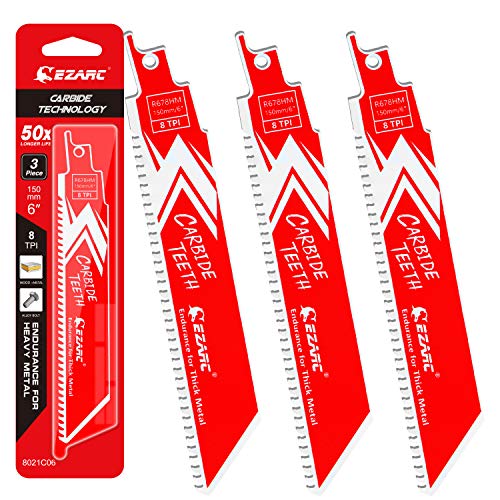
Designed for heavy metal applications, this EZARC trio uses carbide technology to extend blade life significantly compared with traditional bi-metal blades. The 8 TPI tooth design is optimized for cutting thick metals, including high-alloy steels, stainless, rebar, and car beams. ANSI-grade carbide teeth help maintain sharpness when slicing through hardened steels, reducing the need for frequent blade changes and improving cutting performance in demanding jobs.
Key considerations
- Carbide durability offers substantially longer life in challenging metals.
- 6-inch length favors quick, plunge cuts in thick materials.
- 8 TPI provides faster material removal in thick metal, with tolerable control.
Diablo Steel Demon Carbide Teeth (DS0908CF)

This Diablo blade is engineered for extreme metal cutting, featuring TiCo Hi-Density carbide and a Perma-SHIELD non-stick coating. It combines high performance carbide tips with a reinforced blade connection to handle the impact of tough metals like stainless and high-strength alloys. The 6″ length and 8 TPI design deliver strong cutting power for thick metal sections and cast iron components, with reduced heat buildup and better bite in challenging materials.
Key considerations
- Ultra-hardened carbide edge reduces dulling under heavy use.
- Non-stick coating helps resist heat and gumming during long cuts.
- Durable tip-to-blade connection improves impact resistance in tough jobs.
Diablo Steel Demon 6″ Carbide (DS0608CF)

The DS0608CF variant emphasizes ultra-hardened cutting edges to achieve up to 50x longer cutting life than standard bi-metal blades for extreme metal cutting. Ideal for applications between 3/16″ and 9/16″, it targets thick metal work where resilience and speed matter most. The carbide-TiCo construction is designed to maintain sharpness while cutting high-strength alloys, cast iron, and stainless steel.
HARDWIN Carbide Reciprocating Blade, 6-Inch

This HARDWIN blade pairs 30x longer carbide life with an 8 TPI anti-binding wavy tooth design. The 6-inch length is ideal for fast, precise cuts in hard metals like stainless steel and hardened alloys. Each tooth is precision milled and individually welded, ensuring burr-free cuts and consistent performance through tough demolition or metalworking tasks. The universal 1/2-inch shank makes it broadly compatible with standard saws used in construction and metal shops.
EZARC 6-Inch Bi-Metal For Steel Demolition (R610DM, 5-Pack)

This EZARC 5-pack uses bi-metal construction with a 14+18 TPI tooth pattern, optimized for steel demolition. The blade design focuses on balanced performance for metal cutting tasks, offering increased longevity over standard blades and a profile suited to reducing binding in tougher jobs like cutting through thick structural steel, rebar, or heavy gauges of metal pipe.
Buying Guide: Key Purchase Considerations
- Material and tooth design: Carbide blades excel in hardened steels and alloys, offering longer life at the cost of higher price. Bi-metal blades provide good performance at a lower cost and are suitable for demolition and mixed-metal tasks.
- Blade length and TPI: Shorter blades (5–7 inches) are quicker for plunge cuts and tight spaces, while 8 TPI and higher offer smoother cuts in thicker metals. For very hard metals, 8 TPI often balances speed and control.
- Tooth geometry and coatings: Anti-binding designs reduce blade binding in thick metals. Coatings like non-stick or heat-resistant coatings help reduce gum buildup and heat decay during extended cuts.
- Shank compatibility: Most modern reciprocating saws use a 1/2-inch universal shank. Confirm compatibility with your tool to avoid fit issues.
- Durability vs. cost: Carbide blades last significantly longer but are pricier. For high-volume or frequent metal cutting, carbide blades can reduce total blade changes and downtime.
- Application suitability: Choose blades tailored for hardened steels, stainless, cast iron, or structural metals. For meat and bone cutting in food contexts, select FDA-approved, food-grade blades with appropriate corrosion resistance.
- Maintenance: Clean blades after use, wipe away debris, and store in a dry environment to maximize lifespan. Avoid bending or twisting blades during cutting to preserve tooth alignment.
In selecting the best reciprocating saw blade for hardened steel and thick metals, consider the balance between carbide durability and cost, the job’s metal type, and the desired cutting speed. The blades highlighted above are designed to deliver reliable performance in demanding metal-cutting applications, helping professionals complete challenging tasks with fewer blade changes and less downtime.