As an Amazon Associate I earn from qualifying purchases. These links may earn this site a commission when you buy, at no extra cost to you.
Choosing the right reciprocating saw blade for brick and masonry tasks can dramatically improve cutting speed, precision, and blade life. This guide highlights top carbide- and diamond-grit blades designed to handle brick, aerated concrete, and related materials. Each option balances durability, vibrational stability, and compatibility with common saw brands. Use the buying guide below to compare what matters most for your project and workload.
| Product | Brand | Key Feature | Material | Best For |
|---|---|---|---|---|
| PAYA TOOLS 9-Inch Masonry Reciprocating Saw Blade | PAYA TOOLS | Carbide tooth strip for durability | Carbide | Aerated concrete, hollow brick, cement boards |
| MRCGTCE 12-Inch Masonry Reciprocating Saw Blade | MRCGTCE | YG8 tungsten carbide teeth; high wear resistance | Tungsten carbide teeth, HCS body | Red brick, fiber cement, aerated concrete |
| Caliastro 9-Inch Brick/Masonry Saw Blade (2-Pack) | Caliastro | High carbon steel with tungsten carbide teeth | Carbide teeth on carbon steel | Brick, mortar, aerated concrete, engineered stone |
| EZARC Demolition Masonry Reciprocating Saw Blade 12-Inch | EZARC | Carbide teeth; durable, wide-body for stability | Carbide | Aerated concrete, hollow brick, drywall |
| Diablo 9″ Diamond Grit Reciprocating Saw Blade | Diablo | Diamond grit edge; up to 6x life | Diamond grit | Cast iron, masonry, fiber cement |
PAYA TOOLS 9-Inch Masonry Reciprocating Saw Blade

The PAYA TOOLS blade uses a carbide tooth strip to deliver superior durability in masonry applications where standard bi-metal blades struggle. It is optimized for straight cuts in brick, aerated concrete, and related materials, with weight-focused design to reduce vibration and minimize dust. It is suitable for brick, sand-lime brick, cement panels, and aerated concrete. It is not intended for wood or plastic.
MRCGTCE 12-Inch Masonry Reciprocating Saw Blade
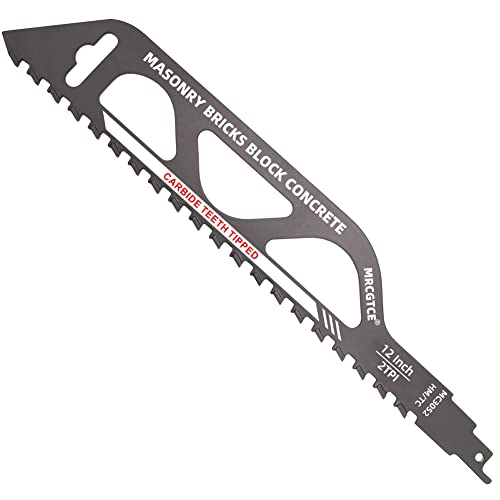
The MRCGTCE blade features 2 TPI tungsten carbide teeth tipped for demolition-grade performance. Its YG8 carbide teeth deliver enhanced wear resistance, with a strong steel back to withstand tough masonry cutting. Suitable for red brick, light brick, fiber cement, aerated concrete, and porous materials, it aims to maximize cutting efficiency and blade life in demanding environments.
Caliastro 9-Inch Brick/Masonry Saw Blade (2-Pack)

This two-pack from Caliastro provides 9-inch blades built for masonry work, including brick, mortar, and aerated concrete. With high carbon steel construction and tungsten carbide teeth, these blades are designed for compatibility with major reciprocating saw brands across the market, ensuring broad usability for home and professional projects alike.
EZARC Demolition Masonry Reciprocating Saw Blade 12-Inch

EZARC’s 12-inch carbide blade is designed for versatility, ideal for porous aerated concrete, hollow brick, fiber cement, and drywall. Its carbide tooth strip provides durability for tough masonry cuts, with a wide-body design that supports stability and precise results. Includes blades of different sizes for varied demolition requirements.
Diablo 9″ Diamond Grit Reciprocating Saw Blade

Diablo’s diamond grit blade is built for extended life in demanding masonry tasks. The thin kerf design enables faster cutting with less resistance, while the Perma-Shield coating protects against heat, gum buildup, and corrosion. It excels in cast iron, masonry, fiber cement, and fiberglass projects, delivering consistent performance and longevity.
Buying Guide: What To Look For When Choosing Brick And Masonry Blades
- Tooth Material And Configuration: Carbide-tipped and diamond-grit blades offer superior wear resistance for hard masonry. Teeth-per-inch (TPI) and tooth geometry affect cutting speed and finish quality. Higher carbide content generally lasts longer on abrasive materials like brick and aerated concrete.
- Blade Length And Backing: Long blades (12 inches or more) are common for demolition and deep cuts. A strong steel back increases durability and helps resist binding in dense masonry.
- Material Compatibility: Ensure the blade is rated for the materials you work with—red brick, aerated concrete, fiber cement, and stone each benefit from different edge configurations.
- Blade Width And Kerf: Thin-kerf blades remove material quickly with less resistance but can be less forgiving on rough cuts. Wider blades can offer steadier cuts in tough materials.
- Brand And Fit: Look for blades designed to fit the saw brands you own (DeWalt, Makita, Milwaukee, etc.). A universal shank can improve compatibility across different models.
- Vibration And Dust Control: Weight-optimized and well-balanced blades reduce vibration and dust, improving control and reducing operator fatigue during extended work sessions.
- Intended Use: Distinguish blades meant for demolition and heavy masonry from those designed for precise scoring and straight cuts. Some blades are not suitable for cutting wood or plastics.
- Durability Features: Coatings like Perma-Shield or braided carbides contribute to longevity by resisting heat buildup and corrosion in tough working conditions.
Choosing By Scenarios
- Simple brick cutting: Carbide-tipped blades with 2 TPI or similar configurations offer a good balance of speed and durability for straight cuts.
- Demolition or heavy-duty cut: Diamond grit or high-carbide blades with longer blades and reinforced backs excel in demanding tasks like cutting through solid masonry or fiber cement.
- Versatile workshop use: A two-pack approach with different blade lengths and sizes provides flexibility for various project requirements without swapping frequently.
All blades discussed are intended for masonry-related applications. For best results, match blade type to the specific masonry material, maintain proper blade speed, and follow manufacturer safety guidelines.