As an Amazon Associate I earn from qualifying purchases. These links may earn this site a commission when you buy, at no extra cost to you.
When tackling aluminum cutting with a reciprocating saw, selecting the right blade can dramatically improve cut quality, reduce heat buildup, and extend blade life. This guide highlights five top-rated blades designed for metal cutting, emphasizing durability, bi-metal or carbide construction, and compatibility with typical aluminum workpieces. Use this overview to compare options before you buy, so you can finish jobs faster and with cleaner edges.
Summary of chosen products
| Product | Brand | Material Type | Key Benefit |
|---|---|---|---|
| DEWALT Reciprocating Saw Blades, Straight Back, Bi-Metal, 6-Inch 24 TPI | DEWALT | Bi-Metal | Durable edge, Made in the USA with global materials |
| 6-Inch Thick Metal Cutting Blades (18 TPI) 8 Pack | Caliastro | Bi-Metal | Fast cutting, robust thickness for metal sheets |
| EZARC Carbide Reciprocating Saw Blade R678HM Endurance | EZARC | Carbide Tipped | Up to 50x longer life, extreme metal cutting |
| Bosch RM618 6-Inch 18T Metal Cutting Blades | BOSCH | Bi-Metal | Thin-kerf for clean metal cuts |
| MUOZLOP 5 Pack 6 inch Blades, 18 TPI | MUOZLOP | Bi-Metal with cobalt blend | Balanced design with high durability |
DEWALT Bi-Metal 6-Inch 24 TPI (DW4813)

The DEWALT DW4813 series uses a bi-metal blade construction that combines a flexible spring steel body with a hardened tooth edge. This blend offers durability for metal-cutting tasks while maintaining blade life under demanding cuts. The 6-inch length and 24 TPI provide a balance between speed and precision for aluminum sheets and other ferrous or non-ferrous metals. The blade is designed for reliability in professional settings, including rough-in work and remodeling projects.
Caliastro 8-Pack 6-Inch 18 TPI Bi-Metal Blades

The Caliastro set features eight 6-inch blades with a thick 0.05-inch body and 18 TPI. Constructed from bi-metal materials, these blades are engineered for faster metal cutting and added durability. The design minimizes blade bending and breaking during heavy-duty work, such as cutting through metal studs, conduit, and thin aluminum sheeting. Precision-set teeth promote smoother cuts, making them suitable for professional remodeling and fabrication tasks where aluminum pieces must be cleanly separated.
EZARC R678HM Endurance Carbide 6-Inch 8TPI
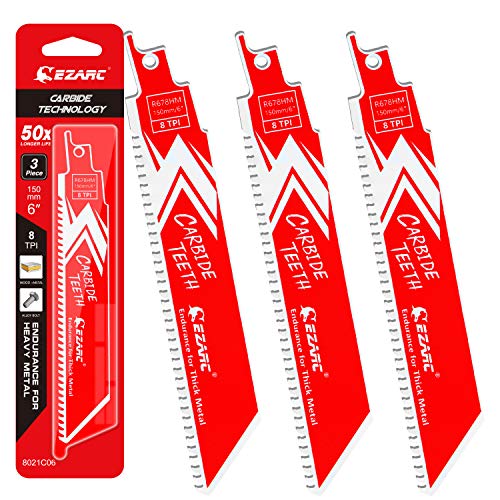
EZARC delivers carbide-tipped blades designed for demanding metal cutting. The R678HM Endurance blade is built for extended life in tough applications, offering up to 50 times longer life than typical bi-metal blades. With 8 TPI and a 6-inch length, this blade excels at cutting thicker aluminum stock, cast metal, and high-strength alloys. Carbide tips help resist heat build-up and maintain sharpness in challenging material combinations, reducing the need for blade changes on extended jobs.
Bosch RM618 6-Inch 18T Metal Blades
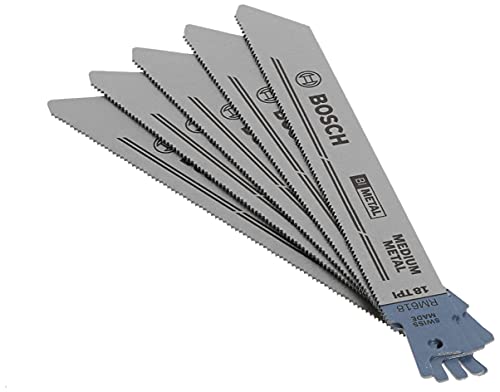
BOSCH RM618 blades emphasize pro-grade bi-metal construction and a thin-kerf .035 inch body. The 18 TPI configuration is optimized for clean cuts in sheet metal, including ferrous and non-ferrous materials. The blades’ reinforced teeth and thin kerf help minimize heat buildup and produce smoother edges on aluminum panels, making them a strong choice for tradespeople working on HVAC, ductwork, or panel fabrication projects.
MUOZLOP 5-Pack 6-Inch Blades, 18 TPI

MUOZLOP offers a five-blade set featuring 18 TPI bi-metal blades with a cobalt blend. The design emphasizes durability and heat resistance for metal cutting, including aluminum and other alloys. The blades are built with balanced thickness for stability and reduced vibration, enabling smoother entry into corners and tight spots. The included organizer case helps keep blades organized between projects and job sites.
Buying Guide: Key Factors When Choosing Reciprocating Saw Blades For Aluminum
Product selection for aluminum cutting hinges on blade construction, tooth geometry, and blade thickness. Here are important considerations and how they apply to the blades above:
- Material construction: Bi-metal blades pair a flexible steel body with hardened teeth for durability. Carbide-tipped blades offer maximum wear resistance, especially for tough alloys and thicker aluminum. Choose based on the anticipated workload and metal hardness.
- Tooth count and type: Higher teeth per inch (TPI) typically yield cleaner cuts in sheet metal but may cut slower. Lower TPI blades cut faster through thicker metal but can leave rougher edges. For aluminum, mid-range ranges (18–24 TPI) are common, offering a balance of speed and finish.
- Blade thickness and kerf: Thicker blades resist bending but can remove more material per pass, increasing heat. Very thin blades cut quickly but are prone to bending in hard metals. Consider 0.035–0.05 inch blades for metal applications including aluminum sheets.
- Length and reach: Standard 6-inch blades suit many DIY and professional tasks. Shorter blades fit tight spaces; longer blades penetrate deeper into material in open areas.
- Application scope: Some blades are designed for general metal cutting, while others target thick metal, cast iron, or high-strength alloys. For aluminum work, blades labeled for metal cutting or thin-kerf sheet metal cuts are particularly relevant.
- Brand and availability: Reputable brands (DEWALT, Bosch, Diablo, EZARC, MUOZLOP) provide consistent quality and replaceable parts. Availability influences long-term project planning.
When evaluating blades for aluminum cutting, it is also important to consider safety and technique. Use a blade with the appropriate hook angle and secure the workpiece to prevent vibration. Apply steady pressure without forcing the cut, and let the blade do the work. Cooling the cut with light lubricant or cutting oil can reduce heat buildup and extend blade life on tougher aluminum alloys.