
Best Rechargeable Batteries for Solar Panels and Off-Grid Power
Choosing the right rechargeable batteries for solar panels can extend system life, improve reliability, and reduce waste. This guide features five top options commonly used in solar lighting, trail cameras, remote sensors, and portable solar devices. Each product brings a balance of capacity, durability, and compatibility to help you power off-grid setups with confidence.
Summary of selected products at a glance:
| Product | Brand | Capacity | Voltage | Notes |
|---|---|---|---|---|
| (4-Pack) HyperPS 14430 | HyperPS | 400 mAh | 3.2V | LiFePO4 chemistry |
| Brightown 12-Pack AA | Brightown | 1000 mAh | 1.2V | NiMH, high capacity |
| (8-Pack) HyperPS 14430 | HyperPS | 400 mAh | 3.2V | LiFePO4, multiple-pack option |
| Stealth Cam Sol-Pak 3000 mAh | Stealth Cam | 3000 mAh | 12V | Solar battery pack for trail cameras |
| Lesaps 5000mAh 2-Pack | Lesaps | 5000 mAh | 10.8V | Solar-ready with USB-C |
(4-Pack) HyperPS 3.2V LiFePo4 14430

The HyperPS 14430 cells use Lithium Iron Phosphate chemistry for stable, long-cycle life in outdoor solar applications. Each 14430 cell delivers a nominal voltage of 3.2V and a capacity of 400mAh, making them well-suited for compact solar lighting, portable mini panels, and small security devices. Their LiFePO4 chemistry provides thermal stability and safety in varied weather conditions, while the compact size simplifies integration into small enclosures.
Key considerations:
- Compatibility: Best for devices that require 3.2V LiFePO4 packs and fit in 14430 form factors.
- Cycle life: LiFePO4 cells generally offer high cycle counts, reducing replacement frequency.
- Safety: Notably stable across temperature changes, an advantage in outdoor solar deployments.
Brightown 12-Pack AA Batteries
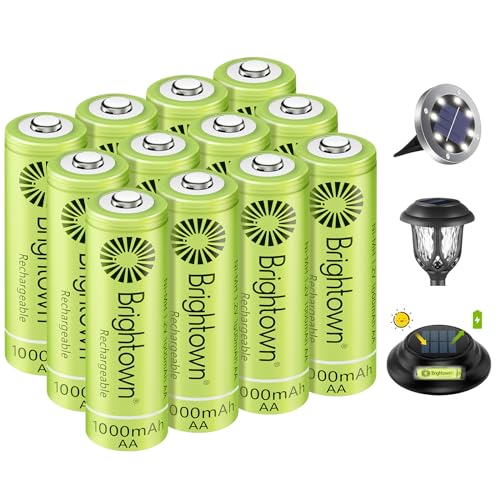
Brightown’s 12-pack uses NiMH chemistry at 1000mAh per cell and 1.2V nominal voltage, designed for high-use devices such as solar lights and household electronics. These cells are pre-charged to a usable level and can endure up to around 1000 recharge cycles, offering a practical solution for repeated daily use and extended solar-powered setups. They are especially useful in larger solar lighting installations and multi-device kits where AA cells are standard.
Key considerations:
- High capacity: A good balance for devices with moderate draw and longer runtimes between charges.
- Recharge cycles: NiMH cells offer robust recharging capability with many cycles when cared for properly.
- Environmental impact: Reusable batteries reduce waste compared with disposables.
(8-Pack) HyperPS 14430

This larger pack provides the same 3.2V LiFePO4 cells with 400mAh capacity per cell, now in an eight-pack. It is ideal for solar-powered devices with multiple small battery slots, such as garden lights, compact cameras, or multiple sensor nodes in a solar network. The LiFePO4 chemistry supports longer life in outdoor environments and tends to keep voltage more stable under load than some other chemistries.
Key considerations:
- Versatility: More cells means more modular power for distributed solar deployments.
- Durability: LiFePO4 cells handle deep discharge better than many alternatives.
- Weight: Although compact, multiple cells add weight to the overall system.
Stealth Cam Sol-Pak Solar Battery Pack, 3000 mAh
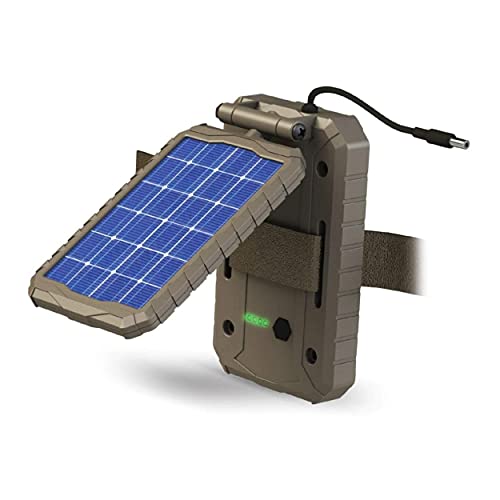
This Sol-Pak battery pack combines a 12V solar panel with a 3000mAh Li-ion battery pack to extend field life for wireless or cellular trail cameras. The kit includes an external 12V DC jack and adjustable mounting brackets, enabling flexible positioning to maximize light exposure. It is designed to keep hunting rigs powered in remote locations with limited access to traditional battery changes.
Key considerations:
- Field life: Solar charging reduces the need for frequent battery changes in the field.
- Compatibility: Specifically designed for Stealth Cam wireless/cellular cameras with 12V jacks.
- Positioning: The adjustable bracket helps optimize sun exposure across different environments.
Lesaps 5000mAh 2-Pack

Lesaps offers a 2-pack of high-capacity 5000mAh batteries intended for solar-ready systems that require longer runtimes between charges. The pack features a 10.8V configuration and supports USB-C charging, enabling quick top-ups via solar panels or compatible chargers. It is presented as a flexible option for Moultrie trail cameras and other solar-powered devices that benefit from extended operation in rugged outdoor settings.
Key considerations:
- High capacity: 5000mAh per pack provides extended energy supply for solar devices.
- USB-C charging: Facilitates faster, more convenient top-ups with compatible chargers.
- Solar-ready compatibility: Suits devices and panels designed for higher-voltage Li-ion packs.
Buying Guide
When selecting rechargeable batteries for solar applications, consider chemistry, capacity, form factor, and compatibility with your equipment. The following factors help balance performance with practicality:
- Chemistry choice: LiFePO4 (Lithium Iron Phosphate) cells offer stability, long cycle life, and safer operation in outdoor conditions, making them popular for solar projects. NiMH cells provide robust performance in common consumer devices and are widely available in AA or AAA formats.
- Voltage and form factor: Match the device’s voltage requirements and the available space. 3.2V LiFePO4 cells fit certain small solar lights and sensors, while higher-capacity Li-ion packs suit trail cameras and larger panels.
- Capacity vs. runtime: Higher mAh translates to longer runtimes between charges, but consider the device’s load and charging source. For multi-device kits, packs with standardized sizes enable easier maintenance.
- Cycle life and charging: Look for cells with long cycle life and compatibility with your charging setup, including solar panels and USB-C or micro-USB chargers where applicable.
- Environmental resilience: Outdoor exposure demands thermally stable chemistries and robust packaging to withstand temperature fluctuations, moisture, and dust.
- Maintenance: Periodic conditioning (full discharge and recharge cycles, when recommended) can help maintain capacity, particularly for NiMH cells.
- System integration: Plan for the number of devices in the solar network. Modular packs simplify future expansion or replacement without rewiring.
In summary, LiFePO4-based cells are favored for long-term outdoor solar deployments due to safety and durability, while high-capacity NiMH options excel in widespread, device-dense setups. For trail cameras and higher-demand devices, purpose-built solar battery packs provide optimized form factors and ready-made integration features. Assess your devices’ voltage, space, and charging options to choose a solution that minimizes maintenance while maximizing uptime.