
Best Rated Solar Attic Fans for Efficient Home Cooling
Exploring solar attic fans helps homeowners reduce cooling costs and improve attic ventilation without relying on grid power. The following five options are among the top-rated choices, balancing airflow, durability, and ease of use. This guide highlights features, performance notes, and practical considerations to help you choose the right model for your space.
| Product | Brand | Main Benefit |
|---|---|---|
| iLIVING HYBRID Ready Smart Thermostat Solar Roof Attic Exhaust Fan | iLiving Store | Smart thermostat control and high capacity |
| Hon&Guan Solar Attic Fan with Thermostat, 12″ | Hon&Guan Store | High airflow with adjustable modes |
| Solar Attic Fan 32W 1600CFM | DC HOUSE Store | Efficient off-grid solar ventilation |
| Hybrid Solar Attic Fan with Remote Control | Moonshan Store | Remote control and multi-speed options |
| Remington Solar Builder Series 40 Watt Solar Attic Fan | Remington Solar Store | Night auto-run and moisture control |
iLIVING HYBRID Ready Smart Thermostat Solar Roof Attic Fan

The iLIVING unit pairs a 40-watt solar module with a robust 1150 CFM blower. It includes a smart thermostat that can be set between 50°F and 122°F with an enable/disable option, and it supports adjustable solar panel angles (0°, 15°, 30°, 45°) to optimize sun exposure. An IP68 waterproof brushless motor promises durability, and the model carries a lengthy 15-year warranty. This option is designed for large attics, cooling areas up to roughly 2900 square feet in practice, and can be integrated into home automation schemes via its thermostat control.
Key considerations include the need for sufficient sun exposure to reach peak performance and the 15-year warranty indicating strong build quality. For climates with variable sunlight, the thermostat control helps maintain consistent attic temperatures and can work in conjunction with other venting strategies. The adjustable solar panel angle is helpful for roof slope and seasonal sun position, enabling flexible installation.
Hon&Guan Solar Attic Fan With Thermostat
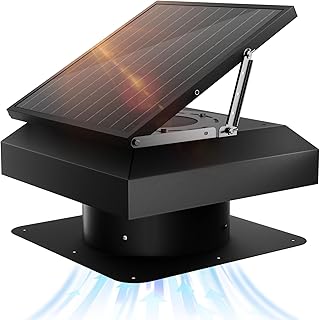
The Hon&Guan model delivers up to 2000 CFM, cooling spaces up to 2500 square feet. It features multi-angle adjustments from 0 to 70 degrees and operates with or without a connected AC/DC adapter for continuous use. The unit includes a thermostat, enabling auto-start at set temperatures (68–113°F) and two modes to balance energy savings with performance. A notable aspect is its ability to run without a battery backup, relying on solar energy and the optional adapter for night or overcast periods.
This option suits homeowners who want flexible positioning and a straightforward mode-based control. The integration of an AC/DC adapter improves reliability in less sunny days, though it adds a dependency on an external power source. The heat and humidity removal helps prevent attic moisture damage, which can protect roofing materials and improve indoor air quality.
Solar Attic Fan 32W 1600CFM
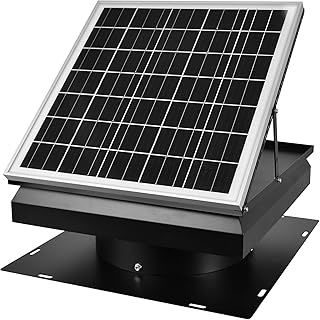
This model emphasizes off-grid operation with 32W solar panels and a rated 1600 CFM airflow. It promises up to a 30°F attic temperature reduction and emphasizes compatibility with existing vents for enhanced whole-house airflow. The design is weatherproof and adaptable to various spaces such as homes, garages, RVs, and greenhouses. It highlights 100% solar operation with straightforward installation and minimal wiring, appealing to DIY installers.
Pros include substantial airflow without electrical costs and the potential for synergy with other attic ventilation. Potential considerations are ensuring proper mounting on a suitable roof plane and checking compatibility with existing vent channels to maximize performance. Its robust blade design is built to withstand wind loads, aiding long-term reliability in diverse climates.
Hybrid Solar Attic Fan with Remote Control

This Moonshan option includes a remote control, enabling on/off operation at any temperature, plus 4-speed and 4-timing settings for precise cooling. Its design features fluid dynamics with a curved dome to optimize airflow and reduce resistance losses through turns. The unit also incorporates lightning protection and rain-proofing, using a steel air duct and aluminum frame with UV-resistant epoxy resin coating. A power cord offers additional supply during rainy days, supporting reliability in variable weather.
Consider this model if you value remote operation and adjustable airflow. The remote control and multiple timing presets simplify daily use, while the weather-resistant construction provides peace of mind in exposed installations. As with all solar attic fans, performance depends on sun exposure and roof conditions; planners should assess wiring, mounting height, and compatibility with attic insulation to maximize outcomes.
Remington Solar Builder Series 40 Watt Solar Attic Fan

The Remington Solar Builder Series provides 40 watts of solar input and includes an 110V adapter for automatic night operation. The kit emphasizes moisture control, with built-in humidistat and thermostat to regulate airflow based on attic conditions. This hybrid approach allows day-to-night operation, which can help maintain steady attic conditions while reducing daytime heat buildup and potential moisture-related issues. The design targets homeowners seeking a balanced, year-round ventilation strategy.
Key considerations include the need for the adapter and power options to ensure smooth night-time operation, especially in seasons with shorter daylight hours. The humidistat feature helps address moisture concerns but requires proper calibration. Installation practicality depends on roof type, attic access, and surrounding insulation; a thorough assessment ensures the unit delivers the expected cooling and moisture protection without overworking the system.
Buying Guide: Key Purchase Considerations For Solar Attic Fans
- Airflow and coverage: Look for CFM ratings that align with your attic size. Higher CFM matters for larger spaces, but ensure the fan can sustain performance throughout daylight hours.
- Power source and reliability: Compare models with pure solar power versus hybrid options that include AC/DC adapters for continuous operation during cloudy days or at night.
- Thermostat and controls: Built-in thermostats help automate operation. Remote control or smartphone integration adds convenience, especially for multi-story homes.
- Durability and weather resistance: IP ratings, rust-resistant housings, and UV-resistant finishes matter for long-term outdoor exposure, particularly in harsh climates.
- Installation considerations: Roof slope, mounting space, and compatibility with existing vents influence installation complexity and effectiveness.
- Warranty and support: Longer warranties generally indicate confidence in durability; verify what is covered and the service process.
- Energy savings vs. upfront cost: Weigh initial investment against anticipated cooling savings and attic moisture protection benefits over time.
- Noise levels: Some units operate quietly, while others may produce noticeable fan sound. Consider if the attic location will be audible in living spaces.
- Maintenance needs: Look for accessible components, filter-free designs, and straightforward cleaning procedures to sustain performance.
- Compatibility with climate: Humidity, temperature extremes, and sun intensity influence how much benefit solar attic fans provide in your region.
When comparing products, map their features to your attic dimensions, roofing type, and typical weather patterns. A hybrid option can offer greater reliability in mixed climates, while a high-CFM, all-solar model can excel in sunny regions with large attic volumes. Consider future needs, such as expansions or additional vents, to maximize overall home cooling efficiency and protect roof integrity.