
Best Rain Gutter Heat Tape Options for Winter Protection
Winter weather can threaten roof integrity and gutter drainage. The right rain gutter heat tape helps prevent ice dams, keeps water flowing, and reduces the risk of damage. Below are five reliable heat tape options, each with distinct features to match different gutter setups and safety standards. Read on to compare performance, certifications, and suitability for metal or plastic gutters, downspouts, and roof edges.
| Product | Length | Power | Certifications | Best For |
|---|---|---|---|---|
| Heat Tape for Water Pipes Roof & Gutter Snow De-Icing | 30 ft | 5 W/ft | IP67; 120V | |
| Frost King RC60 Heating Cables | 60 ft | 5 W/ft (implied) | Unknown specific certifications listed | |
| 20ft Roof Heat Tape for Roof and Gutters | 20 ft | 5 W/ft | ETL & CSA certified; UL plug | |
| HEATIT HIRD 100 ft 5 W/ft | 100 ft | 5 W/ft | ETL & CSA; UL plug | |
| HEATIT 36ft Roof and Gutters Heating Cable | 36 ft | 8 W/ft | ETL; UL plug |
Heat Tape for Water Pipes Roof & Gutter Snow De-Icing Cable

This 30-foot heat tape delivers 5 watts per foot and operates at 120V, with an IP67 rating for moisture protection and a 5-foot plug lead that includes an indicator light. It can reach temperatures up to 167°F and works down to -40°F, making it suitable for preventing ice dams on roofs, gutters, downspouts, and even for heating exposed pipes. It uses a copper core, a PVC inner sleeve, aluminum winding, and a high/low temperature resistant outer jacket. The design supports a variety of DIY heating needs beyond gutters, providing flexible deployment for metal or plastic gutters and other cold-weather applications.
Key considerations: 30-foot length offers versatility for mid-size homes. The IP67 rating helps in wet environments, though installation should still follow safety guidelines. Users should confirm that supplemental insulation and proper clearance from combustibles are observed. This model emphasizes robust performance in extreme cold and is suited for gutters and roof edge protection as well as pipe heating.
Frost King RC60 Heating Cables, 60′

The Frost King RC60 heating cables come in a 60-foot length and are marketed as ready-to-install with simple instructions. This option emphasizes user-friendly setup and convenient pre-assembly. While the product listing highlights easy installation, it does not specify the full certification details in the overview provided. It is designed to melt ice dams and maintain water flow in gutters and downspouts, making it suitable for both metal and plastic gutters where extra warmth is necessary during freezing conditions. Ensure your installation complies with local electrical codes.
Key considerations: The 60-foot length accommodates longer runs, which can be beneficial for larger gutters or roofs. Installation simplicity is a benefit for DIY projects, but verify that the product has complete safety certifications corresponding to your local standards. This option targets straightforward snow-melt applications and is appropriate where quick setup is desirable.
20ft Roof Heat Tape for Roof and Gutters
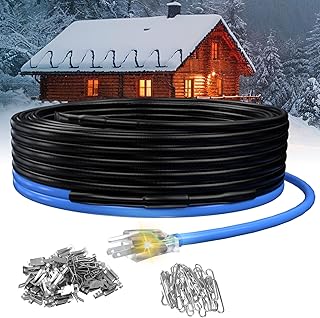
This 20-foot heat tape from TOPDURE Store provides constant wattage of 5 watts per foot, with ETL and CSA certifications for safety. The product emphasizes reliability for both metal and plastic gutters and downspouts, and is suitable for inclined roofs and noncombustible shingles. The inclusion of UL-certified plug adds an extra layer of electrical protection, and the complete certification profile aims to reassure buyers seeking North American safety compliance. The compact length makes it suitable for shorter runs or smaller roof spans while still delivering consistent heat in cold conditions.
Key considerations: Certification breadth matters for comprehensive safety. The constant wattage design helps maintain predictable performance, but users should verify compatibility with their insulation, roof type, and local electrical codes. This option is a balanced choice for mid-sized gutter systems needing reliable heat to prevent ice buildup.
HEATIT HIRD 100 feet 5 Watts Per Foot

The HEATIT HIRD 100-foot cable delivers 5 W/ft with pre-assembly and a 6-foot 18/3 cold lead with plug. It features tough XLPE inner insulation and a high/low temperature resistant outer jacket, plus aluminum foil and tinned copper braid for shielding. The product is fully ETL and CSA certified, with UL certification for the plug, providing a strong safety profile. It is designed to prevent ice dams on roofs and in gutters and downspouts, offering broad compatibility for various roof types and gutter sizes.
Key considerations: Full certification coverage helps ensure compliance with North American safety standards. The long 100-foot length suits larger installations or extended gutters, but careful routing and protective measures are needed to avoid damage and meet installation codes. This option is suitable for homeowners who require robust safety certifications and a durable build for extensive gutter systems.
HEATIT 36ft Roof and Gutters Heating Cable

The HEATIT 36-foot cable features 8 W per foot, with ETL certification and a UL-certified plug for enhanced safety. It is designed as a self-regulating heating option, adaptable to multiple roofing materials including metal, asphalt, rubber, slate, and more. The system is suitable for protecting water pipes, gutters, and downspouts, and is promoted for residential and commercial use alike. The self-regulating capability helps prevent overheating while maintaining effective heat delivery in cold conditions.
Key considerations: Higher wattage per foot means more heat output, which can be advantageous in harsher climates but may require tighter control to avoid excessive energy use. Fully certified cables reduce risk, but proper installation and clearance remain essential. This option provides strong versatility for diverse roof assemblies and a robust safety profile.
Buying Guide: Key Purchase Considerations for Rain Gutter Heat Tape
Certifications and Safety
Look for ETL and CSA certifications for full safety compliance, especially for prolonged outdoor use. A UL-certified plug alone is not enough; ensure the entire cable assembly carries recognized safety marks and has been tested for North American building codes.
Power and Temperature Range
Most gutter heating tapes operate at around 5 W/ft, with some options offering higher wattage. Consider climate severity, roof pitch, gutter material, and the required heat to prevent ice dams. Self-regulating cables adjust output to ambient temperature, reducing the risk of overheating.
Length and Installation
Choose a length that fits your roof span, gutter length, and downspout layout. Longer runs can offer flexibility but may require more careful routing and protection. Pre-assembled options simplify DIY installation, while other models may demand more wiring or professional help.
Materials and Durability
Inner copper cores, protective PVC sleeves, aluminum windings, and outer jackets designed for extreme temperatures contribute to durability. Outdoor installations benefit from moisture resistance, UV stability, and robust insulation to resist winter conditions.
Compatibility and Use Cases
Most tapes are suitable for metal or plastic gutters, downspouts, and roof edges. Consider roof type, shingle compatibility, and whether you need to heat pipes in addition to gutters. Some products are explicitly designed for DIY projects beyond gutter protection, such as heating exposed pipes or other cold-weather applications.
Energy Efficiency and Cost
Constant wattage cables provide predictable heat output, but energy usage varies with climate and how often the tape runs. Weigh the upfront installation cost against long-term savings from preventing ice dam damage and water leakage.