
Best Pressure Controller for Water Pump: Top Picks for Stable, Efficient Water Pressure
Looking for a reliable pressure controller to manage a water pump? This guide highlights five effective options built for different needs, from simple auto-start/stop control to advanced, leak-protected systems. Each product is suited to specific setups—well pumps, submersible pumps, garden irrigation, or home plumbing—so you can pick the best match. The buyer-friendly table below summarizes key points to compare at a glance.
| Product | Best For | What It Tracks | Notes |
|---|---|---|---|
| MARSTEK IP65 Automatic Water Pump Controller | Rugged outdoor installations | Pressure, flow, auto-start/stop | IP65 rated, easy two-wire connection |
| Ensoft Smart Water Pump Pressure Controller | Plumbing with customizable pressures | Preset pressure, auto-start/stop | Corrosion-resistant body |
| WHK Water Pressure Switch for Well Pump | Traditional well pumps | 40–60 psi range, adjustable differential | UL certified, durable build |
| CRESTWAVE Smart Pressure Switch with Gauge | DIY projects needing visibility | 0–145 psi, LED status | Gauge option, easy plug-and-play |
| Cejiuga 30–50 PSI Well Pump Switch | Brass-forged strength | 30–50 psi, automatic control | ABS housing, long life |
MARSTEK IP65 Automatic Water Pump Controller

Best for outdoor or damp locations, this model integrates electronic control to monitor pressure, flow, and water level, starting or stopping the pump automatically. It reduces on/off cycling and adjusts operation modes based on sensed conditions. Clear LED indicators help in monitoring performance. Suitable for self-priming and standard well pumps. Caution: wiring should follow local codes; ensure supply compatibility with your pump’s voltage.
Ensoft Smart Water Pump Pressure Controller
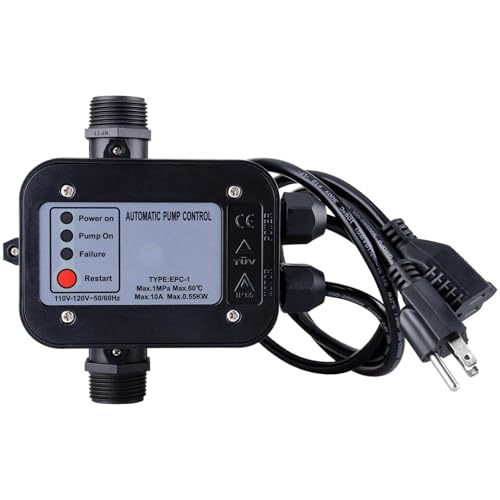
Best for homes needing customizable pressure with easy plug-and-play setup. It lets you set a desired pressure and lets the controller auto-start/stop the pump accordingly. Emergency protection helps prevent motor burnout during sudden drops in supply. Materials are corrosion-resistant for durability in varied environments. Caution: exact pressure range should match your pump’s design to avoid excessive cycling.
WHK Water Pressure Switch for Well Pump
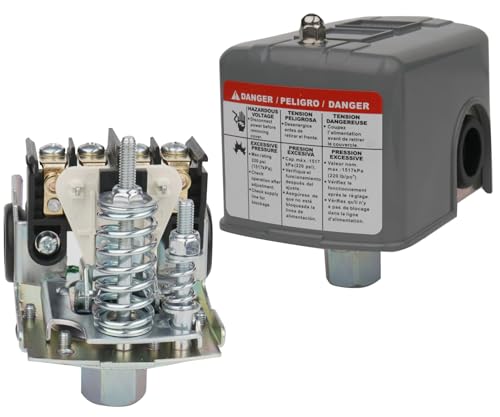
Best for traditional well pumps requiring a straightforward pressure range (40–60 psi) with adjustable differential. The unit aims for steady pressure and protective switching to safeguard plumbing. It features robust construction with UL certification and durable contacts. Caution: make sure the unit’s connection size and voltage match your existing pump setup to avoid compatibility issues.
CRESTWAVE Smart Pressure Switch With Gauge
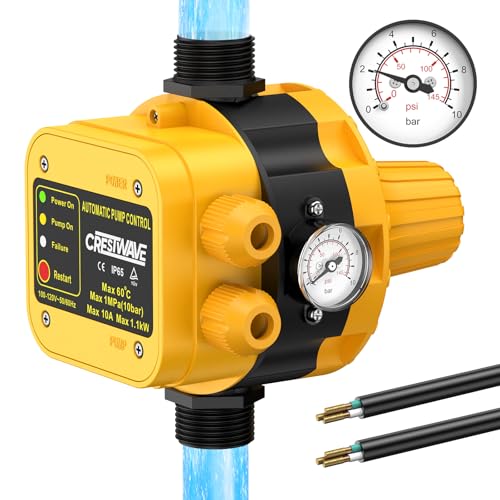
Best for DIY projects needing visible pressure feedback. It provides a 0–145 psi range with a clear gauge and LED indicators for status. A smart controller checks water pressure and levels, initiating auto-start/stop to stabilize flow and pressure. It includes two pre-wired cables for quick hookup. Caution: gauge readings should be periodically checked against actual system pressure to ensure accuracy over time.
CRESTWAVE Smart Adjustable Pressure Switch
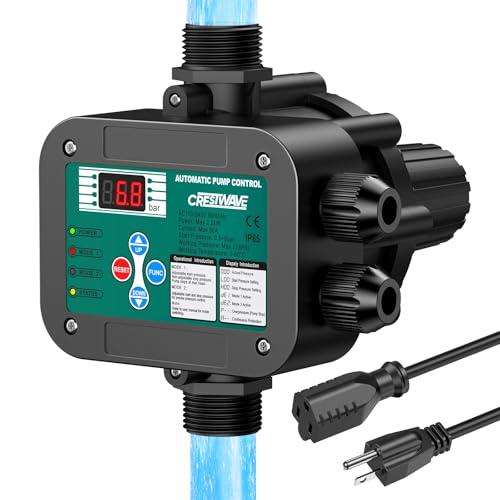
Best for flexible installations requiring dry-run protection with robust, corrosion-resistant housing. It starts or stops the pump based on adjustable pressure, reducing wear and tear from unnecessary cycling. Its plug-and-play design and LED indicators simplify monitoring. Caution: ensure the two included cables meet your pump’s power requirements and local electrical codes.
Cejiuga Water Pressure Switch
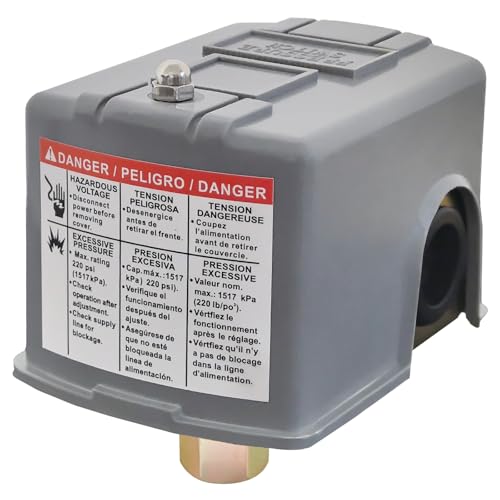
Best for compact installations prioritizing auto control and standard 30–50 psi sensing. Brass construction with ABS housing provides resistance to moisture and dust, extending life in challenging environments. It supports automatic start/stop to protect the pump. Caution: verify pressure range aligns with your system’s target pressure to avoid excessive cycling or under-pressurization.
Buying Guide: Key Considerations For Choosing A Pressure Controller
How to pick the right model for your setup:
- Pressure Range: Match the switch’s cut-in/cut-off range to your pump’s operating needs. Wider ranges handle larger homes or irrigation areas, while narrow ranges suit precise systems.
- Control Type: Do you need automatic start/stop, dry-run protection, or leak protection? Select features that align with your risk tolerance and installation environment.
- Power and Wiring: Check voltage compatibility (110V vs 220V) and whether the unit uses two pre-wired cables or requires extra wiring. Ensure wiring meets local electrical codes.
- Durability: For outdoor or humid locations, choose models with corrosion-resistant housings and UL or equivalent certifications for safety.
- Monitoring Features: Gauges or LEDs can help you monitor pressure and status at a glance. Consider whether you want easy diagnostics for DIY setups.
- Compatibility: Verify the thread size (NPT 1/2″ is common) and connection type to ensure proper mounting on your pump or pressure tank.
Frequently Asked Questions
- What does a pressure switch controller do? It automatically starts and stops a pump based on sensed pressure and flow, maintaining consistent water pressure and protecting the pump from dry-run or over-pressurization.
- Do these controllers require professional installation? Many are plug-and-play or require only basic wiring, but local codes and your pump type may necessitate professional wiring.
- Can a pressure controller be used with any water pump? Most are designed for common well, submersible, and garden pumps, but always check the product’s voltage, thread size, and pressure range for compatibility.
- What is dry-run protection? It automatically shuts off the pump when the water source is depleted, preventing motor burnout during extended dry periods.
- Is a gauge necessary? Gauges offer visible pressure readings, which helps in quick troubleshooting and ensuring your system stays within target ranges.
- How do I know which is best for my home? Consider your pump type, environment (indoor vs. outdoor), required pressure range, and whether you need additional protections like leak or dry-run features.