
Best 100 Amp Power Supplies for RVs, CCTV, and More
Finding a reliable 100 amp power supply can be crucial for RVs, security systems, and heavy 12V setups. This guide highlights five strong options, explains who each is best for, and clarifies key considerations like safety features, derating, and compatibility. The selections prioritize widely used 12V applications, including LED lighting, CCTV cameras, and motor drives. The summary table below compares core specs to aid quick decision-making.
| Product | Best For | Key Strength | Notable Consideration |
|---|---|---|---|
| VIXKPIRR DC 12V 100A | LED strips, CCTV, small electronics | Built-in cooling, dual terminals | Simple connection options |
| PM4 100 Amp RV Power Converter (sdanbom) | RVs, campers, multi-device setups | Smart battery charging, overload protection | Noise from cooling fan at higher loads |
| MEISHILE 12V 100A 1200W | Industrial and DIY 12V projects | Compact, multiple device support | Derating guidance required |
| PowerMax PM4 100A Power Converter | Off-grid, heavy-duty 12V systems | Built-in protections | Widely compatible but generic specs |
| VAYALT DC 12V 100A 1200W | CCTV, printers, LED projects | Aluminum case, load-sharing | Heatsink and cooling considerations |
VIXKPIRR DC 12V 100A Power Supply

- Input: 110V AC to 12V DC, Output: 12V, 100A, 1200W
- Two nickel-plated terminals for direct connections; efficient conversion
- Aluminum shell with built-in cooling fan for stable operation
Best for: Small to medium 12V setups with multiple devices like LED strips, CCTV cameras, and compact 12V tools. This model emphasizes straightforward connections and reliable cooling. A potential limitation is the fan-driven cooling noise under heavier loads.
PM4 100 Amp RV Power Converter (sdanbom)

- Converts 110V-120V AC to 12V-16.5V DC; built-in 4-stage smart charger
- Overcurrent, overtemperature, overvoltage, and reverse polarity protections
- Quiet cooling fan engages as load increases
Best for: RVs and camper setups needing reliable charging and multiple 12V loads. Choose this if you require a smart charger with multi-stage charging. Avoid if you need ultra-quiet operation in a compact space, as the fan may run under load.
MEISHILE 12V 100A 1200W DC Power Supply
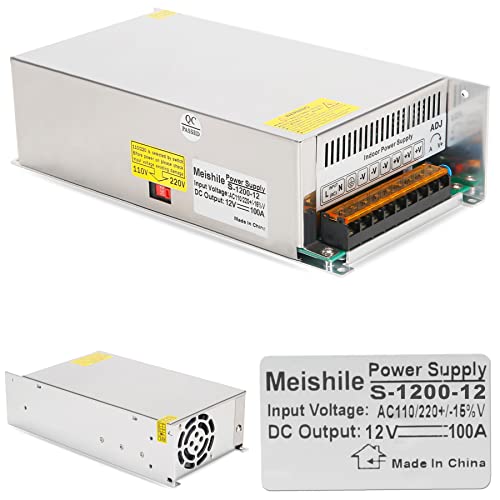
- Universal input 110V/220V; 12V output; rated at 100A 1200W
- Compact and lightweight; supports multiple devices with different currents
- Derating guidance recommended: avoid exceeding 80% of max load
Best for: Industrial or DIY projects needing a compact, versatile supply. Best if you plan to run several devices at once and can manage derating for safety. Consider space for heat dissipation in compact enclosures.
PowerMax PM4 100A Power Converter

- 100A DC output; built-in 4-stage smart charger design
- Reverse polarity, overload, and thermal protections
- Suitable for RVs, boats, LED lighting, and larger 12V systems
Best for: Off-grid and backup power scenarios requiring sturdy protections and multi-application support. Limitation: general specs may require additional configuration for specialized battery chemistries.
VAYALT DC 12V 100A 1200W Power Supply

- Universal 110V/220V input; adjustable 12V output (±10%)
- High-strength aluminum casing; full copper nickel-plated terminals
- Intelligent cooling and load-sharing support for multiple devices
Best for: CCTV systems, 3D printers, LED projects, and computer-related drives needing a robust, well-ventilated supply. Consider the load-sharing capability to avoid exceeding the load limit on a single channel.
Buying Guide: Key Considerations For 100 Amp Power Supplies
- Load requirements: Determine expected continuous load versus peak draw. Many 100A units require derating to about 80% for longevity and safety, especially with motors and inductive loads.
- Input voltage: Most units accept 110V/120V or 220V–240V. If you operate in dual-voltage regions, ensure the model supports both and note any automatic voltage selection features.
- Battery compatibility: For RVs and off-grid setups, confirm compatibility with lead-acid and LiFePO4 batteries. Look for dedicated charging stages and protections against overcurrent and overvoltage.
- Protection features: Overcurrent, overtemperature, reverse polarity, and short-circuit protections are essential. A built-in cooling system is common; check noise level if compact spaces are a concern.
- Derating and efficiency: Understand recommended derating guidelines (often around 80%) and how efficiency changes with load. Efficiency affects heat generation and energy waste.
- Physical design: Aluminum housings help with heat dissipation. Consider size, weight, mounting options, and terminal accessibility for your wiring layout.
- Applications: Match the unit to your primary use—RV power, CCTV and security, LED lighting, or hobbyist electronics—since some models emphasize charging management while others prioritize rugged drive capability.
Frequently Asked Questions
- What does 100A output mean for my device?
It indicates the maximum continuous current the power supply can deliver at 12V. Your device should specify its current draw to ensure safe operation within the supply’s capacity. - Do I need to derate a 100A supply?
Yes, derating is recommended to improve reliability and lifespan, especially for motor-driven or inductive loads. Typical guidance is to run at no more than 80% of the rated current for continuous operation. - Can these units charge RV batteries?
Many models include a built-in smart charger or charger-compatible mode. Check for multi-stage charging (fast/normal/trickle) and compatibility with your battery type (lead-acid or LiFePO4). - Is a cooling fan essential?
For high-current 12V supplies, a cooling system helps maintain stable voltage and prevent overheating. Some models are quiet at light loads but may ramp up under higher demand. - Will these power supplies support multiple devices at once?
Yes, most 12V 100A supplies are designed to power multiple devices. Ensure the total load does not exceed the unit’s peak or continuous rating and consider individual device currents. - How do I choose between 110V/220V input models?
If your power source or region uses one standard, pick a unit that supports that voltage. Dual-voltage units are convenient for travelers or mixed-use environments.