
Best Power Converters for Travel Trailers: Reliable 12V Charging on the Road
Traveling in a motorhome or trailer hinges on dependable 12V power. A capable RV power converter turns 120V shore power into stable 12V DC, charging batteries and running essential systems from lights to pumps. The products below are designed for different battery chemistries, output levels, and installation needs, helping you keep your RV comfortable even when off-grid. This guide highlights five top-rated options, their key features, and practical considerations for choosing the best converter for your travel trailer.
| Product | Brand | Key Feature |
|---|---|---|
| WAVLINK 55 Amp RV Power Converter | WAVLINK | 3 smart charging modes; adjustable 13.0–16.5V |
| RecPro RV Power Converter 55 Amp | RecPro | 4-stage smart charging; 13–16.5V range |
| PowerMax 35 Amp RV Power Converter Charger | PowerMax | 4-stage charging; 13–16.5V output; lithium compatible |
| IOTA DLS-55 Converter Charger | Stag | IQ Smart Charge Controller; 13.4V regulated output |
| WF-8955PEC Power Center (HUHIJIN) | HUHIJIN | Efficient conversion with safety protections |
Note: Each product is listed with its official features to help you compare capabilities such as charging modes, voltage regulation, and safety protections. Always verify compatibility with your RV’s battery type and electrical system before installation.
WAVLINK 55 Amp RV Power Converter

WAVLINK’s 55A RV converter transforms 120V AC into a steady 12V DC supply, suitable for charging both lead-acid and lithium batteries. It features tailored charging modes for different battery types and a customizable fixed voltage range from 13.0V to 16.5V, enabling efficient power management for a variety of RV setups. With up to 55A output, it supports onboard electronics and small appliances while safeguarding battery health. Batteries are not included.
Onylraep WF-8955-MBA 55 Amp Converter
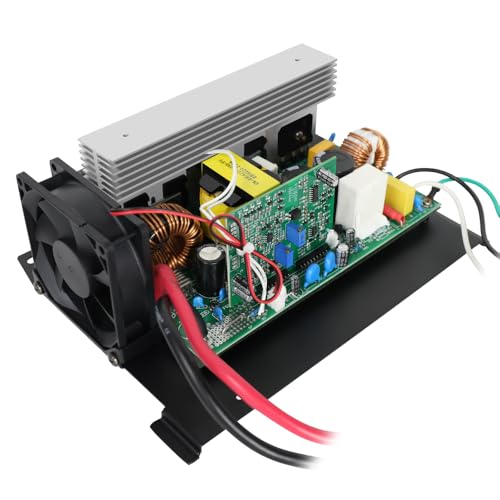
Onylraep’s 55A replacement unit is designed for WF-8955PEC installations and compatible with WF-8955PEC, Parallax 7155, and related power centers. Installation is straightforward with a few mounting screws and wires, making it a practical upgrade or replacement for RV power centers seeking reliable 55-amp output and simple wiring.
RecPro RV Power Converter 55 Amp

RecPro’s 55-amp converter converts shore power to 12VDC efficiently while also acting as a battery charger for your RV’s battery bank. It supports multiple capacities and is designed for steady performance of lights, pumps, and low-voltage devices while charging the battery when connected to shore power.
WF-8955PEC Power Center (HUHIJIN)

HUHIJIN’s WF-8955PEC emphasizes efficient power conversion with built-in safety protections including overload, overheat, and short-circuit safeguards. It’s designed for reliability in RV and travel trailer setups, delivering steady 55-amp 12V output with durable construction for travel use.
PowerMax 35 Amp RV Power Converter Charger

PowerMax PM4-35A delivers a robust 35A 12V DC output from shore power. It incorporates a 4-stage smart charger compatible with AGM, Gel, Lead-Acid, and Lithium batteries, with automatic voltage regulation to ensure safe charging and long battery life for RV uses, including boondocking and regular camping.
Buying Guide: Key Purchase Considerations
When selecting an RV power converter, consider the following factors to match your trailer’s electrical system and travel style:
- Output amperage and battery type: Choose a converter with sufficient current for your battery bank and devices. Lithium-ready models offer better efficiency with lithium packs; lead-acid systems may require different charging profiles.
- Voltage regulation and voltage range: Look for adjustable or fixed voltage settings (13.0–16.5V commonly seen). Ensure compatibility with your battery chemistry to avoid overcharging or undercharging.
- Charging modes: Multi-stage charging (Bulk, Absorption, Float, Equalization) improves battery health and longevity. Some units include IQ Smart Charge or tailored modes for different battery types.
- Safety protections: Overload, overheat, and short-circuit protections protect devices and the RV’s electrical system. Fused wiring and robust housings extend life in mobile environments.
- Installation compatibility: Confirm that the converter fits your existing power center (WF-8955, Parallax, etc.) and matches mounting dimensions and wiring.
- Noise, heat, and efficiency: Efficient converters reduce energy loss and heat. A quieter fan or passive cooling can improve onboard comfort on longer trips.
- Warranty and support: A longer warranty with responsive after-sales service adds reliability for remote or extended travels.
- Physical size and weight: Compact models are easier to install in tight compartments; heavier units may require reinforced mounting.
Given these considerations, assess your trailer’s battery capacity, daily power needs, and how often you rely on shore power versus solar or generator use. For frequent boondocking, prioritize high-efficiency, multi-stage charging with robust safety protections. For occasional camping near hookups, a mid-range 35–55A unit with lithium compatibility provides ample headroom without over-investing.