
Best Portable Oxygen Gas Detectors for Safe, Real-Time Oxygen Monitoring
Looking for a reliable portable oxygen gas detector? This guide highlights five top models designed for quick, accurate O2 readings in work, home, and outdoor environments. Each device targets different user needs—industrial safety teams, DIY enthusiasts, or individuals monitoring indoor air quality. Below, you’ll find clear usage scenarios, pros and limits, and a practical buying guide to help you compare features like response time, battery life, alarms, and data logging. A quick buyer’s table summarizes the key options for easy reference.
| Product | Best For | Key Benefit | Limitations |
|---|---|---|---|
| ATO Portable Oxygen Gas Detector | General indoor environments | Direct readout of gas type, concentration, and local time | Smaller feature set for advanced data export |
| TopTes Guard-101 | Worksites with harsh conditions | Triple alarms, rugged build, 14h battery | Limited to four gases |
| TopTes Guard-756 | Long deployments and quick response | 0.5s response, 7-day runtime, 999 logs | Basic screen; more advanced displays missing |
| TopTes Guard-863Pro | Professional projects needing data export | TFT color screen, 5-year O2 sensor, USB export | Higher cost |
| ZYKYCX Portable Oxygen Detector | Indoor/outdoor versatility | Temp and humidity readings included | Five percent accuracy variance typical for electrochemical sensors |
ATO Portable Oxygen Gas Detector
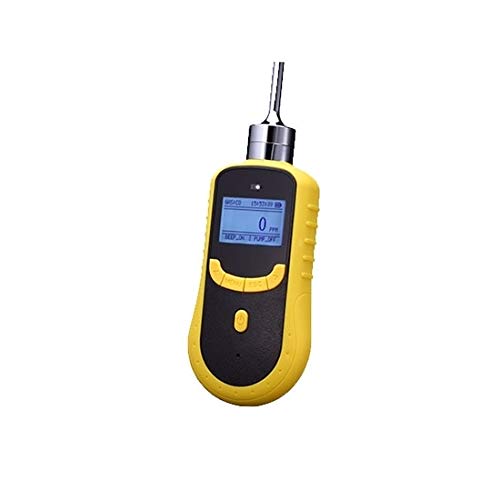
The ATO Oxygen Detector covers a 0 to 30% Vol range with a straightforward LCD dot matrix display. It provides direct readouts of gas type, concentration, and local time, making it clear when oxygen levels shift. A built-in micro-sampling pump with 10 suction grades supports flexible sampling in confined spaces. This model is best for general indoor monitoring where fast, simple readings are valued by facility staff or hobbyists. Its self-calibration and zero calibration features improve reliability and reduce drift between calibrations.
Best for: small to midsize spaces where quick, uncomplicated readings are needed. Choose this if you want a compact, easy-to-use detector with reliable auto-calibration. Caution: it lacks the more extensive data-logging and multi-gas capabilities of higher-end models.
TopTes Guard-101 Gas Detector
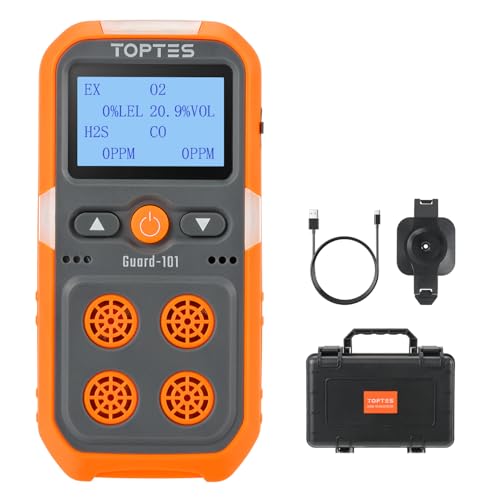
The Guard-101 is a 4-gas monitor designed for H2S, CO, LEL, and O2 with rapid detection and a long runtime. It features triple alarms (LED, vibration, sound), ensuring alerts in noisy or harsh environments. With a rugged ABS housing, waterproof and explosion-proof design, and a back-clip for easy carry, it’s well-suited for construction sites, maintenance operations, and home workshops. A built-in data storage capability allows monitoring histories to be reviewed later, which helps with compliance and safety reviews.
Best for: professionals needing rapid, multi-gas alerting in tough environments. Choose this if you value durable construction and a quick, multi-sensor response. Caution: does not provide a full-color display or advanced data-export beyond local memory.
TopTes Guard-756 Upgraded Oxygen Detector

The Guard-756 emphasizes a fast 0.5-second response with a DDS sensor, offering high accuracy and long sensor life. It runs up to seven days on a single charge thanks to its 2000mAh battery, with a 4-hour quick charge. It logs up to 999 records and provides three alarm modes (LED, vibration, sound). Its sensor placement at the top reduces airflow blockage in the hand, improving measurement reliability during use. This model is best for users who need fast alerts and extended operation without frequent recharges.
Best for: field workers and continuous monitoring scenarios where rapid alerts and long battery life matter. Caution: data logging capacity, while ample, is not unlimited and should be managed for lengthy projects.
TopTes Guard-863Pro 4 Gas Monitor

The 863Pro is a professional 4-gas monitor with a TFT color display and a five-year lifespan sensor for O2. It offers USB data export to capture alarm records, fault logs, calibration history, and operation notes. The instrument delivers a fast 0.5-second response and continuous triple alarms to ensure immediate action in dangerous environments. While more expensive, it suits workplaces requiring robust data management and durable, long-term sensor performance.
Best for: professionals who need clear visual data, quick response, and export capabilities for compliance records. Avoid this if a simple, budget-friendly unit is required or if you do not need multi-gas measurement beyond oxygen.
ZYKYCX Portable Oxygen Detector

The ZYKYCX model provides a 0-30% VOL oxygen range with a fast 0.5-second response and a triple-alarm system (sound, light, vibration). It adds temperature and humidity readings, improving indoor air quality awareness. A 2500mAh battery supports up to 16 hours of operation, with Type-C charging for quick returns to service. It also stores up to 180 alarm logs for safety analysis. This option is well-suited for mixed indoor/outdoor use and environments where ambient conditions matter as part of safety decisions.
Best for: users needing ambient environmental data alongside oxygen monitoring. Caution: accuracy may vary by sensor type and environmental interference; verify suitability for your critical safety thresholds.
Buying Guide: Key Purchase Considerations
- Measurement range and resolution: Most detectors cover 0-30% O2. Look for 0.1% or 0.5% resolution for precise readings in confined spaces.
- Response time: A faster response (0.5 seconds) helps in early danger detection, especially in dynamic environments.
- Alarm system: Triple alarms (sound, light, vibration) outperform single alerts in noisy or hard-to-hear settings.
- Power and battery life: Consider runtime per charge and recharge time. Longer runtimes reduce maintenance in remote sites.
- Sensor longevity and calibration: Some models feature long-life O2 sensors (up to several years) and automatic self-calibration. Check calibration procedures and intervals.
- Data logging and export: For compliance or post-incident analysis, data logging capacity and export options (USB, SD, or cloud) are important.
- Durability: For industrial use, select rugged housings, waterproofing, and explosion-proof ratings if applicable.
- Additional measurements: If you need more than oxygen, consider multi-gas monitors with H2S, CO, LEL, etc. to reduce tool counts.
- Portability and ease of use: Clip-on designs and lightweight builds improve usability in the field.
FAQ
What should I look for in a portable oxygen detector for home use?
Look for a simple, reliable unit with clear readings, a user-friendly display, and a reliable alarm system. A compact design and adequate battery life are beneficial for home maintenance and hobby projects.
How important is a fast response time?
Very important. A faster response helps identify oxygen depletion quickly, enabling prompt evacuation or mitigation in potentially hazardous environments.
Are data logs essential for safety monitoring?
Data logs help track safety trends, verify compliance, and review past incidents. If you need reporting, choose models with robust data logging and export capabilities.
Can these devices detect other gases besides oxygen?
Yes, several options are multi-gas monitors. If you need broader gas detection (H2S, CO, LEL), select a model marketed as a multi-gas detector.
How long do the sensors last?
Oxygen sensors vary by model, with some lasting years and others requiring regular replacement or recalibration. Check sensor lifespan and manufacturer recommendations.
Is self-calibration reliable?
Self-calibration improves consistency, but periodic professional calibration is still advisable, especially in critical safety applications.