
Best Plug-in Timer Lights for Easy Home Automation
Plug-in timer lights offer a simple, reliable way to automate lamps, seasonal decor, and small appliances without smart hubs or apps. This guide aggregates five reliable 24-hour mechanical timers ideal for homes, offices, and outdoor setups. The best picks suit different needs: indoor general use, two-outlet control, outdoor weatherproof use, and dual-outlet flexibility. Use this summary to compare features, setup ease, and where each timer shines.
| Product | Best For | Key Benefit |
|---|---|---|
| BN-LINK U47 Indoor Mini 24-Hour Timer (2-Pack) | Small appliances, lamps, fans | Easy dial with 30-minute intervals; daily repeat |
| GE 24-Hour Mechanical Timer Switch (1 Pack) | Indoor lighting, seasonal decor | Simple pushpin timing; ETL-listed |
| GE 24-Hour Mechanical Timer Outlet, 2 Outlets (2-Pack) | Two-device automation | Dual outlets; manual override |
| HBN Outdoor Timer Outlet Waterproof | Outdoor lights and decor | Weatherproof, visible timer pins |
| DEWENWILS 24 Hour Cycle Timer (Dual Outlets) | Indoor lights, devices needing two outlets | Two 3-prong outlets; 30-minute intervals |
BN-LINK U47 Indoor 24-Hour Timer (2-Pack)

The BN-LINK U47 is a compact, mechanical timer designed for indoor use. It uses a dial with pins to set up to 24 on/off periods per day in 30-minute steps. Pins DOWN mean ON and Pins UP mean OFF. This dual-pack suits buyers who want to automate multiple lamps or small devices from one outlet. It’s best for seasonal decor, lamps, or fans in bedrooms or home offices. A potential limitation is that mechanical timers require manual pin configuration and lack smart integration.
GE 24-Hour Mechanical Timer Switch (1 Pack)

The GE 24-Hour Mechanical Timer Switch provides a simple, pushpin-based schedule with 30-minute intervals. It’s particularly strong for lamps and seasonal lighting, delivering consistent daily cycles without any apps or Wi-Fi. It’s ETL-listed for indoor use and designed for a single grounded or polarized receptacle. Choose this if you want a straightforward, reliable indoor timer with easy setup and predictable timing.
GE 24-Hour Plug-in Mechanical Timer Outlet (2 Outlets)

This GE timer adds a second grounding-capable outlet, allowing two three-prong devices to run on a single countdown. It uses a 24-hour cycle with 30-minute pushpins for quick setup and manual override for on-demand control. It’s best for households needing two devices to operate in sync, such as a lamp and a fan. A caveat is that both outlets share the same timer program, limiting independent control.
HBN Outdoor Timer Outlet Waterproof
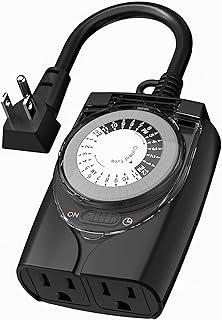
The HBN outdoor timer is built for exterior use with a waterproof design and a durable, weatherproof build. It schedules 24 ON/OFF operations per day, each pin representing a 30-minute interval. It’s ideal for Christmas lights, holiday decorations, and other outdoor devices. A limitation to consider is placement: mount vertically at least two feet off the ground for optimal waterproofing. It also emphasizes visibility with a clear timer cover.
DEWENWILS 24 Hour Cycle Timer

The DEWENWILS timer offers dual 3-prong outlets and a 24-hour cycle with 30-minute intervals. It emphasizes easy operation—set the current time on the dial and adjust pins for ON/OFF times. It’s well-suited for lamps, small appliances, and pet-related devices. A potential drawback is that the two outlets share the same schedule, which may not fit scenarios needing separate programs.
Buying Guide: Practical Considerations For Plug-In Timer Lights
- Indoor vs. outdoor use: Outdoor timers require weatherproof housing and splash-resistant design. If you plan to put a timer outside, prioritize a model with waterproofing and UV resistance.
- Number of outlets: If you want to control more than one device, look for dual-outlet timers or a timer pack. Consider whether you need independent or shared scheduling.
- Interval granularity: Most timers use 30-minute increments. If you need finer control (e.g., 15-minute steps), verify pin density and compatibility before buying.
- Ease of setup: Mechanical timers are typically easier to use without apps; however, some people prefer pushpins for quick changes. Consider whether you want daily repeats or special one-off programs.
- Safety and labeling: Check ETL or UL listings for indoor use. Ensure the timer is suitable for the load you plan to connect and that cords do not create tripping hazards.
- Maintenance and durability: Outdoor timers should resist dust and moisture; indoor models should withstand frequent plug-in use without loosening.
FAQ
- What is the benefit of a 24-hour timer?
It automates daily routines, saving energy and improving security by turning lights on/off automatically. - Can I use these timers with LED lights?
Yes, most mechanical timers work with LED lamps as long as the load is within the timer’s rated capacity. - Do these timers require Wi‑Fi or apps?
No. They are mechanical timers that operate without internet or smart apps. - Are dual-outlet timers suitable for different devices?
They are convenient for two devices sharing a single schedule, but you cannot program them independently. - How should I mount an outdoor timer?
Position it vertical, at least 2 feet above ground, and protect the outlet from direct water exposure. - What safety checks should I perform?
Ensure loads are within the timer’s amperage rating, and check that cords aren’t damaged before use.