
Best Plug in Desk Fans for Quick Personal Cooling in Any Space
Looking for an affordable, plug-in desk fan to cool a small room, office cubicle, or bedside nook? This guide highlights five top USB- or AC-powered desk fans that fit compact desks, dorm setups, and home offices. Each option is described with who it’s best for, why it was chosen, and practical limits to consider. The featured products are well-suited for personal cooling, energy-friendly air flow, and easy movement from desk to nightstand. Below is a quick comparison of the selected models to help you decide faster.
| Product | Best For | Key Benefit |
|---|---|---|
| Honeywell TurboForce HT900 | Small desks and personal spaces | Powerful, quiet with 90° pivot |
| Amazon Basics Air Circulator Desk Fan | Compact rooms and multifunction desks | Three speeds, 90° tilt |
| TriPole USB Desk Fan | Travelers and USB-powered setups | USB-powered with 360° rotation |
| Gaiatop 5-Inch Desk Fan (Black) | Small offices and dorm rooms | Strong airflow in a tiny frame |
| Comfort Zone 4-Inch All-Metal Mini Desk Fan | Durable, portable setups | All-metal build with dual-power options |
Honeywell TurboForce HT900 Desk Fan

The HT900 is designed as a compact, table- or floor-style fan with three speeds and a 90° pivoting head. It emphasizes quiet operation and strong air movement, making it suitable for small to medium rooms. Best for users who want cooling at a comfortable distance and the option to direct airflow precisely. A potential limitation is its smaller frame, which may not deliver wide-area cooling in larger spaces.
Amazon Basics Air Circulator Desk Fan

This desk fan is compact with a 90-degree tilt and three speed settings. It’s a practical choice for bedrooms, living rooms, or office desks where space is limited. The tilt feature helps target airflow precisely. A note: the compact design means airflow may be more direct than broad, gentle cooling in larger rooms.
TriPole Desk Fan USB Powered

TriPole offers USB-powered cooling with three speeds and a 360° rotation feature. Its compact size and USB-C compatibility (via standard USB-A port) make it ideal for laptop setups, dorm rooms, or travel-ready workstations. Best for users who need portable cooling without relying on a wall outlet. Limitation: longer USB cord helps reach power sources but may clutter a small desk if not managed well.
Gaiatop 5-Inch Desk Fan (Pink)

This small, lightweight fan uses a 3-speed setup with a 360° tilt for directed airflow in tight spaces like a dorm or apartment desk. It’s suited for personal cooling where space is at a premium and aesthetics may matter. A potential drawback is its petite frame, which may limit airflow range compared to larger desk fans.
Comfort Zone 4-Inch All-Metal Mini Desk Fan

The Comfort Zone fan uses a rugged all-metal design and offers dual-power options via USB or 120-volt wall outlet. It features a 360-degree tilt so you can direct airflow in any direction. Best for users seeking durability and flexibility in portable or stationary desk setups. Limitation: its smaller blade diameter may produce a narrower airflow compared with larger fans.
Honeywell HT-904 TurboForce (White)
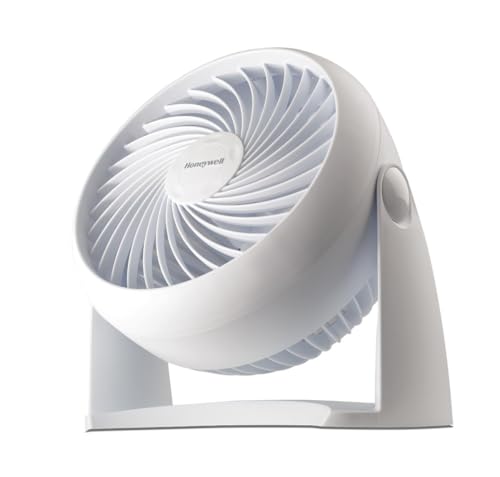
This model is a white variant in the TurboForce line with a similar design to HT900. It’s best for users who want a compact, powerful desk fan that can be wall-mounted or placed on a desk. A potential limitation is that, like other compact TurboForce models, it may not move air as broadly as larger desk fans in bigger rooms.
Honeywell QuietSet Personal Table Fan HTF210B

The HTF210B emphasizes quiet operation with four power and sound levels. It’s suitable for bedrooms or workspaces where low noise is important. Choose this if you want adjustable sound profiles in addition to airflow. Limitation: lower maximum airflow compared with higher-powered desk fans.
Buying Guide: Key Purchase Considerations
- Space and footprint: Measure your desk area to ensure the fan fits without crowding your workspace. Smaller fans work best on dorm desks or bedside tables.
- Airflow and noise: Decide between louder, high-airflow units and quieter, lower-air options. If you need minimal distraction, prioritize models marketed as quiet or with fewer decibels.
- Power source: USB-powered fans are convenient for laptops and small setups, while AC-powered units may deliver steadier airflow for longer use without a battery drain.
- Adjustability: Consider tilt, rotation, and head-angle options. A 90° or 360° range helps direct air where it’s needed most.
- Durability and materials: All-metal constructions tend to be sturdier, especially for travel or frequent handling, while lightweight plastic can save cost and weight.
- Maintenance: Removable grilles or easy blade access simplify cleaning and extending lifespan.
- Portability vs. power: If you need a fan that travels with you, prioritize compact, USB-powered designs. For a desktop that stays put, a larger unit with higher airflow may be better.
Frequently Asked Questions
- What is the best desk fan for a small dorm room?
Choose a compact model with a 90° tilt and USB power for flexibility and easy setup. - Are metal desk fans more durable than plastic?
Yes, metal housings generally offer greater durability and longer life in busy study or work environments. - Do desk fans cool whole rooms or just personal spaces?
Most desk fans cool personal spaces or small areas; larger fans or tower fans are better for whole rooms. - Should I pick a USB-powered desk fan or a wall-plug model?
USB fans are portable and eliminate wall clutter; plug-in models typically offer steadier airflow during extended use. - Is quieter always better for desk fans?
Quieter models are preferable for bedrooms or offices where noise matters, but they may move air more slowly than louder options. - Can desk fans help reduce energy use?
Yes, targeted cooling can lower overall climate control needs by allowing you to set lower thermostat temperatures while remaining comfortable at your workspace.