As an Amazon Associate I earn from qualifying purchases. These links may earn this site a commission when you buy, at no extra cost to you.
Plexiglass and other plastics pose unique challenges for circular, table, and miter saws. The right blade design—low heat buildup, carbide teeth tuned for plastics, and a precise kerf—helps minimize melting and chipping while delivering smooth edges. The following selections are among the top options available for cutting plexiglass and similar plastics with table or compound saws. Each blade emphasizes heat management, carbide durability, and clean finishes to support professional or hobbyist projects alike.
| Product | Brand | Arbor | Teeth | Material Focus | Notable Feature |
|---|---|---|---|---|---|
| Freud LU94M010 | Freud | 5/8″ | 80 | Plastic | Premium TiCo carbide, MTCG tooth design |
| Freud LU94M008 | Freud | 5/8″ | 54 | Plastic | MTCG grind for reduced heat |
| CMT 222.080.10 | CMT ORANGE TOOLS | 5/8″ | 80 | Plastic, Plexiglass | Alternate Top Bevel with Chamfer Grind |
| FOXBC 10-Inch 80-Tooth | FOXBC | 5/8″ | 80 | Plastic | TCG design with vibration-reducing vents |
| MASTEC 100T | MASTEC | 5/8″ | 100 | Aluminum/Plastic | TCG for aluminum, plexiglass, plastics |
Freud LU94M010: 10″ Plastic Blade
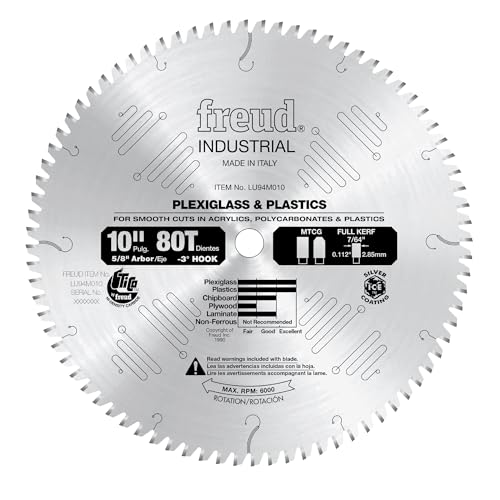
The Freud LU94M010 uses a premium TiCo Hi-Density carbide blend and a Modified Triple Chip Grind (MTCG) tooth design. With a 10″ diameter and 5/8″ arbor, it features a low 0.110″ kerf and a negative -3° hook angle to minimize heat buildup when cutting acrylics, polycarbonates, and other plastics. This blade is designed to reduce melting while delivering a smooth finish on plastic materials commonly used in displays, signs, and protective housings. The combination of MTCG and TiCo carbide supports long edge life and consistent performance across repeated cuts.
Freud LU94M008: 8″ Plastic Blade

Freud’s LU94M008 is a smaller-diameter option built with the same emphasis on heat control. The 54-tooth configuration is suitable for thinner plastics where precision and clean edges are critical. As with the larger version, the MTCG tooth design helps keep temperatures down during cuts, reducing the risk of edge deformation or melting. This blade fits standard 5/8″ arbors, making it a versatile choice for compact saws used in sign shops and hobby workshops.
CMT 222.080.10 Industrial Plexiglass Blade

The CMT 222.080.10 is engineered for plastic, plexiglass, and related materials. With a 0.110″ kerf and a -3° hook angle, this blade is designed for smooth, controlled cuts across thin plastics. The MATB grind with an alternate top bevel and chamfer helps reduce heat buildup and produces cleaner edges without scorching. This blade is well-suited for radial arm saws, table saws, and similar heavy-duty setups where consistent plastic cutting is required.
FOXBC 10-Inch 80-Tooth TCG Blade

This FOXBC blade uses a 10″ diameter with an 80-tooth configuration designed for aluminum, non-ferrous metals, and plastics. The 0.094″ kerf and a 5/8″ arbor combine for stable cuts with minimal vibration. Laser-cut stabilizer vents are included to trap noises and vibrations, enhancing accuracy and longevity, making it a solid choice for projects requiring precise, clean cuts in plexiglass and related materials.
MASTEC 100T TCG Aluminum/Plexiglass Blade

The MASTEC blade features 100 carbide teeth and a 5/8″ arbor, making it well-suited for fast, smooth cuts through plexiglass and other plastics. The triple chip tooth geometry (TCG) is designed for durable cutting and cleaner edges on non-ferrous materials, including plexiglass with moderate thickness. This blade emphasizes endurance and predictable cuts in mixed-material work where plastic sheets are involved.
Buying Guide: Key Considerations For Plexiglass Cutting
Blade Geometry And Tooth Design
For plastics, look for teeth designed to minimize heat buildup. Modified Triple Chip Grind (MTCG) or TCG tooth configurations help reduce friction and prevent edge melting. A higher tooth count generally yields cleaner finishes on thin plastics, but may require more passes on thicker materials.
Kerf And Arbor Compatibility
A narrow kerf (0.094″ – 0.110″) reduces material waste and stress on the saw. Ensure the arbor size matches your equipment, typically 5/8″ for most table and miter saw blades. If your saw uses a different arbor, adapters or alternate blade models may be necessary.
Heat Management And Cutting Speed
Blades with heat-dissipation features and grind patterns designed to minimize heat transfer help prevent melting at the work edge. When cutting plexiglass, maintain steady feed pressure and avoid aggressive plunges that generate heat and flex in the material.
Edge Quality And Finish
For signs, displays, or protective glazing, a smooth edge is essential. Blades with MTCG or similar grind designs tend to produce crisper, less chipped edges. In some cases, a dedicated plastic blade outperforms a general-purpose metal blade on plexiglass.
Compatibility With Saws
Verify that the blade is compatible with your saw type (table saw, miter saw, radial arm saw). The blades listed here are designed to fit common 5/8″ arbors but always confirm arbor diameter and compatible saw models before purchasing.
Cost, Availability, And Maintenance
Plastic-specific blades can vary in price. Consider blades with durable carbide and resharpenable teeth for longer service life. Clean blades after use to remove plastic residue and prevent buildup that could affect accuracy.