
Best Panel Switch for Generator: Top Manual Transfer Switches for Backup Power
When choosing a panel switch for a generator, select a reliable manual transfer switch or interlock kit that safely routes generator power to essential circuits. This guide highlights five models best suited for home backup, off-grid setups, or RV applications. Each entry explains who it’s best for, why it’s chosen, and any important caveats to consider.
| Product | Best For | Key Benefit |
|---|---|---|
| DSGSANO 50A Pro/Tran2 10-Circuit | Homes needing up to 10 circuits | Reliable power transfer with marked wires |
| Generac HomeLink 50 Amp | Users needing seamless grid backup | Interlock prevents backfeed and NEC compliance |
| Reliance 31406CWK 30 Amp | Smaller setups and budget-conscious | Compact 6-circuit option |
| tgon 50A 10-Circuit Surface Mount | Organized circuit control | Clear wiring with marked circuits |
| Natupal Interlock Kit for 150/200A Panels | Square D QO/Homeline panels | Safe interlock spacing for main and generator |
Introduction to the top picks: The choices below emphasize safety, ease of installation, and practical circuit management. These options are aimed at buyers who want controlled, reliable generator power without professional installation complexity. Each product listing includes who it’s best for and why it stands out, along with a practical caveat where relevant.
DSGSANO 50A Pro/Tran2 10-Circuit Transfer Switch

This 50 Amp transfer switch supports up to 10 circuits and is designed for reliable whole-house backup or RV/off-grid use. It uses a normally open contact type and requires basic knowledge of electrical wiring. It is best for buyers seeking a cost-effective alternative to pricier options while maintaining key safety features and circuit organization. A limitation is that installation assumes familiarity with electrical schematics; improper wiring can compromise safety.
Generac HomeLink 50 Amp Portable Generator Switch

This 50-amp manual transfer switch for portable generators powers up to 10 circuits at 120/240V, including furnaces and well pumps. It features a mechanical interlock to prevent backfeed into the utility grid, aligning with safety requirements and protecting line workers during outages. It’s best for homeowners seeking NEC-compliant backfeed protection and straightforward operation. A consideration is that it targets portable generator setups rather than fixed, permanent panel installations.
Reliance Controls 31406CWK 30 Amp 6-Circuit
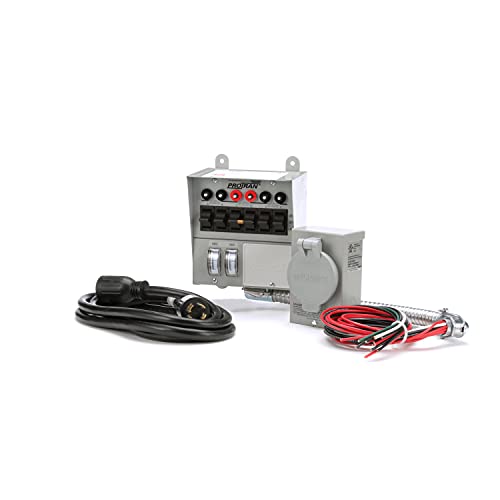
This 30-amp, 6-circuit transfer switch is a compact option for smaller systems. It’s suitable for homes or cabins with limited load needs and where a smaller footprint is desirable. The product data emphasizes hose length and corded power, useful for certain installation layouts but may limit flexibility in more expansive setups. Best for users prioritizing a lower-cost, space-conscious solution.
50A 10-Circuit Surface Mount Transfer Switch (tgon)

This 50-amp, 10-circuit surface-mount switch organizes essential loads with marked wires for quick identification. It’s best for homeowners who want clear circuit attribution and simple access to critical devices during outages. A potential limitation is its surface-mount design, which requires appropriate wall space and secure mounting. It’s a solid choice when clean circuit management is a priority.
Natupal Interlock Kit for Square D QO/Homeline Panels

The Natupal interlock kit supports 1 3/8 inch spacing between main and generator breaker and is designed for compatibility with Square D QO or Homeline 150/200 Amp panels. It enables a safe, controlled transfer of power during outages and is ideal for those with existing QO or Homeline panels who want a robust interlock solution. A caveat is that installation requires precise alignment and adherence to spacing specifications.
Buying Guide: Key Considerations For Choosing A Panel Switch For Generator
- Compatibility: Confirm your panel brand (Square D QO, Homeline, etc.) and amp rating before purchasing an interlock kit or transfer switch.
- Circuits: Determine how many circuits you need to power during an outage. Choose a model that supports that many circuits without overloading.
- Installation: Assess whether you prefer a plug-and-play unit or a solution that requires electrical expertise. Interlock kits often need precise alignment and drilling.
- Safety Features: Look for backfeed protection, NEC compliance, and clearly labeled wires to minimize wiring errors during outages.
- Mounting Style: Surface-mount vs. panel-integrated units affect installation space and aesthetics. Consider where you’ll place the switch.
- Future Upgrades: Some systems offer upgrade paths to automatic transfer or HomeLink compatibility; plan for future needs if you expect expanding backup power.
Frequently Asked Questions
- What is a transfer switch and why do I need one?
Answer: A transfer switch safely routes generator power to selected circuits, preventing backfeed into the utility grid and protecting line workers during outages. - Can I install a transfer switch myself?
Answer: Some kits are designed for DIY installation with basic electrical knowledge, while others require professional installation to ensure code compliance. - What’s the difference between a manual transfer switch and an interlock kit?
Answer: A manual transfer switch isolates circuits directly from the generator, while an interlock kit prevents simultaneous connection of main and generator breakers, both enhancing safety but via different mechanisms. - How many circuits should I power during an outage?
Answer: Start with essential circuits (lighting, furnace, sump pump, refrigerator) and expand only to the loads your generator can safely handle. - Is NEC compliance important for my transfer switch?
Answer: Yes, NEC-compliant designs reduce risk to utility workers and ensure legal operation during outages. - What maintenance is required after installation?
Answer: Periodically inspect wiring, test operation, and replace any worn components according to manufacturer guidelines.