
Best Outdoor Extension Cords 100ft for Safe, Reliable Power Delivery
When you need reach and reliability for outdoor projects, a 100 ft outdoor extension cord is often the best choice. This guide compares five top options to help gardeners, contractors, and homeowners pick the right cord for long runs, weather exposure, and heavy-use needs. Each pick is evaluated for durability, safety, and suitability for specific outdoor tasks. The table below highlights the key differences at a glance.
| Product | Length | Gauge | Best For |
|---|---|---|---|
| Skrizcable 16/3 100 Ft Outdoor Extension Cord | 100 ft | 16 AWG | General lawn and garden, light power tools |
| POWGRN 100 ft 12/3 Outdoor Extension Cord | 100 ft | 12 AWG | Heavy-duty outdoor use, power tools, lights |
| Amazon Basics 100 Foot 3-Prong | 100 ft | 16 AWG | Budget-friendly, moisture-resistant tasks |
| HuiFengros 100 FT Outdoor Extension Cord | 100 ft | 16 AWG | General outdoor appliances, decorations |
| UBOORY 100 FT Orange 14/3 SJTW | 100 ft | 14 AWG | Long reach with higher amperage needs |
Skrizcable 100 Ft Outdoor Extension Cord

Best for: general lawn and garden tasks that require a long reach without heavy loads. This 16/3 cord is ETL listed, rated for 125V, 10A, and 1250W. It uses three copper strands with a thick middle insulation and a flame-retardant IP65 jacket, making it suitable for outdoor use in rain, sun, and cold. The plug pins resist rust and corrosion, and it undergoes a 2500V high voltage test. Choose this if you need a reliable, weatherproof option for sprinklers, leaf blowers, or string lights. Limitation: not ideal for very high-wattage tools beyond 1250W.
- ETL/cETL listed; 2500V test safety
- IP65 waterproof and flame retardant jacket
- Weather- and abrasion-resistant for outdoor conditions
POWGRN 100 Ft 12/3 Outdoor Extension Cord

Best for: heavy-duty outdoor projects where higher wattage is common, like circular saws or lawn equipment. This 12/3 cord supports up to 1875W at 125V and 15A, with a lighted end indicator for visibility in dark work areas. It is SJTW and ETL listed, with an IP65 waterproof jacket rated for -58°F to 158°F. It’s a good pick for long runs on construction sites or landscaping jobs. Caution: heavy-duty jackets can be stiffer in cold weather, affecting flexibility.
- Lighted end for visibility
- 12 AWG is thicker than standard cords for better current capacity
- Flexible in a wide temperature range
Amazon Basics 100 Foot Extension Cord
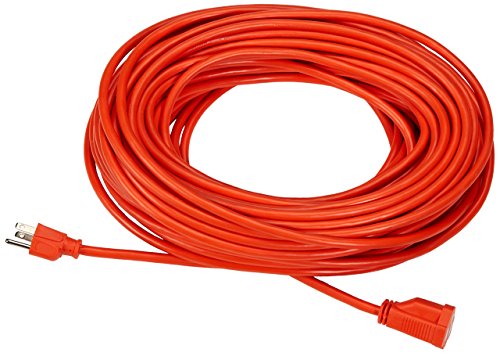
Best for: budget-conscious buyers who still need reliable outdoor utility power. This 100-foot, 16-gauge vinyl-covered cord is ETL certified, with a grounded three-prong plug. All-copper conductors and moisture/UV-resistant jacket improve durability for moisture-prone outdoor spaces. Choose this for simple tasks like lighting, garden equipment, or a temporary power setup where cost is a factor. Limitation: 16 AWG provides modest current capacity compared with thicker gauges, so avoid high-wattage tools on this cord.
- ETL certified for safety
- All-copper conductors for reliable power
- Moisture and sun-resistant jacket
HuiFengros 100 FT Outdoor Extension Cord
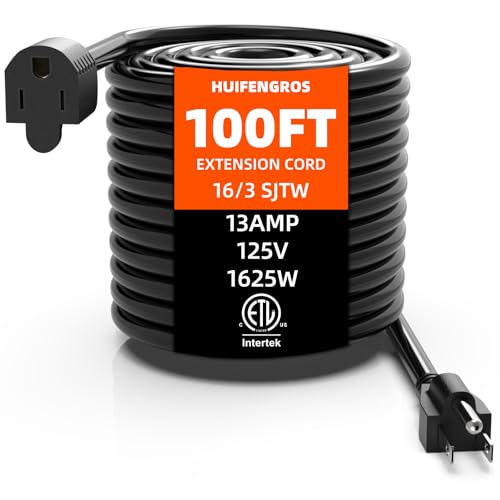
Best for: general outdoor use with a robust warranty of weather resistance. This 16 AWG, SJTW cord is ETL listed and rated for 125V, 1625W, 13A. The jacket resists moisture, heat, and abrasion, and the cord remains flexible in cold conditions. It’s a solid choice for leaf blowers, garden lights, and other lawn equipment. Limitation: 16 AWG means lower current capacity than 12 AWG cords for heavy loads over long runs.
- ETL listed; wide operation temperature
- Weather-resistant jacket suitable for lawn care gear
- Flexible in cold weather
UBOORY 100 Ft Orange 14/3 SJTW

Best for: tasks requiring extra amperage with a longer reach. This 14/3 SJTW cord supports 125V, 1625W, and 13A. The orange jacket increases visibility, reducing trip hazards. It’s UL listed and designed for indoor/outdoor use, including cold conditions. Choose this if you need more conductors than a basic 2-prong cord and want high visibility. Limitation: 14 AWG provides less current capacity than 12 AWG options for demanding tools.
- UL listed; high visibility jacket
- 13A, 125V, 1625W rating
- Suitable for indoor and outdoor tasks
Buying Guide: Key Considerations for 100ft Outdoor Extension Cords
Purpose and environment: Match gauge and jacket with the load and climate. For heavy-duty tools, 12 AWG cords offer better current capacity than 14 or 16 AWG. If you’ll be exposed to rain, snow, or damp ground, choose a cord with an IP rating and waterproof jacket.
Safety certifications: Look for ETL or cETL listings and high-voltage testing. These signals indicate adherence to safety standards and reliable construction for outdoor use.
Weather resistance and durability: A flame-retardant jacket, corrosion-resistant pins, and robust insulation extend cord life in sun, wind, or freezing temperatures. Consider abrasion resistance if the cord will drag on rough surfaces.
Visibility and convenience: Lighter colors or bright jackets help you see the cord in low-light conditions. A lighted end can be helpful for confirming power in dark work areas.
Length and flexibility: While 100 ft provides reach, some cords remain relatively stiff in cold weather. If you’ll use the cord in cold climates, prioritize flexibility in the design and jacket material.
FAQ
- What is the difference between 12 AWG and 16 AWG for outdoor cords?
12 AWG has thicker conductors, delivering more current with less voltage drop, suitable for higher-wattage tools. 16 AWG is lighter and more affordable but supports lower loads. - Are outdoor extension cords weatherproof?
Many are IP65-rated and SJTW or similar jackets designed for moisture, sun, and temperature exposure. Always verify the jacket’s rating before outdoor use. - Can I use a 100 ft extension cord indoors?
Yes, if the outlet is accessible and the cord length does not create a tripping hazard. For indoor-only tasks, consider a shorter cord to reduce voltage drop. - What safety features should I look for?
Look for ETL/cETL listing, corrosion-resistant pins, flame retardant jackets, and test standards that indicate resilience in outdoor conditions. - Is there a risk of overheating with a long extension cord?
Overheating depends on the connected load. Always ensure the total wattage does not exceed the cord’s rated capacity and avoid daisy-chaining multiple cords. - How do I choose against cable damage in rough environments?
Favor cords with abrasion-resistant jackets and thicker insulation, especially if dragging across gravel or stairs is common.