
Best on Demand Water Heating Systems for Instant Hot Water in Any Home
On demand water heating systems provide instant hot water without the standby energy loss of traditional tanks. This guide highlights five well-suited options for residential use, ranging from compact under-sink models to whole-home solutions. It’s ideal for buyers seeking energy efficiency, space savings, and reliable hot water across multiple fixtures. The top picks target different setups: point-of-use needs, small apartments, and larger homes requiring higher GPM for simultaneous usage.
Summary at a glance: a quick comparison table of the five featured products helps you decide which model fits your home layout and hot-water demand. The table lists: product name, best use case, estimated GPM capability, and installation notes. Use this as a reference as you read deeper into each section.
APUS 18kW Electric Tankless—Best For Small Homes
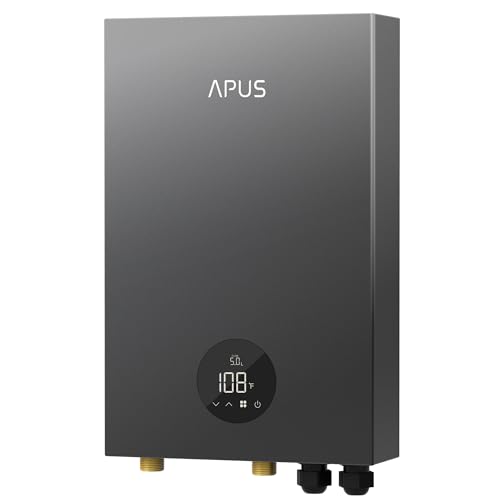
The APUS 18kW unit delivers up to 4.4 GPM, suitable for 2–3 simultaneous uses such as a shower, sink, or laundry cycle. It features a LED display for precise 1°F temperature control (86°F–140°F) and a built-in memory to keep settings after power outages. Self-modulating technology optimizes power usage to maintain stable temperatures and reduce energy waste. The unit offers high thermal efficiency (up to 99.8%) and minimizes standby losses, ideal for eco-conscious households with modest hot-water needs.
Who it’s best for: homeowners with compact spaces and moderate hot-water demand who want reliable, continuous flow for a couple of fixtures at once. Why chosen: compact electric tankless design, clear temperature control, and energy-smart features support consistent performance without a bulky tank.
Caution: ensure your electrical panel supports the load. This model relies on efficient modulation, but high simultaneous demand still requires adequate circuit capacity.
ORBEK 14kW Tankless—Best For Small Apartments

This 14kW model provides up to 3.38 GPM, enough for 1–2 fixtures at once. It emphasizes practical efficiency, claiming up to 60% energy savings versus traditional tanks. It uses advanced separation technology to minimize scale, supporting long-term reliability. An ETL certification note suggests compliance with standard electrical safety expectations, though actual installation specifics require a robust 240V circuit and appropriate wiring.
Who it’s best for: renters or buyers in small apartments who want a budget-friendly option with straightforward installation and solid hot-water output. Why chosen: compact footprint and solid efficiency make this a practical point-of-use solution.
Caution: installation requires a suitable electrical panel and dedicated breakers; check local codes for venting not needed in electric units but ensure space for wiring access.
AIYEZIDT 110V Portable Mini—Best For RVs And Campers
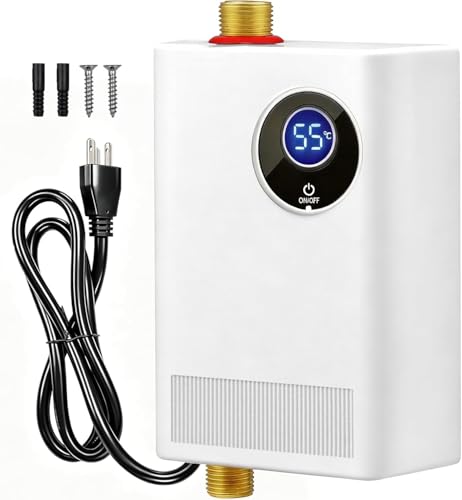
This 110V, 3000W unit provides instant hot water in 3–5 seconds, with a maximum temperature around 131°F. Its compact, wall-mounted design is ideal for kitchens, bathrooms, RVs, and travel scenarios where space is limited. The LCD display enables straightforward monitoring, and built-in safety features include IPX4 waterproofing, leakage protection, dry burning protection, and automatic shutoff when inactive.
Who it’s best for: travelers, RV owners, or small-cabinet setups needing on-demand hot water with easy mounting. Why chosen: true point-of-use performance in a very small footprint and practical safety protections for mobile or semi-permanent use.
Caution: not suitable for high-flow needs like showering in full-demand scenarios; best for low-to-moderate hot-water use at a single point of use.
APUS 27kW—Best For Whole Home Demand
This 27kW APUS model supports up to 6.5 GPM, suitable for 3–4 simultaneous uses. It offers a memory function with adjustable temperature control from 86°F to 140°F via LED, and self-modulating technology for efficiency. The compact design is noted to fit smaller spaces than traditional tank systems and supports whole-house or large point-of-use configurations with 3/4″ NPT connections. It emphasizes fast heating with a cast aluminum heating element for efficient performance and energy savings.
Who it’s best for: mid-to-large homes or busy households needing robust hot-water flow across multiple fixtures at once. Why chosen: higher GPM capability and memory-controlled settings make it a versatile whole-home option.
Caution: installation requires multiple high-capacity breakers and appropriate cable sizing; verify panel suitability before purchase.
WINTEMP WM12V Plus 12kW—Best For Eco-Conscious Upgrades

The WINTEMP WM12V Plus delivers up to 2.8 GPM with smart self-modulating control. It maintains stable temperatures by adjusting power based on real-time flow and temperature. Designed for 1–2 points of use, it uses a water-electricity separation approach to minimize scale and corrosion. It supports zero standby energy when not in use and emphasizes easy integration with existing plumbing and electrical setups.
Who it’s best for: households in warmer climates or small offices needing efficient point-of-use hot water with modern control features. Why chosen: strong temperature stability and energy-conscious design for limited hot-water demand areas.
Caution: installation requires careful breaker sizing (50A class) and proper wiring; read the electrical requirements to avoid overloads.
Buying Guide: Key Considerations For Selecting On Demand Water Heating Systems
What size and flow rate do you need? GPM expectations depend on the number of fixtures and usage patterns. For 1–2 fixtures, 2–3 GPM may suffice. For 3–4 simultaneous uses, aim for 6–7 GPM or more unless you phase usage.
Do you need a whole-home or point-of-use solution? Whole-home models deliver hot water to multiple fixtures but require larger electrical supply. Point-of-use units are ideal for single sinks, RVs, or small apartments where space and wiring are limited.
What electrical capacity is required? Many on demand heaters are 240V with high amperage. Confirm circuit capacity, breaker type, and wire gauge against the manufacturer’s installation guide. Inadequate electrical supply can limit performance or cause tripping.
What installation space is available? Tankless units vary in footprint. Consider accessibility for service, venting (for gas models), and clearance around the unit. Indoor, outdoor, and under-sink installations each have distinct requirements.
What are the safety and maintenance features? Look for anti-scale interior, dry-boil protection, leakage safeguards, and automatic power-off features. Self-modulating technology helps conserve energy by matching heat output to demand.
What are the operating costs? On-demand systems reduce standby losses but may require higher upfront electrical investments. Evaluate long-term energy savings against installation costs and potential need for upgraded electrical panels.
FAQ: Quick Answers For On-Demand Water Heating Buyers
- What is on-demand water heating? A system that heats water only as it is drawn, reducing energy waste compared to a storage tank system.
- Can I install a tankless heater myself? Some models are DIY-friendly at smaller scales, but most require a licensed electrician and possibly a plumber for proper connections and code compliance.
- What determines GPM capability? Flow rate and incoming water temperature; higher demands require models with a higher GPM rating.
- Do tankless heaters work in cold climates? Yes, but output can drop as incoming water is colder; you may need higher capacity units for reliable performance in winter.
- Are gas models better than electric? Gas units can offer higher flow at lower electrical demands, but require venting and gas line compliance. Electric units are simpler for many urban homes.
- Is a memory function useful? Yes, it helps preserve user temperature preferences after a power interruption, improving convenience.